Workplace Investigation Procedures
Common Mistakes Employers Should Avoid During Harassment Investigations
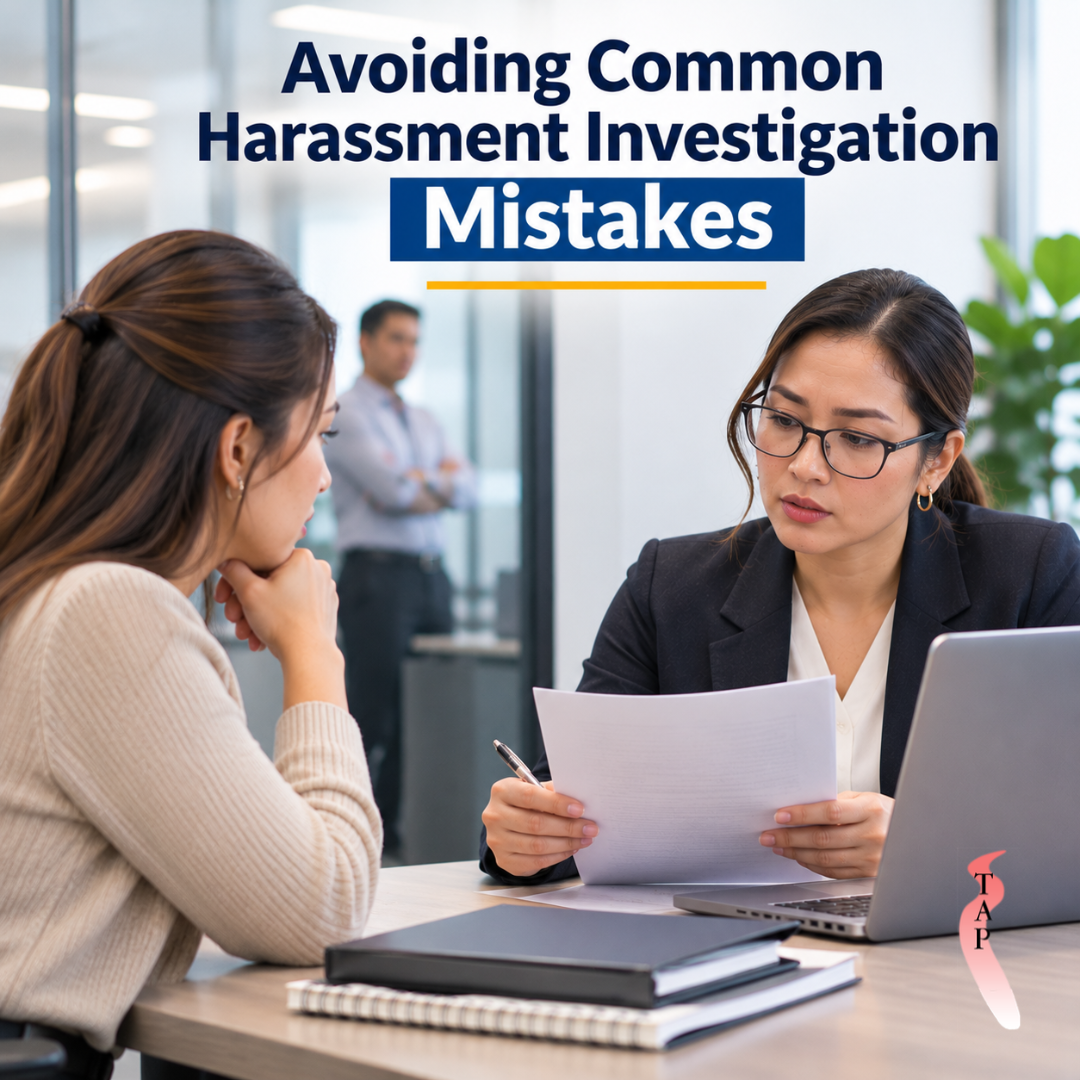
Workplace harassment investigations are an important part of addressing employee complaints and maintaining a respectful work environment. However, mistakes during the investigation process can affect employee trust, compromise fairness, and create additional legal concerns.
Delayed responses, incomplete documentation, premature conclusions, and inconsistent procedures are among the common problems employers should avoid.
Understanding these workplace harassment investigation mistakes can help employers establish more reliable complaint-handling procedures and respond appropriately to reported concerns.
1. Delaying Responses to Harassment Complaints
Failing to respond promptly can allow inappropriate behavior to continue and may discourage employees from reporting future concerns.
Employers should acknowledge complaints, assess whether immediate protective measures are necessary, and begin an appropriate review without unreasonable delays.
Even when a complaint appears minor, employers should avoid dismissing it without considering the circumstances.
2. Reaching Conclusions Before Reviewing the Facts
Employers should avoid assuming that a complaint is either valid or unfounded before gathering relevant information.
Premature conclusions may result from personal relationships, workplace rumors, or assumptions about the individuals involved.
A fair investigation should include:
- Listening to the complainant and the person accused.
- Interviewing relevant witnesses.
- Reviewing available documents and communications.
- Evaluating evidence objectively before making findings.
Investigators should distinguish allegations from established facts and avoid allowing personal opinions to influence the outcome.
3. Maintaining Inadequate Documentation
Incomplete records can make it difficult to understand what occurred or demonstrate how the employer responded.
Employers should document relevant information, including:
- Dates and descriptions of reported incidents.
- Individuals involved and potential witnesses.
- Relevant emails, messages, and other evidence.
- Interviews, investigative steps, and findings.
- Corrective measures and follow-up actions.
Records should be factual, organized, and securely stored with access limited to authorized personnel.
4. Overlooking Conflicts of Interest
An investigation may be compromised when the person responsible for reviewing a complaint has a close relationship with someone involved.
For example, a supervisor should not be responsible for independently investigating allegations involving their own conduct.
Employers should consider assigning an impartial HR representative, another qualified investigator, or an appropriate external professional when necessary.
5. Applying Investigation Procedures Inconsistently
Workplace harassment complaints should receive appropriate attention regardless of an employee's position, seniority, or influence.
Inconsistent procedures may create concerns about favoritism or unequal treatment.
Employers should establish clear investigation guidelines and apply them consistently while allowing flexibility based on the circumstances of each complaint.
6. Failing to Protect Employees From Retaliation
Employees may hesitate to report harassment if they fear losing assignments, receiving negative evaluations, or experiencing workplace exclusion.
Employers should clearly prohibit unlawful retaliation against individuals who report concerns or participate in protected investigation activities.
Appropriate follow-up after an investigation can also help identify and address potential retaliation.
Legal Background
Title VII of the Civil Rights Act of 1964 prohibits covered employers from engaging in unlawful sex discrimination, including sexual harassment that meets applicable legal standards.
An employer's response to reported harassment may be relevant when evaluating its legal responsibilities. Depending on the circumstances, employers may be expected to take prompt and appropriate corrective action.
Federal law also prohibits retaliation for engaging in protected activities. State and local laws may impose additional requirements.
Employers should review applicable legal obligations when developing investigation procedures.
The Importance of Sexual Harassment Training
Sexual harassment prevention training can help employees and supervisors recognize inappropriate conduct, understand reporting procedures, and respond responsibly to workplace concerns.
Sexual Harassment Training | TAP Series®
Training should reinforce:
- Employee awareness: Recognizing harassment and understanding when to report concerns.
- Reporting procedures: Knowing how complaints should be submitted and handled.
- Supervisor responsibilities: Responding promptly, documenting concerns, and escalating complaints appropriately.
- Workplace respect: Maintaining professionalism and avoiding retaliation or workplace speculation.
- Prevention strategies: Supporting consistent procedures and appropriate responses to reported conduct.
Training should complement clear workplace policies, impartial investigations, and secure documentation practices.
Key Takeaways for Employers
Employers can strengthen harassment investigation practices by:
- Responding promptly to complaints.
- Avoiding premature conclusions.
- Maintaining accurate and secure records.
- Assigning impartial investigators.
- Applying procedures consistently.
- Protecting employees from retaliation.
- Providing appropriate training for supervisors and HR personnel.
Conclusion
Workplace harassment investigations require fairness, consistency, and careful documentation.
By avoiding delayed responses, premature conclusions, conflicts of interest, and inconsistent procedures, employers can strengthen their approach to complaint handling.
Clear reporting policies, appropriate investigations, and practical sexual harassment prevention training can help organizations address concerns responsibly and maintain professional workplace standards.