Home Buying Considerations
How Seasonal Changes Can Affect a Property
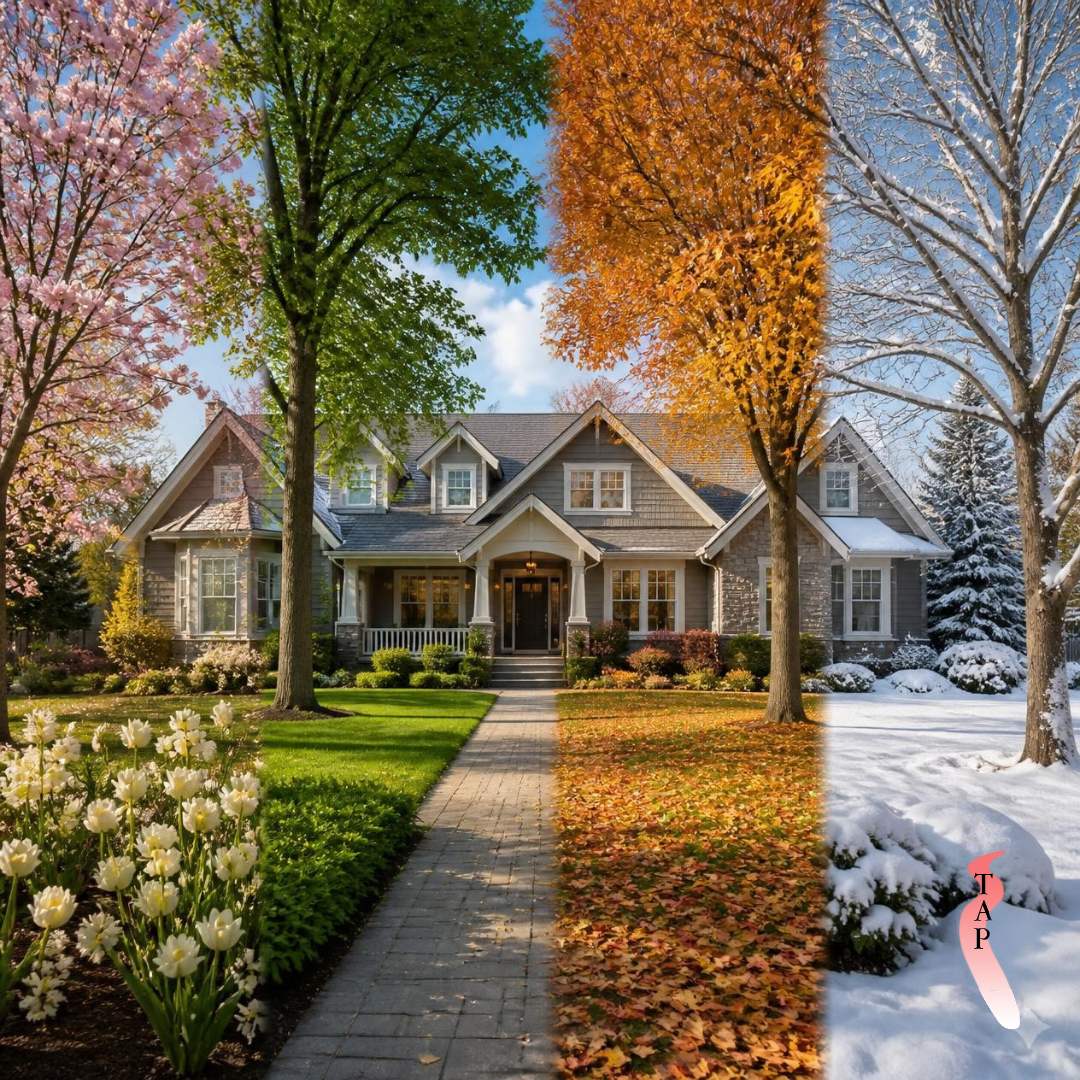
A property can look and feel very different depending on the season. A home that seems comfortable during a mild spring viewing may experience more heat, cold, rain, or shade at other times of the year. The surrounding neighbourhood can also change as landscaping, traffic, weather, and outdoor spaces respond to seasonal conditions.
Considering how a property may function throughout the year can give buyers a more complete understanding of the home and its surroundings.
Consider Seasonal Weather
Start by thinking about the typical weather conditions in the area throughout the year. Depending on the location, properties may experience heavy rainfall, extreme heat, cold temperatures, snow, storms, or dry periods.
Consider how the home's construction, windows, roof, exterior materials, and drainage may respond to these conditions. Previous signs of water damage, weathering, or repairs may also provide useful information.
Pay Attention to Sunlight
The amount and direction of sunlight can change throughout the year.
A room that receives plenty of natural light during one season may receive less at another time. Outdoor areas can also become significantly hotter or cooler depending on the position of the sun.
When possible, consider the property's orientation and how sunlight reaches bedrooms, living areas, patios, gardens, and other frequently used spaces.
Check Drainage and Water Flow
Seasonal rainfall can reveal drainage issues that may not be obvious during dry weather.
Look for signs such as standing water, soil erosion, water stains, damaged landscaping, or areas where water appears to collect. Consider how rainwater moves away from the house, driveway, yard, and other structures.
Local flooding patterns and the property's surrounding terrain may also be worth researching.
Evaluate Heating and Cooling
Heating and cooling systems can have a major influence on comfort throughout the year.
Consider the age and condition of the HVAC system, insulation, windows, ventilation, and other features that can affect indoor temperatures.
A home that feels comfortable during a mild-weather viewing may perform differently during periods of extreme heat or cold.
Look at Seasonal Landscaping
Landscaping can change considerably throughout the year. Trees may lose leaves, gardens may require more watering, and lawns may become dormant or require additional maintenance depending on the climate.
Consider how much ongoing care the outdoor areas may require. Large trees can provide shade and privacy, but they may also create additional maintenance needs.
Think About the Neighbourhood
Seasonal changes can affect more than the property itself. Traffic patterns, noise levels, outdoor activities, parking, and nearby businesses may vary throughout the year.
For example, a quiet neighbourhood during one season may become busier during holidays, tourism periods, school terms, or warmer weather.
If possible, visit the area at different times and consider how seasonal conditions could affect your daily routine.
Ask About Seasonal Maintenance
Some properties require maintenance that becomes more important at certain times of the year.
This could include cleaning gutters before heavy rainfall, servicing heating or cooling equipment, preparing landscaping for changing weather, maintaining drainage systems, or protecting outdoor features.
Review available maintenance records and consider which tasks may need to be performed regularly.
Consider the Property Throughout the Year
When buying a home, it can be useful to think beyond how the property looks on the day you visit. Seasonal changes and property condition can influence comfort, maintenance, outdoor usability, and the surrounding environment.
By considering weather, sunlight, drainage, heating, cooling, landscaping, and neighbourhood activity across different seasons, buyers can develop a better understanding of how a property may function throughout the year.