Property Maintenance Tips For Homeowners
How to Decide Which Home Repairs Matter Most
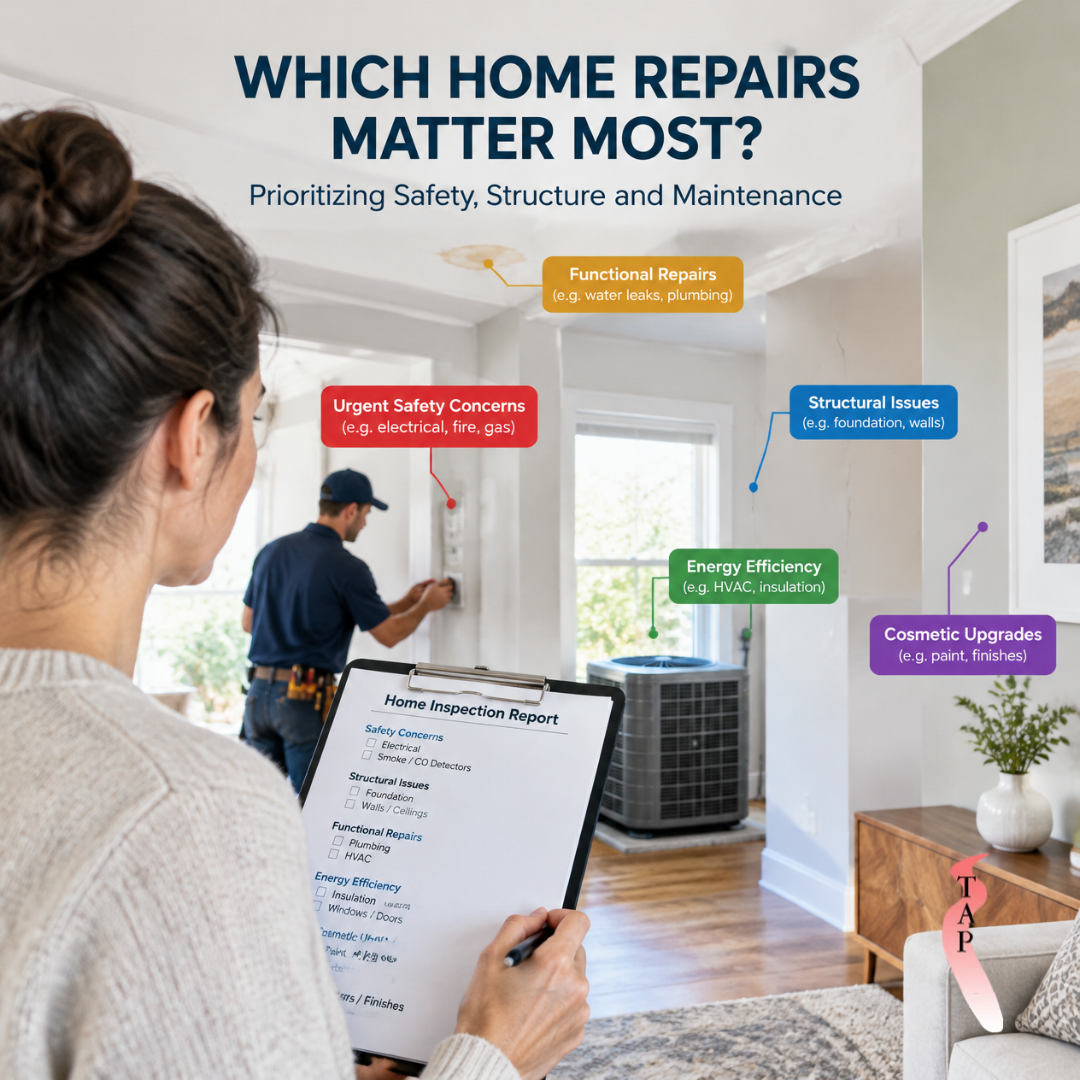
Owning a home often involves a steady list of repairs and improvements. Some issues require immediate attention, while others can be planned for later. For prospective buyers, understanding the condition of a property can help clarify which repairs may need to be addressed after purchase. For existing homeowners, prioritising repairs can help protect the property, maintain everyday comfort, and manage maintenance responsibilities more effectively.
The challenge is knowing where to begin. A cracked tile, an ageing air conditioning unit, and a leaking roof may all need attention, but they do not carry the same level of urgency. Learning to distinguish between safety-related, structural, functional, efficiency-related, and cosmetic repairs provides a practical starting point for making informed decisions.
Start With Safety-Related Repairs
Safety-related repairs generally deserve the highest priority because they can affect the wellbeing of people living in or visiting the property. Problems involving exposed electrical wiring, suspected gas leaks, damaged staircases, missing handrails, or malfunctioning smoke alarms can create immediate hazards.
Water intrusion can also become a safety concern if it reaches electrical components or contributes to hazardous mould growth. Similarly, damaged glass, loose balcony railings, and unstable steps may increase the risk of injury.
When evaluating a property, buyers should look beyond its appearance and consider whether essential safety features are present and functioning properly. Homeowners should also pay attention to warning signs rather than postponing repairs because the issue appears minor.
If a condition presents an immediate danger, the affected area may need to be avoided until it has been assessed or made safe. Suspected gas leaks, electrical hazards, and serious structural instability warrant appropriate urgent professional assistance.
Identify Structural Problems Early
Structural repairs involve the components that support a home and help maintain its stability. These may include foundations, load-bearing walls, roof structures, beams, and other important building elements.
Warning signs can include significant or widening cracks, uneven floors, doors that suddenly become difficult to close, visibly sagging roof sections, or evidence of movement in walls. However, not every crack or uneven surface indicates a serious structural problem. Some changes may result from normal material movement, ageing, or minor settlement.
The important consideration is whether the issue could indicate a deeper problem that needs investigation. Buyers should consider a professional property inspection and, where appropriate, an assessment by a qualified structural specialist.
Structural concerns may affect other parts of the home as well. For example, water entering through a damaged roof can deteriorate timber components, damage ceilings, and affect insulation. Addressing the underlying cause is often more important than repairing the visible damage alone.
Assess Essential Functional Systems
Functional repairs relate to the systems and features a household depends on for everyday living. These include plumbing, electrical installations, heating and cooling equipment, water heaters, drainage, windows, doors, and kitchen or bathroom fixtures.
A dripping tap may be relatively straightforward to address, but repeated leaks, poor drainage, inconsistent hot water, or frequently tripping electrical circuits may indicate more significant problems.
When deciding which functional repairs matter most, consider how the issue affects daily use, whether it is worsening, and whether it could damage other parts of the property. A slow drain may need investigation if it repeatedly blocks, while a leaking pipe inside a cabinet could damage surrounding materials if left unresolved.
For buyers, testing accessible fixtures and checking the general condition of essential systems can reveal questions that deserve further investigation. For homeowners, keeping records of recurring faults can help identify patterns and support more effective maintenance planning.
Evaluate Energy Efficiency Improvements
Efficiency-related improvements aim to reduce unnecessary energy or water use, improve indoor comfort, or help a home operate more effectively. Examples include improving insulation, sealing air leaks, upgrading inefficient lighting, maintaining heating and cooling systems, and replacing outdated water fixtures.
These improvements can be worthwhile, but they do not always require immediate action. An inefficient appliance may still function safely, while a damaged electrical component requires more urgent attention.
The priority depends on the condition of the existing feature, the level of discomfort it creates, and the likely resources required to improve it. For instance, repairing damaged window seals may help address draughts and moisture intrusion, while replacing a functioning appliance solely for efficiency reasons may be less urgent.
Buyers should also consider whether the home has underlying issues that could limit the effectiveness of an upgrade. Improving insulation, for example, should be considered alongside ventilation and moisture management to avoid creating new problems.
Leave Cosmetic Improvements Until Essential Issues Are Addressed
Cosmetic repairs improve the appearance of a home without necessarily correcting an underlying functional or structural issue. Common examples include repainting walls, updating cabinet handles, replacing decorative light fittings, refreshing landscaping, and changing finishes.
These projects can make a property more comfortable and better suited to personal preferences. However, they are generally lower priority when essential systems need repair or safety concerns remain unresolved.
Consider a home with peeling paint, an outdated bathroom, and evidence of a roof leak. Repainting and replacing bathroom tiles may improve the appearance, but addressing the source of the leak should come first. Otherwise, new finishes could be damaged by continuing moisture.
Cosmetic work can also be easier to schedule around other repairs. Once essential work is complete, homeowners can decide which visual improvements offer the greatest practical value to their household.
Consider Cost, Consequences, and Timing Together
Repair priorities are not determined by category alone. The urgency of a problem also depends on its severity, how quickly it may worsen, and what could happen if it remains unresolved.
A useful approach is to assess each repair against four considerations:
- Urgency: Does the issue create an immediate safety risk or threaten essential services?
- Consequences: Could delaying the repair lead to further damage or a more complicated problem?
- Functionality: Does the issue affect the safe and practical use of the home?
- Planning requirements: Does the repair require specialist assessment, permits, particular materials, or coordination with other work?
For example, a minor paint defect can usually be scheduled for later, while an active roof leak may need prompt attention to prevent further damage. A failing heating or cooling system may require planning before it stops working completely, particularly where replacement equipment has a long delivery time.
Homeowners can organise identified repairs into immediate, near-term, and longer-term priorities. This creates a clearer maintenance plan without assuming that every issue must be resolved at once.
Make Repair Decisions With the Whole Property in Mind
Deciding which home repairs matter most requires looking beyond individual defects. Safety, structural stability, essential functionality, efficiency, and appearance all contribute to a property's condition, but they do not carry equal urgency in every situation.
Buyers can use inspections, maintenance records, and specialist assessments to understand potential concerns before making property decisions. Homeowners can benefit from regular checks, documenting recurring issues, and reviewing repair priorities as the property ages.
The most practical approach is to address hazards and serious underlying problems first, maintain essential systems, plan efficiency improvements thoughtfully, and schedule cosmetic updates when appropriate. This helps create a clearer path for managing repairs while recognising that each property has different needs.
This article is for general educational purposes only and is not a substitute for professional building, safety, or financial advice.