What To Look For When Viewing A House
How to Evaluate a Home's Privacy Before Buying
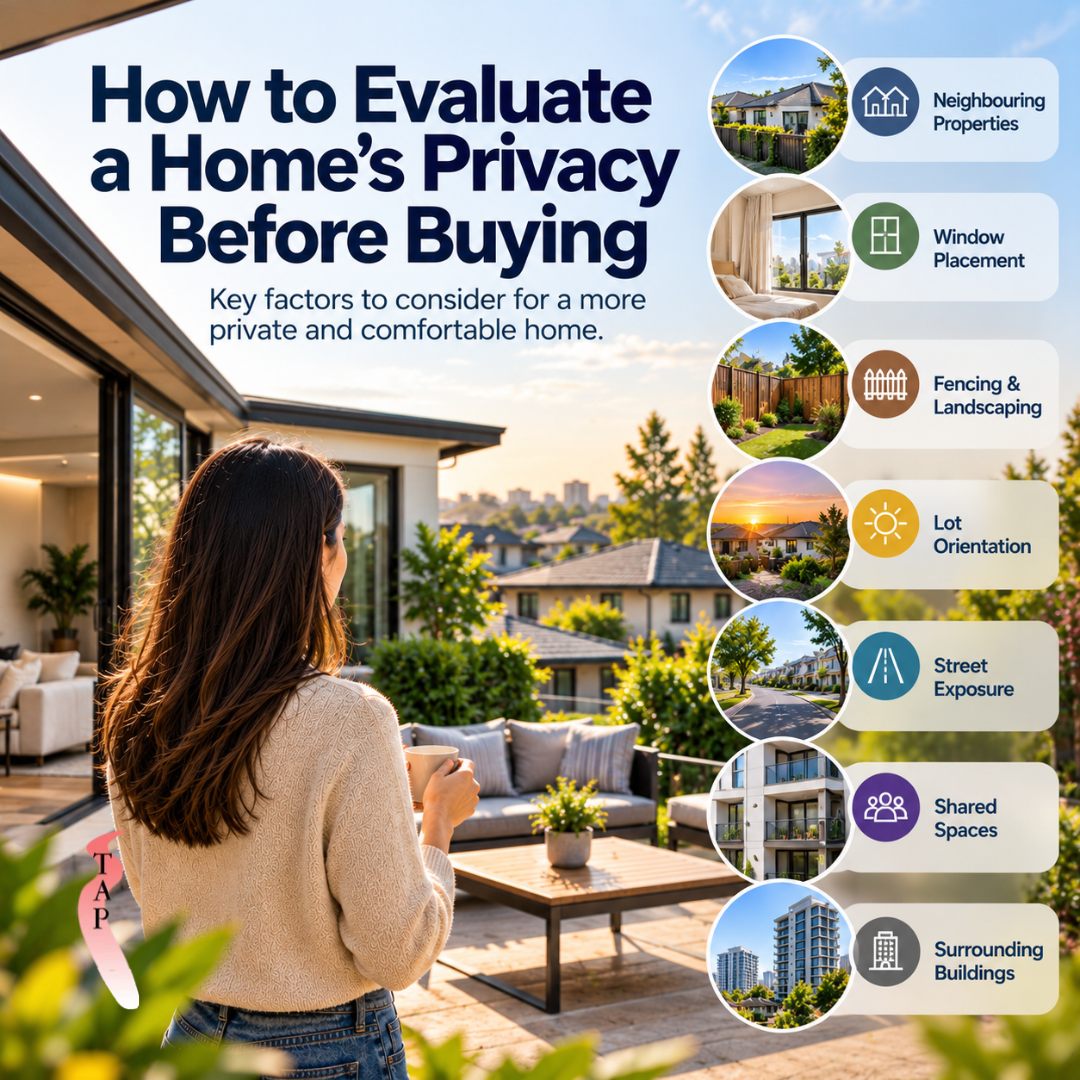
Privacy is an important consideration when choosing a home, yet it can be easy to overlook during a property viewing. A house may have an attractive layout, spacious rooms, and appealing outdoor areas, but its proximity to neighbouring properties, streets, or shared facilities can affect how private it feels in everyday life.
For prospective buyers, evaluating home privacy involves more than checking whether a property has fences or curtains. Window placement, lot orientation, surrounding buildings, landscaping, and nearby activity can all influence visibility, noise, and personal comfort.
Understanding these factors before purchasing can help buyers determine whether a property's privacy levels suit their lifestyle and expectations.
Examine the Distance Between Neighbouring Properties
The space between homes can significantly influence privacy. Properties built close together may have windows, balconies, or outdoor areas that directly face one another.
During a viewing, observe how neighbouring buildings are positioned in relation to the property. Consider whether people in adjacent homes could easily see into bedrooms, living rooms, kitchens, or private outdoor spaces.
A larger lot may provide more separation between buildings, but size alone does not guarantee privacy. A smaller property with thoughtful window placement and landscaping may feel more secluded than a larger home with exposed living areas.
Also consider the height of neighbouring buildings. A two-storey house overlooking a single-storey property may create visibility concerns even when there is reasonable distance between them.
Assess Window Placement and Sightlines
Windows provide natural light and ventilation, but their location can affect how exposed a home feels.
Large windows facing neighbouring properties, public walkways, or busy roads may reduce privacy, particularly in bedrooms and frequently used living spaces.
When inspecting a property, stand near the windows and look outside. Consider what is visible from inside and whether the same view could be available to people outside.
Pay particular attention to:
- Bedroom windows facing neighbouring homes or shared pathways.
- Living room windows positioned close to public areas.
- Bathroom windows without suitable privacy features.
- Glass doors opening toward exposed outdoor spaces.
- Upper-floor windows overlooked by taller buildings.
Curtains, blinds, frosted glass, and suitable window coverings can improve visual privacy. However, buyers should consider whether these solutions would limit natural light or ventilation.
Consider Lot Orientation and Home Layout
The orientation of a property can influence both privacy and everyday comfort. The position of the house on its lot determines which rooms face the street, neighbouring buildings, gardens, or open spaces.
For example, a home with its main living areas facing a private backyard may feel more secluded than one with large windows directly overlooking a busy street.
The internal layout also matters. Bedrooms positioned near the front entrance or shared boundaries may experience more activity and noise than rooms located toward quieter sections of the property.
Buyers should think about how they intend to use different areas throughout the day. A home office facing a pedestrian walkway may create distractions, while a private courtyard could provide a quieter space for relaxation.
Privacy preferences vary between households, so the most suitable layout depends on individual routines and expectations.
Evaluate Fencing, Landscaping, and Outdoor Privacy
Fences, walls, hedges, and landscaping can help create separation between neighbouring properties and public spaces.
When assessing outdoor areas, check whether existing fencing provides adequate screening for patios, gardens, balconies, and seating areas.
Consider the height, condition, and coverage of fences. Gaps, damaged sections, or low boundaries may offer limited visual privacy.
Landscaping can also provide screening through trees, shrubs, and hedges. However, plants require maintenance and may take time to grow sufficiently.
Buyers should consider whether proposed privacy improvements are practical. Local regulations, shared boundary arrangements, and community rules may restrict fence heights, landscaping changes, or the installation of screening structures.
It is also important to balance privacy with sunlight, airflow, and outdoor space. Dense landscaping or tall barriers may improve screening while reducing natural light or creating additional maintenance responsibilities.
Check Street Exposure and Pedestrian Activity
A property's relationship with the street can affect how private it feels, particularly when living areas, bedrooms, or outdoor spaces face public footpaths.
Homes located on busy roads, near intersections, or beside frequently used pedestrian routes may experience greater visibility and noise.
During a property viewing, observe how close windows and entrances are to the street. Consider whether passing pedestrians can see directly into the home or whether outdoor seating areas are exposed to public view.
Street lighting, nearby parking areas, and vehicle headlights may also influence comfort during evening hours.
Where practical, visit the neighbourhood at different times of day. Traffic patterns, pedestrian activity, and surrounding noise can change significantly between mornings, afternoons, and evenings.
Understand Privacy in Shared Residential Spaces
Privacy considerations can be different in condominiums, townhouses, and other multi-unit developments.
Shared corridors, elevators, stairwells, parking areas, balconies, and communal gardens can increase the number of people passing close to individual homes.
For example, an apartment near an elevator or shared entrance may experience more foot traffic than one positioned at the end of a corridor.
Buyers should consider whether neighbouring balconies overlook private rooms or outdoor areas. Shared walls and floors may also affect acoustic privacy, particularly when sound insulation is limited.
Reviewing the layout of shared spaces can help buyers understand how much separation exists between private living areas and communal facilities.
Look Beyond the Property's Immediate Boundaries
Surrounding buildings and land uses can influence privacy even when they are not directly adjacent to the home.
Nearby apartment buildings, commercial properties, schools, parks, and public facilities may create overlooking, noise, or increased activity.
Buyers should also consider vacant land and potential future development. An open view today may change if nearby land is developed, although future construction is not always predictable.
Local planning information can provide useful context about permitted land uses and known development proposals.
When evaluating the surroundings, consider both existing conditions and the possibility that the neighbourhood may change over time.
Balance Privacy With Other Property Features
Privacy is rarely an all-or-nothing feature. A property may offer excellent backyard privacy but have bedrooms facing a busy street. Another may provide secluded indoor spaces while having balconies overlooked by neighbouring buildings.
Buyers should identify which aspects of privacy matter most to their household.
For some, visual privacy in bedrooms and bathrooms may be the priority. Others may value a quiet home office, a secluded garden, or limited exposure to street activity.
It can be helpful to distinguish between privacy concerns that are difficult to change and those that may be improved through window coverings, landscaping, or other modifications.
However, potential improvements should be assessed for practicality, cost, and any applicable restrictions before assuming they can be completed.
Making Privacy Part of Your Property Evaluation
Evaluating a home's privacy requires observing both the building and its surroundings. Window placement, neighbouring properties, lot orientation, fencing, street exposure, and shared spaces can all influence the experience of living in a home.
During property viewings, take time to assess sightlines from different rooms, observe outdoor spaces, and consider activity around the property. Visiting at different times and reviewing available local planning information can provide additional perspective.
Ultimately, the right level of privacy depends on personal preferences and everyday needs. By considering privacy alongside location, layout, maintenance, and other ownership factors, buyers can make a more informed decision about whether a property suits their household.
This article is for general educational purposes only and is not a substitute for professional property, legal, or financial advice.