Employer Compliance Training
Sexual Harassment Prevention During Business Travel
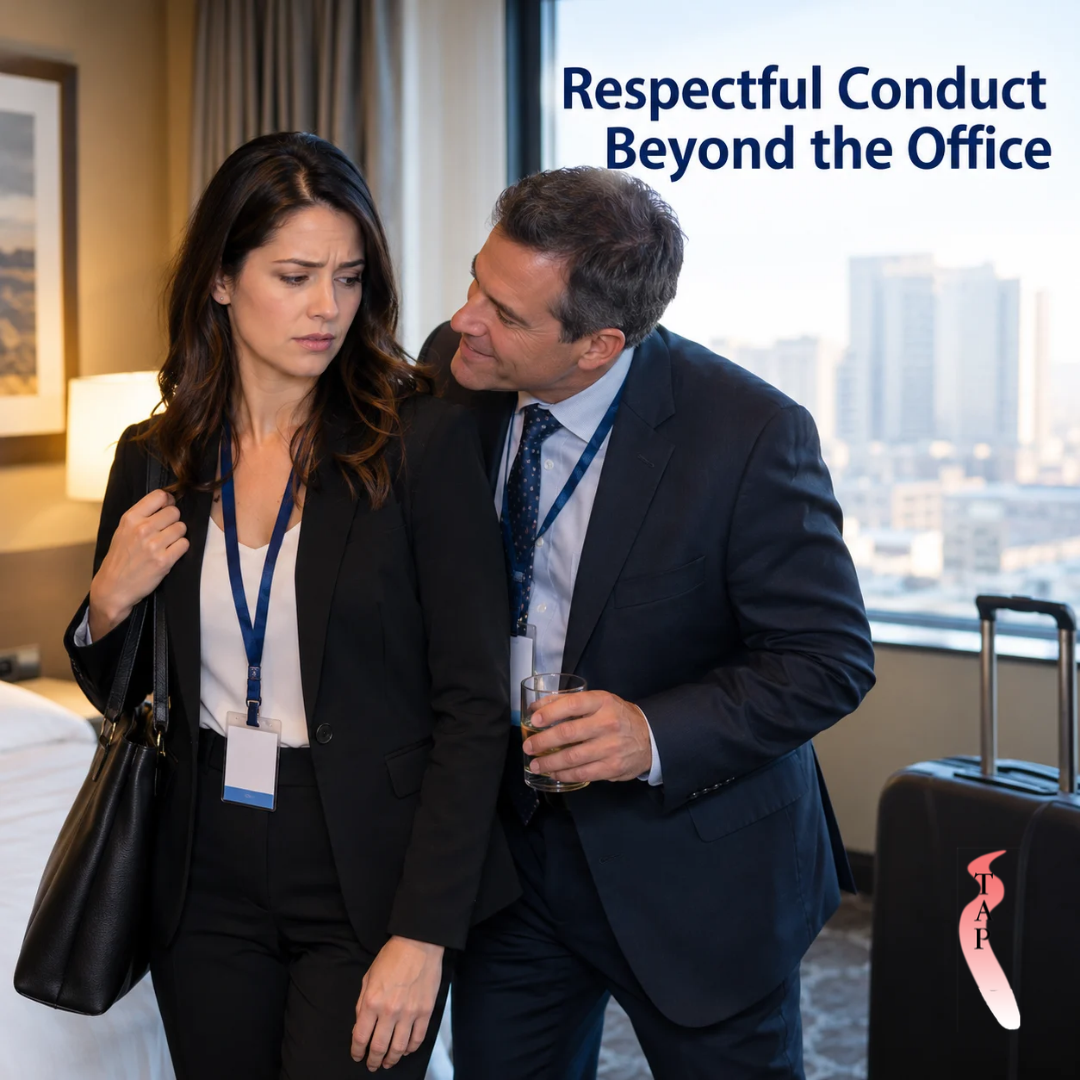
Business travel allows employees to attend conferences, meet clients, participate in training, and represent their organisations at events outside their usual workplace. Although these activities support professional development and business relationships, they can also create situations where employees may face inappropriate conduct or feel uncertain about workplace boundaries.
Business travel can involve unfamiliar environments, overnight stays, shared transportation, client entertainment, and social gatherings where professional and personal interactions overlap. Employees may also spend extended periods with colleagues, supervisors, clients, or business partners outside normal working hours.
Sexual harassment prevention should extend to these work-related activities. Employers need clear expectations, accessible reporting procedures, and practical guidance to help employees recognise inappropriate conduct and understand how to respond when concerns arise.
How Business Travel Can Create Additional Harassment Risks
Work-related travel can change the usual workplace dynamics. Employees may be away from familiar colleagues, supervisors, or HR representatives who could otherwise provide immediate support. They may also depend on another person for transportation, accommodation arrangements, scheduling, or access to business activities.
Several circumstances can increase the importance of clear workplace boundaries during business travel:
- Unfamiliar environments: Employees may not know where to seek assistance when inappropriate conduct occurs outside their usual workplace.
- Differences in authority: A supervisor or senior colleague may influence travel assignments, professional opportunities, performance evaluations, or career advancement.
- Extended time together: Conferences, group dinners, transportation, and overnight trips can create additional opportunities for unwanted personal attention.
- Social expectations: Employees may feel pressured to participate in after-hours activities or tolerate uncomfortable behaviour to maintain professional relationships.
- Isolation from support: Employees travelling alone or in small groups may feel less confident raising concerns while away from their normal support network.
These circumstances do not automatically lead to harassment, but they highlight why prevention measures should account for the realities of business travel.
Sexual Harassment Risks During Conferences and Business Events
Conferences, trade shows, seminars, and networking events often bring employees into contact with colleagues, clients, vendors, and other professionals. These interactions may take place in crowded venues, private meeting rooms, restaurants, or informal networking spaces.
Inappropriate conduct may include unwelcome sexual comments, repeated personal advances, intrusive questions about an employee's private life, or unwanted requests for dates. Behaviour may also involve persistent messages or attention after an employee has clearly indicated a lack of interest.
Alcohol may be present at receptions or networking dinners, but it does not excuse inappropriate behaviour or remove an individual's responsibility to respect professional boundaries.
Employers should communicate that workplace conduct standards apply during conferences and business events, even when activities occur outside regular working hours or away from company premises.
Employees should understand that professional networking does not imply consent to personal attention, physical contact, or romantic or sexual advances.
Preventing Harassment During Overnight Business Trips
Overnight travel can introduce concerns involving hotel arrangements, private spaces, and interactions outside scheduled business activities. Employees may feel particularly vulnerable when travelling with a supervisor, senior colleague, client, or business partner who has greater professional influence.
Potential concerns include unwanted invitations to a colleague's hotel room, persistent requests to socialise privately, inappropriate comments about appearance, or conduct that makes an employee uncomfortable in shared travel arrangements.
Employers can reduce uncertainty by establishing clear travel guidelines, including:
- Arranging separate hotel rooms for employees unless an alternative arrangement has been freely agreed to and is appropriate under company policy.
- Prohibiting supervisors from pressuring employees to participate in private or after-hours social activities.
- Providing employees with clear points of contact for reporting concerns while travelling.
- Establishing expectations for professional behaviour in hotels, restaurants, and other accommodation-related settings.
- Explaining how employees can seek assistance if they feel unsafe or need to leave an uncomfortable situation.
Travel policies should address practical arrangements while reinforcing that employees have the right to professional treatment throughout a work-related trip.
Maintaining Professional Boundaries During Transportation
Transportation is another setting where employees may encounter uncomfortable situations. Travelling by car, taxi, rideshare, shuttle, or company vehicle can place individuals in relatively confined spaces, sometimes without other colleagues nearby.
Potentially inappropriate behaviour may include unwanted sexual conversation, repeated personal questions, unwelcome advances, or attempts to initiate physical contact. An employee may also feel pressured to accept a private ride or remain in a vehicle because the other person controls the transportation arrangements.
Employers should provide practical guidance for transportation during business trips.
- Encourage employees to use approved transportation arrangements and understand their available alternatives.
- Avoid creating unnecessary situations where an employee depends exclusively on a colleague who has made them uncomfortable.
- Ensure employees know whom to contact if transportation arrangements become unsafe or inappropriate.
- Remind employees that professional boundaries apply regardless of whether the interaction occurs in a company vehicle or a privately arranged ride.
- Allow employees to raise concerns about travel arrangements without being subjected to ridicule or retaliation.
Clear planning can help employees make informed decisions and access support when concerns arise.
Managing Client Meetings and Business Entertainment
Client relationships are important to many organisations, but business objectives do not justify inappropriate conduct. Sexual harassment concerns can arise during private client meetings, dinners, hospitality events, or informal discussions after scheduled business activities.
An employee may experience unwanted advances from a client or vendor and feel uncertain about responding because the relationship has commercial significance. Similarly, an employee may mistakenly believe that tolerating inappropriate behaviour is necessary to retain a client or protect a business opportunity.
Employers should make clear that employees are not expected to accept sexual harassment as part of their professional responsibilities.
Practical prevention measures include:
- Establishing standards for professional behaviour during client entertainment and networking.
- Providing a process for employees to raise concerns involving customers, clients, vendors, or other third parties.
- Explaining how managers should respond when a business partner engages in inappropriate conduct.
- Supporting employees who need to leave an uncomfortable interaction or request assistance.
- Avoiding responses that prioritise a commercial relationship over the employee's reported concerns.
Employers should also explain that complaints involving third parties will be taken seriously and assessed appropriately, even when the person accused of misconduct is not an employee.
After-Hours Activities and Workplace Socialising
Business trips frequently include team dinners, celebrations, networking receptions, and other activities outside formal working hours. Although these events may be intended to strengthen relationships, they can blur the distinction between professional and personal interactions.
Employees may feel obligated to attend because a supervisor organised the event or important clients will be present. Others may worry that declining an invitation could affect their standing within the team.
Harassment prevention requires employers to establish clear expectations for these activities.
Employees should understand that attendance at a work-related social event does not imply consent to sexual attention, personal advances, or unwanted contact. Supervisors should avoid pressuring employees to participate in activities that make them uncomfortable and should respond appropriately when concerns are raised.
Employers should also address conduct in work-related group chats, text messages, and other communications that continue during or after a business trip.
Reporting Sexual Harassment While Travelling
Reporting a concern may be more difficult when an employee is away from the workplace. The employee may not know which reporting channel to use, may be concerned about disrupting the trip, or may fear that speaking up could affect future assignments or relationships with colleagues.
An effective reporting process should remain accessible regardless of an employee's location.
Employers should:
- Provide multiple ways to report concerns, including a contact outside the employee's immediate supervisory chain.
- Explain how employees can reach HR or another designated representative while travelling.
- Encourage prompt reporting without requiring employees to confront the person involved.
- Explain how reports will be reviewed and how confidentiality will be handled to the extent reasonably possible.
- Prohibit retaliation against employees who report concerns in good faith or participate in an investigation.
- Provide guidance on seeking immediate assistance if an employee believes they are in danger.
Employees should know that they can report concerns involving colleagues, supervisors, clients, vendors, or other individuals encountered during work-related activities. They should not be expected to manage a potentially serious situation alone.
The Responsibilities of Supervisors During Business Travel
Supervisors play an important role in setting expectations and responding to concerns during work-related travel. Their responsibilities do not end when employees leave the office.
Managers should model respectful conduct, maintain appropriate professional boundaries, and avoid using their authority to influence employees' personal decisions. They should also recognise that employees may hesitate to raise concerns when the supervisor is involved in organising travel, assigning duties, or evaluating performance.
When an employee reports inappropriate behaviour, supervisors should listen without dismissing the concern, follow company reporting procedures, and refer the matter to the appropriate personnel. They should not promise absolute confidentiality, discourage reporting to protect a business relationship, or attempt to resolve serious allegations informally without following established procedures.
Employers should ensure supervisors understand their responsibilities before approving or leading business trips. Training can help them recognise inappropriate conduct, respond appropriately to disclosures, and understand when concerns must be escalated.
Establishing a Business Travel Harassment Prevention Policy
A workplace harassment policy should address work-related activities beyond the employer's physical premises. Employers can support prevention by integrating clear travel-specific expectations into existing policies and procedures.
A practical policy should cover:
- Scope of conduct standards: Explain that applicable workplace rules extend to conferences, business trips, client meetings, transportation, accommodation arrangements, and work-related social events.
- Employee responsibilities: Outline expectations for respectful communication, professional boundaries, and appropriate conduct.
- Travel arrangements: Establish guidance for accommodation, transportation, and situations involving isolated or private interactions.
- Reporting channels: Identify accessible contacts and procedures for raising concerns while away from the usual workplace.
- Third-party misconduct: Explain how employees can report inappropriate behaviour by clients, vendors, and other business contacts.
- Investigation and follow-up: Describe how concerns will be reviewed and how appropriate corrective measures may be determined.
- Anti-retaliation protections: Clearly prohibit retaliation against employees who raise concerns or participate in workplace investigations.
Policies should be communicated before employees travel, not only after a concern arises. Employers should also review them periodically to identify gaps in travel planning, reporting access, and supervisor guidance.
Legal Background: Employer Responsibilities Beyond the Office
Under Title VII of the Civil Rights Act of 1964, covered employers are prohibited from discriminating against employees on the basis of sex. Sexual harassment may constitute unlawful sex discrimination when it meets the applicable legal standards, including conduct that creates a hostile work environment or certain employment decisions based on submission to or rejection of sexual advances.
Whether conduct is unlawful depends on the circumstances and applicable legal standards. Not every uncomfortable interaction necessarily constitutes a legal violation, but employers should not ignore inappropriate behaviour simply because it occurs away from company premises.
Business travel can remain connected to employment when an employee attends an event, meets a client, or performs duties on behalf of the organisation. Employers should therefore consider the work-related context of an incident, the individuals involved, and their responsibilities under applicable law and company policy.
Employers should also be mindful of relevant state and local requirements, which may impose additional obligations concerning harassment prevention, training, reporting, and employer responses.
The Importance of Sexual Harassment Training
Sexual harassment prevention training can help employees and supervisors understand how workplace conduct standards apply during business travel. Training should address realistic situations employees may encounter outside their usual workplace and provide practical guidance for responding to concerns.
Sexual Harassment Training | TAP Series®
Relevant training considerations include:
- Employee awareness: Help employees recognise unwelcome conduct, understand professional boundaries, and identify situations that may require support.
- Reporting procedures: Explain how to report concerns during conferences, overnight trips, client meetings, and other work-related activities.
- Supervisor responsibilities: Prepare managers to respond appropriately to reports, follow escalation procedures, and avoid conduct that could create pressure or fear of retaliation.
- Workplace respect: Reinforce that professional standards apply to colleagues, supervisors, clients, vendors, and other business contacts.
- Prevention strategies: Use realistic scenarios to discuss travel arrangements, after-hours events, transportation, digital communications, and ways to seek assistance.
Training should complement clear policies, accessible reporting channels, consistent investigations, and appropriate corrective action. Employers should also account for applicable federal, state, and local training requirements rather than assuming that a general training programme satisfies every legal obligation.
Broader Implications for Employers
Business travel policies are part of a broader workplace culture. Employees are more likely to understand their responsibilities when employers consistently communicate expectations, provide practical guidance, and respond appropriately to concerns.
Organisations should examine whether employees have meaningful access to support while travelling, whether supervisors understand their responsibilities, and whether commercial priorities are influencing how complaints are handled.
Prevention also requires recognising that employees may have different levels of authority, confidence, and access to resources. A clear policy is important, but employees also need to understand how to use it and trust that concerns will be taken seriously.
By integrating harassment prevention into travel planning, employee training, and management practices, employers can reinforce professional standards across a wider range of work-related settings.
Conclusion
Sexual harassment prevention should extend to every setting in which employees conduct business on behalf of their organisation. Conferences, overnight trips, transportation, client meetings, and after-hours activities can introduce circumstances that make professional boundaries and reporting procedures especially important.
Employers can address these concerns through clear travel policies, accessible reporting channels, responsible supervision, and practical training. Employees should understand that work-related travel does not suspend expectations for respectful conduct, and they should have a clear way to seek help when problems arise.
A consistent approach helps organisations reinforce workplace respect and address concerns appropriately, wherever work takes place.