Employer Harassment Compliance
Supporting Employees During and After a Workplace Harassment Investigation
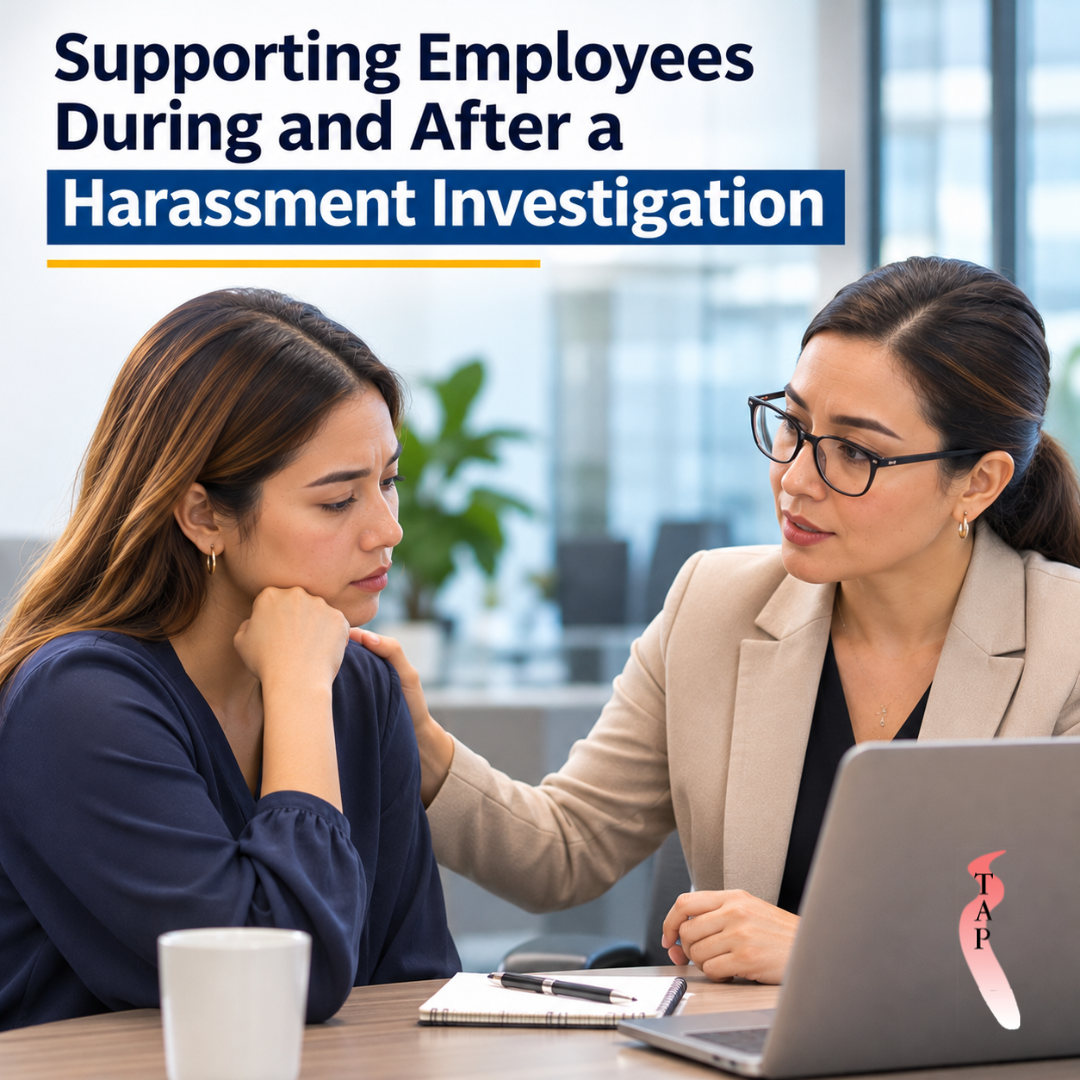
Workplace harassment investigations can be stressful for employees involved in complaints, including complainants, respondents, and witnesses. Uncertainty about the process, concerns about privacy, and fear of retaliation may affect employees throughout an investigation.
Supporting employees during workplace harassment investigations requires respectful communication, appropriate updates, confidentiality safeguards, and consistent follow-up.
Employers should establish procedures that protect employee rights while supporting fair and impartial investigations.
Communicating Respectfully During Investigations
Clear communication helps employees understand what to expect during the complaint-handling process.
Employers should:
- Explain the general investigation process and expected next steps.
- Identify appropriate contacts for questions or concerns.
- Provide reasonable updates when circumstances change.
- Avoid making promises about investigation outcomes.
- Treat everyone involved with professionalism and respect.
Communication should remain neutral and avoid suggesting that allegations have been proven before the investigation is completed.
Protecting Employee Privacy
Harassment investigations often involve sensitive personal information, witness statements, and workplace records.
Employers should limit access to individuals with a legitimate need to know and avoid unnecessary disclosure of complaint details.
However, employers should not promise absolute confidentiality because certain information may need to be shared to conduct a fair investigation.
Considering Appropriate Workplace Adjustments
Depending on the circumstances, temporary workplace adjustments may help address concerns while an investigation is ongoing.
These may include:
- Adjusting reporting relationships or work assignments.
- Providing alternative communication arrangements.
- Modifying schedules when reasonably necessary.
- Offering access to available employee assistance resources.
- Establishing temporary measures to prevent further inappropriate interactions.
Employers should avoid automatically placing the burden of adjustments on the employee who reported harassment. Any changes should be evaluated carefully to avoid unnecessary disadvantage or retaliation.
Preventing Retaliation During and After Investigations
Employees may worry about negative treatment after reporting harassment or participating in an investigation.
Retaliation concerns may involve unfavorable assignments, exclusion from workplace activities, threats, or other actions that could discourage protected reporting.
Employers should reinforce anti-retaliation policies, monitor for potential concerns, and respond promptly when employees report possible retaliation.
These protections remain important after an investigation has concluded.
Following Up After an Investigation
Employee support should not necessarily end when investigative findings are reached.
Employers should communicate appropriate outcomes to the individuals involved while respecting privacy obligations.
Follow-up may include:
- Checking whether workplace concerns have continued.
- Confirming that corrective measures have been implemented.
- Monitoring for possible retaliation.
- Reviewing whether additional training or policy improvements are needed.
- Providing employees with appropriate reporting contacts for future concerns.
The information shared about findings or disciplinary actions should reflect applicable legal requirements and confidentiality considerations.
Legal Background
Title VII of the Civil Rights Act of 1964 prohibits covered employers from engaging in unlawful sex discrimination, including sexual harassment that meets applicable legal standards.
Federal law also prohibits retaliation against employees for engaging in protected activities, including reporting discrimination or participating in certain investigations.
Employers should respond appropriately to harassment complaints and take corrective measures when warranted. Their specific responsibilities depend on the circumstances and applicable federal, state, and local laws.
The Importance of Sexual Harassment Training
Sexual harassment prevention training can help employees and supervisors understand reporting procedures, appropriate workplace conduct, and their responsibilities during investigations.
Sexual Harassment Training | TAP Series®
Training should reinforce:
- Employee awareness: Understanding workplace harassment and available support.
- Reporting procedures: Knowing how to raise concerns during or after an investigation.
- Supervisor responsibilities: Responding respectfully, maintaining appropriate privacy, and escalating concerns.
- Workplace respect: Avoiding gossip, intimidation, and inappropriate treatment.
- Prevention strategies: Reinforcing anti-retaliation protections and consistent follow-up procedures.
Training should complement clear workplace policies, impartial investigations, and appropriate employee support measures.
Key Takeaways for Employers
Employers can strengthen employee support by:
- Communicating respectfully and providing appropriate updates.
- Protecting sensitive information without promising absolute confidentiality.
- Considering temporary workplace adjustments when warranted.
- Avoiding measures that unnecessarily disadvantage complainants.
- Reinforcing safeguards against retaliation.
- Following up after investigations to address continuing concerns.
- Training supervisors on appropriate complaint-handling responsibilities.
Conclusion
Supporting employees during and after workplace harassment investigations requires more than completing the investigative process.
Respectful communication, privacy safeguards, appropriate workplace adjustments, and ongoing anti-retaliation measures can help employers address employee concerns while maintaining impartial procedures.
By establishing clear support practices and providing sexual harassment prevention training, organizations can reinforce accountability and respectful workplace relationships.