Residential Property Zoning Checklist
Understanding Zoning Rules Before Buying Residential Property
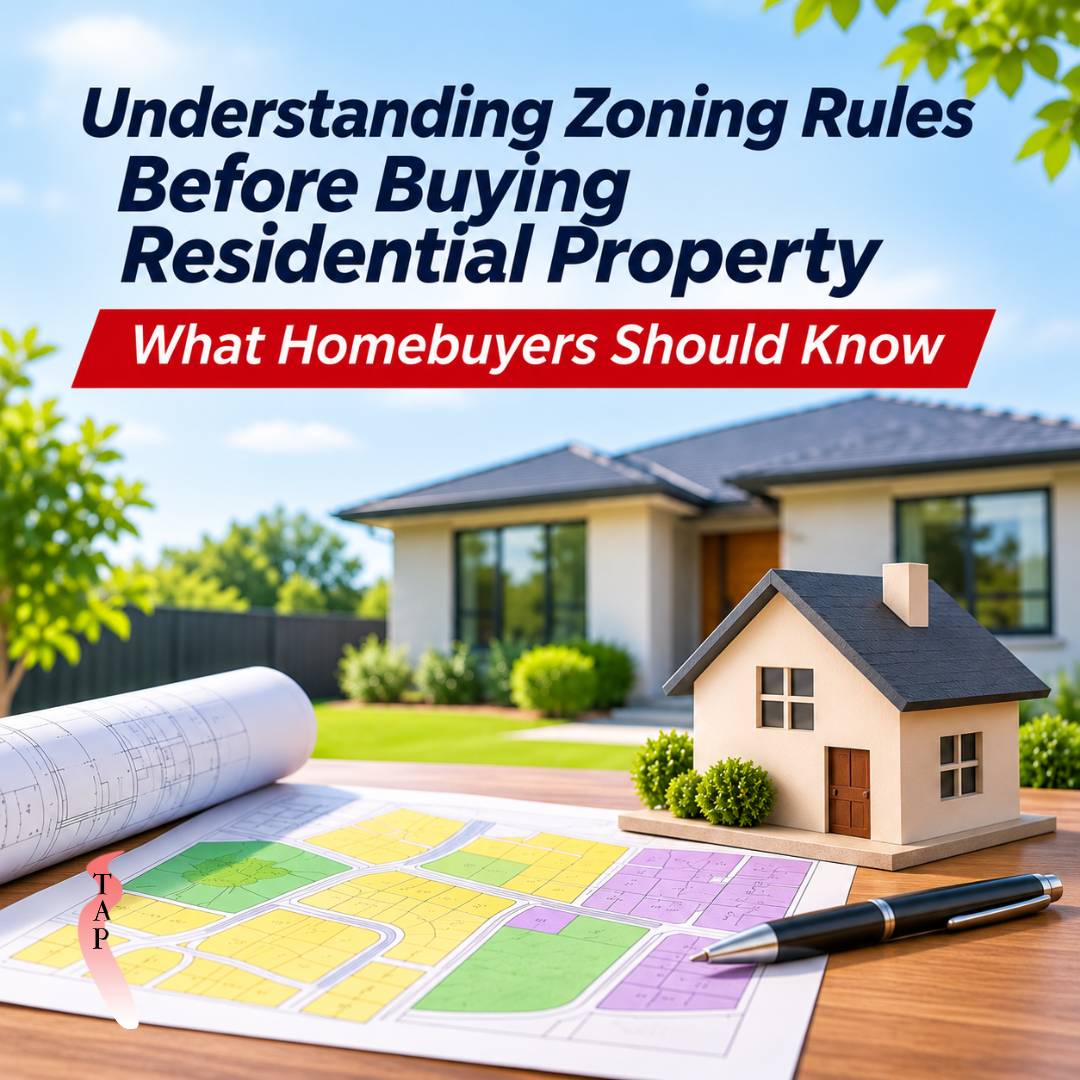
Buying a home involves more than evaluating its location, price, and physical condition. Local regulations can also influence how a property may be used, modified, or developed in the future. One important consideration is residential zoning, which establishes rules for land use and certain types of construction.
Understanding zoning rules before buying residential property can help prospective buyers recognise potential restrictions and determine whether a home suits their current needs and future plans.
Although zoning requirements vary by location, learning the basic concepts can make property research more practical and help buyers identify questions worth investigating before purchasing.
What Is Residential Zoning?
Residential zoning refers to local land-use regulations that determine how properties within designated areas may be used.
Local governments typically establish zoning districts to guide development, manage land use, and address considerations such as building density, infrastructure, and compatibility between neighbouring properties.
A residential zoning district may permit detached houses, townhouses, duplexes, apartments, or other housing types, depending on its classification.
Some districts allow a mixture of residential and limited commercial activities, while others have more restrictive requirements.
Zoning designations are not identical across cities, counties, or states. A classification used in one location may have different rules elsewhere.
For buyers, the important starting point is identifying the property's current zoning designation and understanding what that classification allows.
Understand Permitted Property Uses
Zoning regulations often specify which activities and building types are permitted on a particular property.
For example, one residential district may primarily accommodate single-family homes, while another may allow multiple residential units.
Certain activities may be permitted without additional land-use approval, while others require special permission or may be prohibited.
Buyers should consider whether their intended use of the property aligns with applicable regulations.
Someone planning to use a home exclusively as a primary residence may have different concerns from a buyer interested in creating an additional dwelling or using part of the property for business activities.
It is also important to distinguish zoning rules from other restrictions, such as private community covenants or building requirements.
A use permitted under zoning regulations may still be subject to other applicable limitations.
Review Building Restrictions and Property Layout
Zoning can influence where buildings are positioned and how much of a property may be developed.
Common restrictions may involve:
- Setbacks: Minimum distances between structures and property boundaries.
- Building height: Limits on the permitted height of buildings.
- Lot coverage: Restrictions on how much land may be occupied by structures.
- Building density: Rules affecting the number of residential units permitted.
- Parking requirements: Standards for vehicle parking or access.
- Accessory structures: Conditions for garages, sheds, and other secondary buildings.
These requirements can affect the practical use of outdoor space.
For example, a large backyard does not necessarily mean there is sufficient permitted space for a substantial extension.
Buyers should review relevant regulations before assuming that the property's available land can accommodate future construction.
Consider Future Home Improvements
Many homeowners eventually consider renovating, extending, or modifying their properties.
Potential improvements may include adding a bedroom, building a garage, converting an existing structure, or creating additional living space.
Some projects may be allowed under existing zoning rules, while others could require planning approval, building permits, or compliance with additional standards.
The size, location, and intended purpose of the improvement can influence which requirements apply.
For example, converting a garage into a living area may raise questions about parking, building safety, and permitted residential use.
Similarly, constructing a separate backyard dwelling may be subject to rules concerning lot size, access, utilities, and occupancy.
Buyers considering future improvements should investigate feasibility before relying on those plans when evaluating a property.
Understand Rules for Home-Based Businesses
Working from home has become a common consideration for many households.
However, operating a business from a residential property may involve different zoning requirements from simply working remotely.
Some residential areas permit certain home-based businesses, particularly when activities have limited effects on neighbouring properties.
Restrictions may address customer visits, employee numbers, signage, deliveries, parking, noise, or the amount of space used for business activities.
For example, someone performing computer-based work from a home office may face different requirements from a person operating a business that regularly receives customers.
The rules depend on the nature of the activity and the property's location.
Buyers planning to operate a business should confirm whether their intended activities are permitted and whether additional approvals may be required.
Check Restrictions on Additional Living Units
Some buyers are interested in properties that could accommodate additional residential space.
Examples include basement apartments, converted garages, or accessory dwelling units, sometimes called ADUs.
These arrangements may provide flexibility for extended family members or other household needs.
However, zoning regulations can affect whether additional units are permitted.
Relevant considerations may include minimum lot dimensions, building separation, parking, utility connections, and limits on the number of dwellings.
Existing additional units also deserve attention.
A finished basement or detached structure does not automatically mean that it has been approved for use as a separate residence.
Buyers should review available permits and official property records to understand the status of existing structures.
Research Possible Zoning Changes and Nearby Development
Zoning regulations can change as communities develop and local planning priorities evolve.
Local governments may update zoning maps, revise permitted uses, or introduce new development standards.
These changes can influence how nearby land may be used in the future.
For example, an undeveloped parcel near a residential property may eventually accommodate housing or another use permitted under its zoning designation.
Buyers can review available zoning maps, land-use plans, and public planning information to better understand the surrounding area.
However, zoning classifications do not guarantee that a particular development will occur or that neighbourhood conditions will remain unchanged.
Proposed changes may also be revised, delayed, or rejected.
The purpose of this research is to understand potential possibilities rather than predict future development.
Know the Limitations of Existing Property Uses
A property's current appearance or use does not necessarily establish that every feature complies with present zoning rules.
Some buildings were constructed before current regulations took effect and may qualify as lawful nonconforming uses or structures.
These properties may be permitted to continue under certain conditions, but restrictions can apply to expansion, reconstruction, or changes in use.
Other properties may contain improvements that lack required approvals.
Buyers should avoid assuming that an existing structure can automatically be expanded or rebuilt in the same form.
Understanding the property's documented status can help identify questions requiring clarification.
How to Research Zoning Before Buying
Buyers can begin by identifying the property's official address and parcel information.
Local government planning departments often provide zoning maps, land-use regulations, and information about permitted activities.
A practical research process includes:
- Identify the zoning designation. Confirm the property's current classification through official records.
- Review permitted uses. Understand which residential and other activities are allowed.
- Check building restrictions. Investigate setbacks, height limits, lot coverage, and related requirements.
- Consider future plans. Determine whether intended renovations or additional structures may require approval.
- Review surrounding land use. Examine nearby zoning classifications and available development information.
- Clarify uncertainties. Contact the relevant planning authority or an appropriately qualified professional when requirements are unclear.
Because regulations differ between jurisdictions, official local information is particularly important.
Making an Informed Property Decision
Residential zoning can influence how a home is used, modified, and developed over time.
A property may meet a household's immediate needs while having restrictions that affect future extensions, additional living units, or home-based business activities.
Understanding permitted uses, building limitations, and nearby land-use classifications can help buyers assess these considerations before purchasing.
By reviewing official zoning information and recognising that regulations may change, prospective homeowners can develop a clearer understanding of the property's practical limitations and possibilities.
This article is for general educational purposes only and does not constitute legal, financial, or property development advice. Zoning regulations vary by jurisdiction and should be verified with the appropriate local authority.