Costs Of Owning A Home With A Pool
What to Consider Before Buying a Home With a Swimming Pool
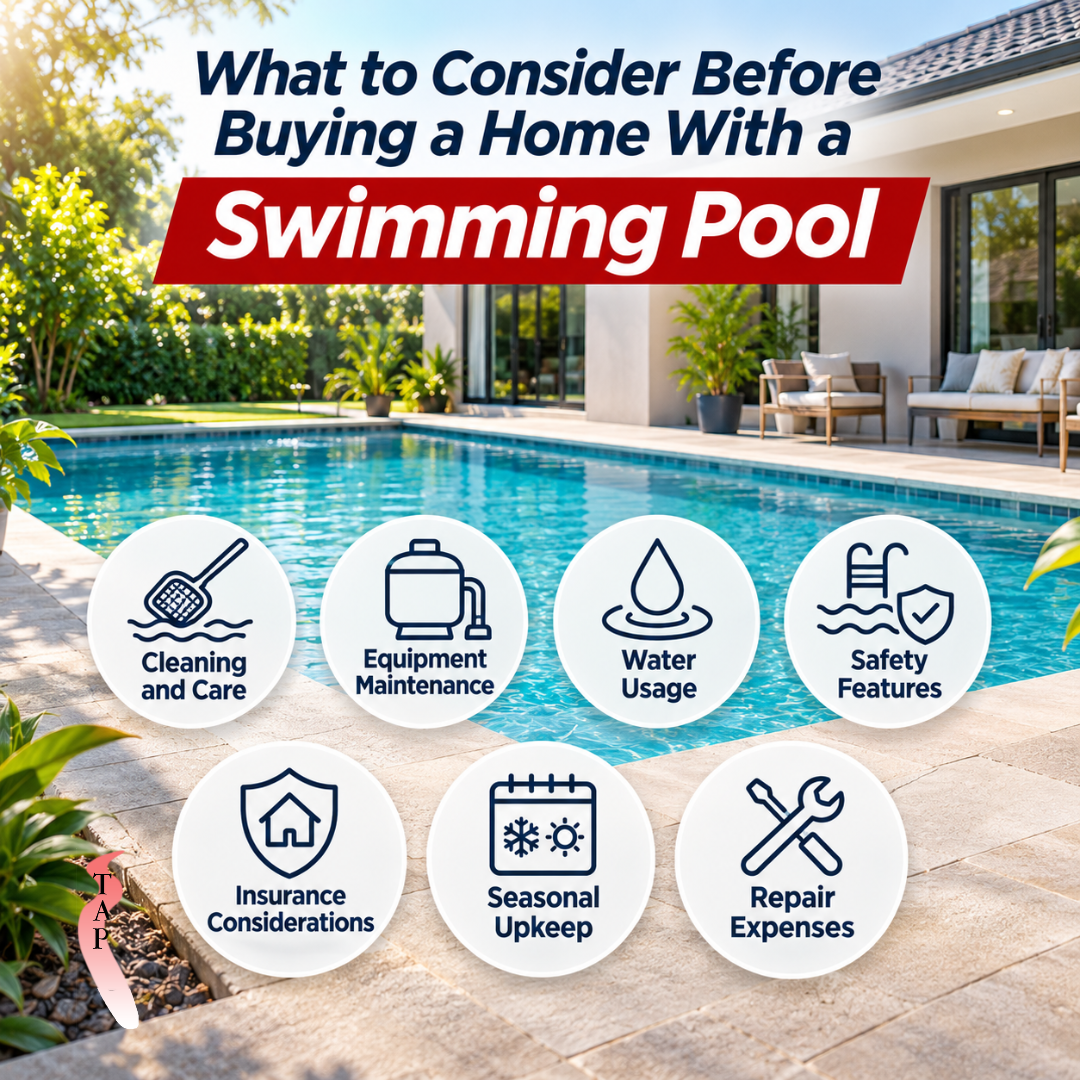
A swimming pool can be an appealing feature for homebuyers who enjoy outdoor recreation, exercise, or spending time with family and friends. However, pool ownership involves more than having a convenient place to swim. Regular cleaning, equipment maintenance, water consumption, safety requirements, and potential repairs can all influence the responsibilities and expenses associated with a property.
For prospective buyers, understanding what to consider before buying a home with a swimming pool can help determine whether this feature suits their lifestyle, available time, and household budget.
Understand the Type and Condition of the Pool
Swimming pools come in different designs, materials, and construction types. Common examples include in-ground concrete, fiberglass, and vinyl-lined pools, as well as above-ground structures.
Each type has different maintenance requirements and potential repair considerations.
Concrete pools may require periodic surface maintenance, while vinyl liners can become damaged or eventually need replacement. Fiberglass pools have different surface characteristics and maintenance needs.
During a property viewing, examine the pool's visible condition. Look for cracks, damaged tiles, peeling surfaces, staining, or unusual water levels.
Buyers should also ask about the pool's age, installation history, and previous repairs. A visually attractive pool may still have equipment or structural concerns that are not immediately noticeable.
Consider Regular Pool Cleaning Requirements
Keeping a swimming pool clean requires consistent attention throughout the year.
Routine tasks generally include removing leaves and debris, brushing surfaces, vacuuming, cleaning filters, and monitoring water chemistry.
The amount of maintenance depends on factors such as pool size, surrounding vegetation, climate, and frequency of use.
For example, a pool located beneath large trees may collect more leaves and organic material than one surrounded by open paving.
Buyers should consider whether they have the time and knowledge to manage routine cleaning or would prefer to arrange professional pool maintenance.
Both approaches involve responsibilities, whether through personal effort, equipment purchases, or recurring service expenses.
Evaluate Pool Equipment and Maintenance History
Swimming pools depend on mechanical equipment to circulate, filter, and sometimes heat the water.
Common components include pumps, filters, skimmers, chlorination systems, heaters, and automated cleaning equipment.
During a viewing, buyers should ask whether the equipment operates properly and when it was last serviced.
Potential concerns include unusual pump noises, visible leaks, damaged pipes, corrosion, and poorly maintained filtration equipment.
Older components may continue functioning adequately, but they can also require repairs or replacement as they age.
Reviewing service records, warranties, and equipment manuals can provide useful information about maintenance history and future responsibilities.
A specialist pool inspection may be appropriate when the equipment's condition is uncertain.
Understand Water Usage and Utility Expenses
Swimming pools require water for initial filling, evaporation replacement, cleaning, and certain maintenance activities.
Water consumption varies depending on pool size, climate, exposure to sunlight, wind conditions, and whether a suitable cover is used.
Pools in hot or dry regions may experience greater evaporation, while certain filtration systems require water during cleaning.
Electricity consumption is another consideration. Pumps, heaters, lighting, and automated equipment can contribute to household energy expenses.
Buyers can request available utility records to better understand historical consumption, although previous usage patterns may differ from their own.
Pool covers and appropriately maintained equipment may help manage some operating requirements, but actual expenses depend on the property and how the pool is used.
Check Pool Safety Features
Safety should be a priority when evaluating any property with a swimming pool.
Depending on local regulations, pools may require barriers, self-closing gates, compliant fencing, alarms, or other protective features.
During a viewing, inspect the condition of fences, gates, pool covers, ladders, and surrounding surfaces.
Look for damaged barriers, gates that do not latch properly, slippery paving, or areas where access to the pool is insufficiently controlled.
Households with children or frequent visitors may have additional safety considerations.
Buyers should verify applicable local pool safety requirements rather than assuming existing installations meet current standards.
Even when safety features are installed, supervision and responsible pool use remain essential.
Review Insurance Considerations
A swimming pool can affect homeowners insurance because it introduces additional property and liability considerations.
Insurance providers may consider the pool's type, condition, safety features, and other characteristics when assessing coverage.
Some policies may have specific requirements, exclusions, or limitations relating to pools and associated equipment.
Buyers should investigate whether the existing pool affects available coverage, premiums, or liability protection.
It is also important to understand whether damage to the pool itself, surrounding structures, or mechanical equipment is covered under a particular policy.
Insurance terms vary, so buyers should review the details applicable to the property rather than relying on general assumptions.
Plan for Seasonal Pool Maintenance
Pool maintenance needs can change throughout the year.
In warmer climates, pools may remain in use for extended periods, requiring consistent cleaning and water treatment.
In colder regions, seasonal preparation may involve lowering water levels where appropriate, protecting equipment, and preparing plumbing for freezing conditions.
Reopening a pool after winter can also involve cleaning, equipment checks, and water treatment.
Storms, heavy rainfall, and falling leaves may create additional maintenance requirements.
Buyers should consider the local climate and how seasonal conditions could influence the time and expense involved in keeping the pool operational.
Consider Potential Repair and Replacement Expenses
Beyond routine maintenance, swimming pools may eventually require significant repairs.
Possible expenses include replacing pumps, filters, heaters, liners, damaged tiles, or worn pool surfaces.
Underground plumbing leaks, structural cracks, and drainage problems can be more complicated to investigate and repair.
The cost of these improvements depends on the pool's construction, accessibility, condition, and local service availability.
Buyers should avoid assuming that a recently renovated pool is free from underlying problems.
Where possible, review repair documentation and arrange a professional pool inspection to identify visible defects and equipment concerns.
Understanding the potential scope of future work can support more realistic household expense planning.
Evaluate How the Pool Fits Your Lifestyle
A swimming pool may offer recreational benefits, but it also occupies outdoor space that could otherwise serve different purposes.
Consider whether the pool's size, depth, location, and accessibility suit the household's needs.
A large pool may provide more swimming space but also require additional cleaning, water, and maintenance.
Buyers should also assess the surrounding deck, landscaping, privacy, outdoor lighting, and available space for other activities.
For households that rarely swim, the ongoing responsibilities may outweigh the practical benefits.
The most suitable choice depends on personal preferences, available resources, and intended use.
Making an Informed Decision About a Home With a Pool
Buying a home with a swimming pool involves balancing lifestyle benefits with ongoing ownership responsibilities.
Cleaning, equipment servicing, water consumption, insurance, seasonal maintenance, safety requirements, and potential repairs can all affect the experience of owning the property.
Before purchasing, buyers should examine the pool's condition, review available maintenance records, investigate local safety requirements, and consider whether professional inspection is necessary.
By assessing both the pool and the wider property, buyers can better understand whether this feature supports their household's needs and long-term expectations.
This article is for general educational purposes only and is not a substitute for professional pool inspection, insurance, legal, or financial advice.