Employment Discrimination Enforcement
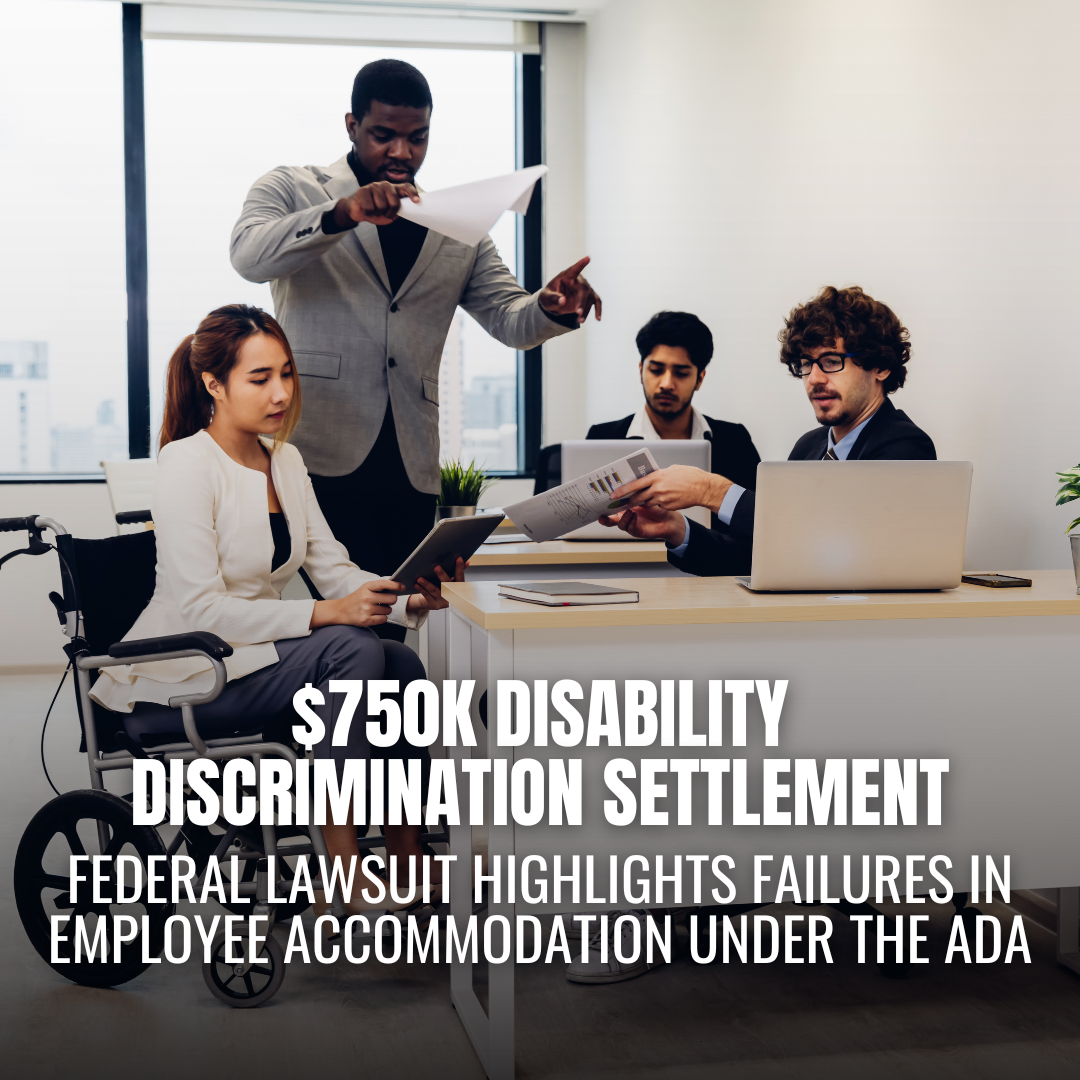
1st Franklin Financial to Pay $750,000 to Resolve Federal Disability Discrimination Lawsuit
Background
1st Franklin Financial Corporation operates hundreds of consumer lending branches across the Southeastern United States. Beginning in 2022, the company faced allegations that it failed to properly address disability accommodation requests from employees, leading to a federal enforcement action. The case highlights ongoing compliance expectations under federal disability discrimination laws, particularly around reasonable accommodations and medical leave.
Incident Details
According to the federal lawsuit, 1st Franklin Financial repeatedly denied reasonable accommodation requests from employees with disabilities. The allegations state that the company did not offer alternative accommodations, even when employees requested medical leave as a temporary adjustment to continue their employment.
One affected employee, a customer service representative with multiple serious medical conditions, experienced heart attacks that required hospitalization. He requested a short leave of absence while recovering and awaiting medical clearance for discharge. The lawsuit alleges that the company denied this request and terminated his employment instead. The EEOC contended that this conduct was part of a broader pattern affecting multiple employees with disabilities.
Legal Background
The case was brought under the Americans with Disabilities Act (ADA), which requires employers to provide reasonable accommodations to qualified employees with disabilities unless doing so would cause undue hardship. The ADA also prohibits terminating employees because of a disability or because they requested an accommodation, including medical leave. Before filing suit, the EEOC attempted to resolve the matter through its conciliation process, which did not result in a settlement at that stage.
Settlement and Relief
To resolve the lawsuit, 1st Franklin Financial agreed to a three-year consent decree that includes both monetary and non-monetary relief. The company will pay a total of $750,000, including $250,000 to the former customer service representative and $500,000 to a class fund for other affected employees.
In addition to financial compensation, the settlement requires the company to revise its employment and accommodation policies, provide specialized training to managers, supervisors, and human resources personnel handling disability accommodation requests, and post workplace notices informing employees of their rights. The company must also submit periodic reports to the EEOC detailing accommodation requests and how they are addressed.
Key Takeaways
- Medical leave can qualify as a reasonable accommodation under federal disability law when it does not impose undue hardship on the employer.
- Denying accommodation requests without considering alternatives may expose employers to significant legal and financial risk.
- Policy updates, manager training, and consistent documentation are critical components of ADA compliance.
Conclusion
The resolution of this case underscores the importance of properly handling disability accommodation requests and engaging in an interactive process with employees. Employers operating across multiple locations should ensure that managers and HR teams are aligned with ADA requirements to prevent similar disputes. The settlement serves as a reminder that failure to accommodate disabilities can result in substantial monetary penalties and long-term compliance obligations.