Worker Tax Savings
Alabama’s 2025 Income Tax Exemption on Overtime Pay: A Game-Changer for Workers and Employers
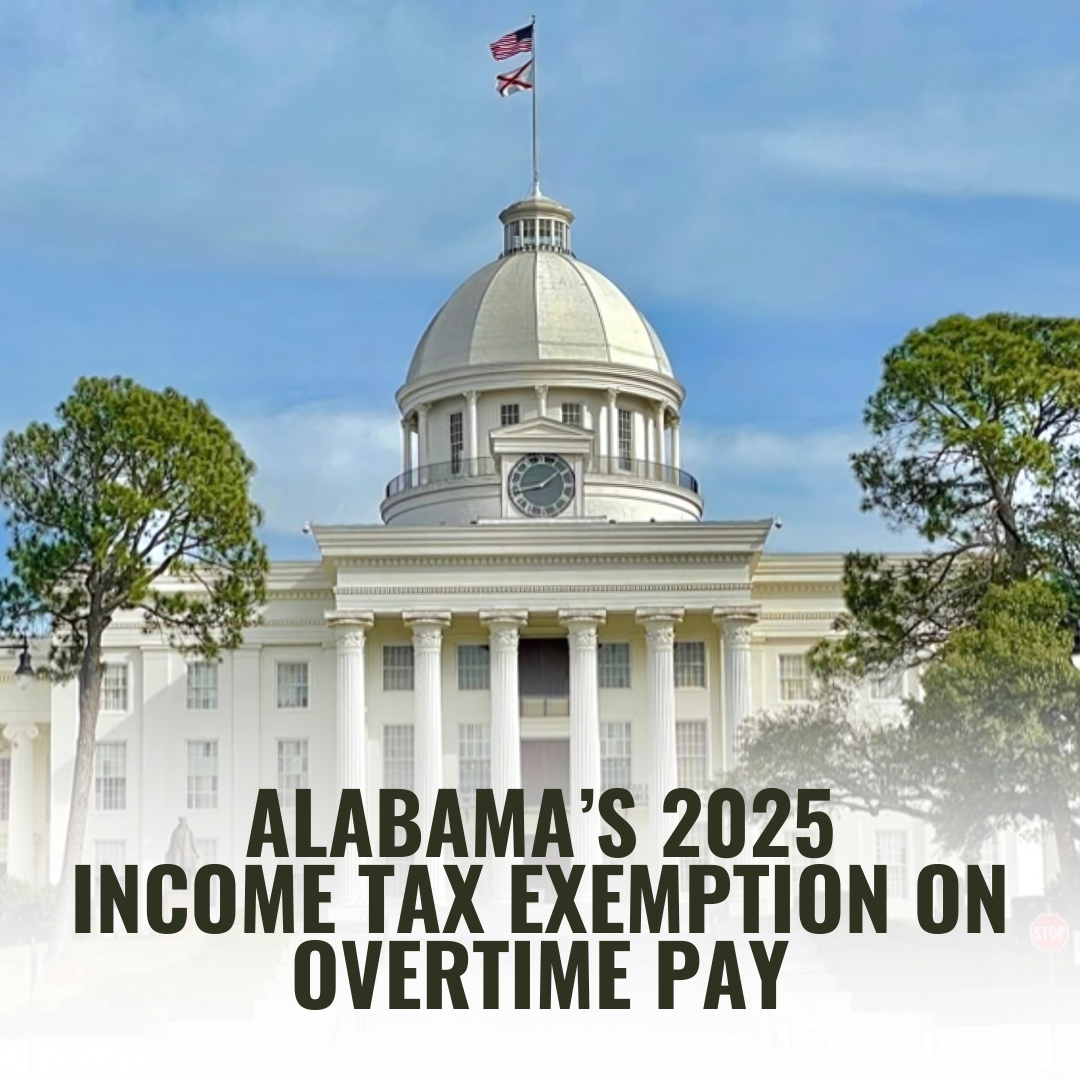
Alabama’s groundbreaking labor law that exempts overtime pay from state income tax has been making waves since its enactment on January 1, 2024. Championed by House Minority Leader Anthony Daniels and supported by a bipartisan group of legislators, House Bill 217 was designed to provide financial relief to full-time hourly workers and help alleviate the state's severe labor shortage. As the exemption continues through June 30, 2025, its impact on workers, businesses, and the state economy is becoming increasingly evident.
Boosting Take-Home Pay for Alabama’s Workforce
One of the most immediate benefits of this law is the increased take-home pay for employees working beyond the standard 40-hour workweek. Under the federal Fair Labor Standards Act (FLSA), Alabama’s minimum wage remains at $7.25 per hour, with overtime pay set at a minimum of $10.87 per hour. By exempting this overtime income from state taxation, Alabama workers are seeing a significant rise in their earnings.
- Rep. Daniels estimated that an employee making $15 per hour and working five overtime hours per week would see an extra $111 in their bi-weekly paycheck.
- Over a year, that amounts to nearly $2,900 in additional income—an impactful boost that provides workers with more financial security and spending power.
- In just the first nine months of the exemption, Alabamians collectively took home over $230 million more than they would have before the law’s implementation.
Addressing Alabama’s Labor Shortage
The economic benefits of this law extend beyond individual workers. Alabama is grappling with one of the most severe labor shortages in the nation, with only 38 available workers for every 100 job openings, as reported by the U.S. Chamber of Commerce. The state also struggles with a low labor participation rate, which stood at 57.7% as of November 2024—among the lowest in the U.S.
Encouraging workers to re-enter the workforce or take on additional hours is critical to filling the gap. The income tax exemption on overtime serves as a direct financial incentive, and its effects are already noticeable:
- Since the law took effect, Alabama’s labor participation rate has increased by 0.5 percentage points.
- The law provides motivation for those who have left the workforce to return.
- Employers benefit from greater workforce availability without needing to offer unsustainable wage increases.
A Win-Win for Employers and the Economy
Employers are also benefiting from the law. With labor shortages straining businesses across industries, companies are struggling to find and retain employees willing to work overtime. By making overtime pay more attractive, businesses have a better chance of filling shifts without significantly increasing labor costs.
Moreover, while some may argue that exempting overtime from taxation could result in lost revenue for the state, the policy has potential long-term economic advantages:
- As workers take home more income, they are likely to spend more, boosting sales tax revenue.
- Increased consumer spending can help offset any potential shortfalls in state tax collections.
- The exemption enhances Alabama’s ability to compete with neighboring states for talent.
Leveling the Playing Field with Other States
Alabama is the only state in the U.S. to repeal the income tax on overtime pay, setting it apart as a leader in worker-friendly tax policies. However, the state still faces stiff competition from neighboring states like Florida, Tennessee, and Texas, which do not impose any state income tax at all. Reducing the tax burden on workers is a step toward making Alabama a more attractive destination for both new residents and businesses.
The Push to Make the Exemption Permanent
With the exemption set to expire in mid-2025, there is growing momentum for lawmakers to make it permanent. The Alabama Policy Institute (API) and other advocates argue that maintaining this tax relief is essential for sustaining the state’s workforce and economic growth. Given the early positive impacts, the Alabama Legislature has a strong case for extending or permanently enshrining the tax break in the upcoming 2025 session.
Conclusion
Alabama’s income tax exemption on overtime pay is proving to be a significant policy shift that benefits workers, employers, and the state economy. By allowing employees to keep more of their hard-earned money and encouraging workforce participation, this law has the potential to be a lasting solution to some of Alabama’s most pressing economic challenges. As the 2025 legislative session approaches, making this tax exemption permanent should be a top priority for policymakers looking to secure Alabama’s economic future.