Legal Rights For Employees Alaska
Alaska’s AS 23.10.490: Protecting Employees from Forced Political and Religious Speech in the Workplace
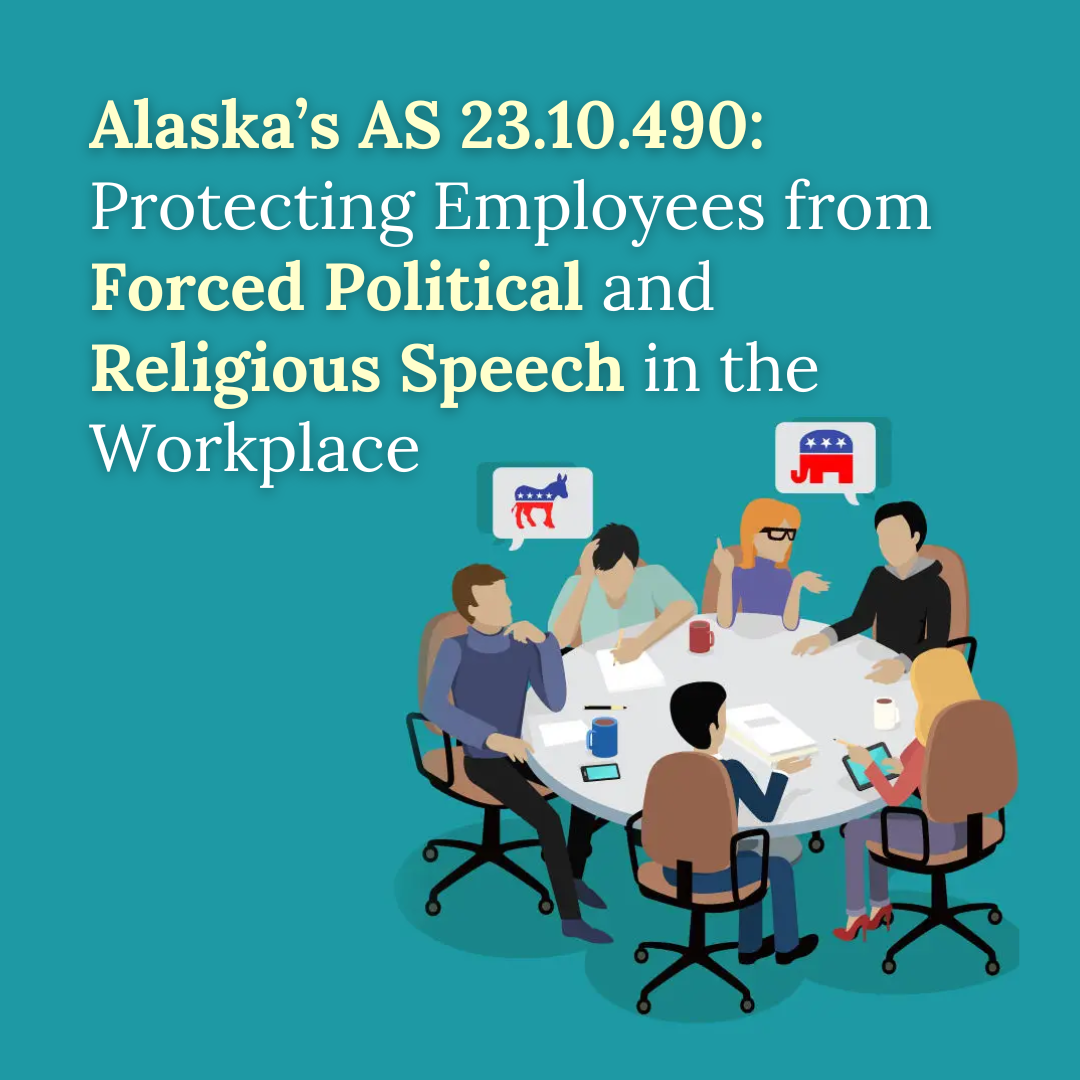
Alaska’s new law, AS 23.10.490, represents a significant step forward in protecting workplace rights. This law prevents employers from forcing employees to attend meetings or listen to communications that primarily convey the employer’s religious or political opinions. By prohibiting any adverse employment actions against employees who choose to opt out, the law ensures that workers are not subjected to ideological discussions as a condition of their employment.
Importance of the Law
Workplaces should be environments focused on professional responsibilities rather than ideological conformity. However, it is not uncommon for employers to use their positions to promote personal or organizational agendas. In some cases, employees may feel pressured to attend meetings where political candidates are endorsed or religious beliefs are discussed. Even without direct coercion, there is often an unspoken fear that refusal to participate could be viewed negatively. This law addresses such concerns by explicitly granting employees the right to decline without repercussions.
Key Provisions
- Employees Cannot Be Forced Into Political or Religious Meetings – Employers cannot require attendance at meetings primarily intended to express political or religious views.
- Retaliation Is Prohibited – Employers who take adverse action against employees for opting out could be held liable for lost wages.
- Essential Communication Is Still Allowed – Employers retain the right to communicate legally required information, job-related matters, or other workplace-relevant details.
- Certain Exceptions Apply – Religious organizations remain exempt, meaning they can require employees to participate in faith-based communications. Similarly, higher education institutions can mandate discussions as part of academic coursework.
Broader Implications
This law aligns with broader efforts to maintain clear boundaries between work and personal beliefs. Employees should be able to perform their duties without concern that their job security hinges on ideological alignment with their employer. For instance, if a company executive promotes a controversial political stance during mandatory meetings, employees may feel pressured to conform. Likewise, in workplaces where religious discussions are frequent, employees may find it difficult to opt out without fear of professional consequences. AS 23.10.490 ensures that they have the legal right to do so.
From an employer’s perspective, this legislation reinforces the importance of keeping workplace discussions professional. While employers retain the right to personal beliefs, they cannot impose them in a way that affects employees’ livelihoods. At the same time, the law reassures businesses that essential operational communications remain unaffected.
A Step Toward Workplace Neutrality
With today’s workforce becoming increasingly diverse, laws such as AS 23.10.490 promote a more inclusive and respectful work environment. Employees should not have to choose between their job security and their personal beliefs. This law establishes that professional spaces should prioritize work-related discussions over ideological persuasion.
As the law takes effect in July 1, 2025, its impact on workplace culture will be closely watched. It may lead employers to reconsider how they communicate personal beliefs and empower employees to assert their rights more confidently. Regardless of how it unfolds, the law represents a move toward ensuring that workplaces remain focused on professionalism rather than ideological influence.