Involuntary Leave Disability Case
American Airlines Sued for Disability Discrimination Over Blind Employee’s Termination
Background
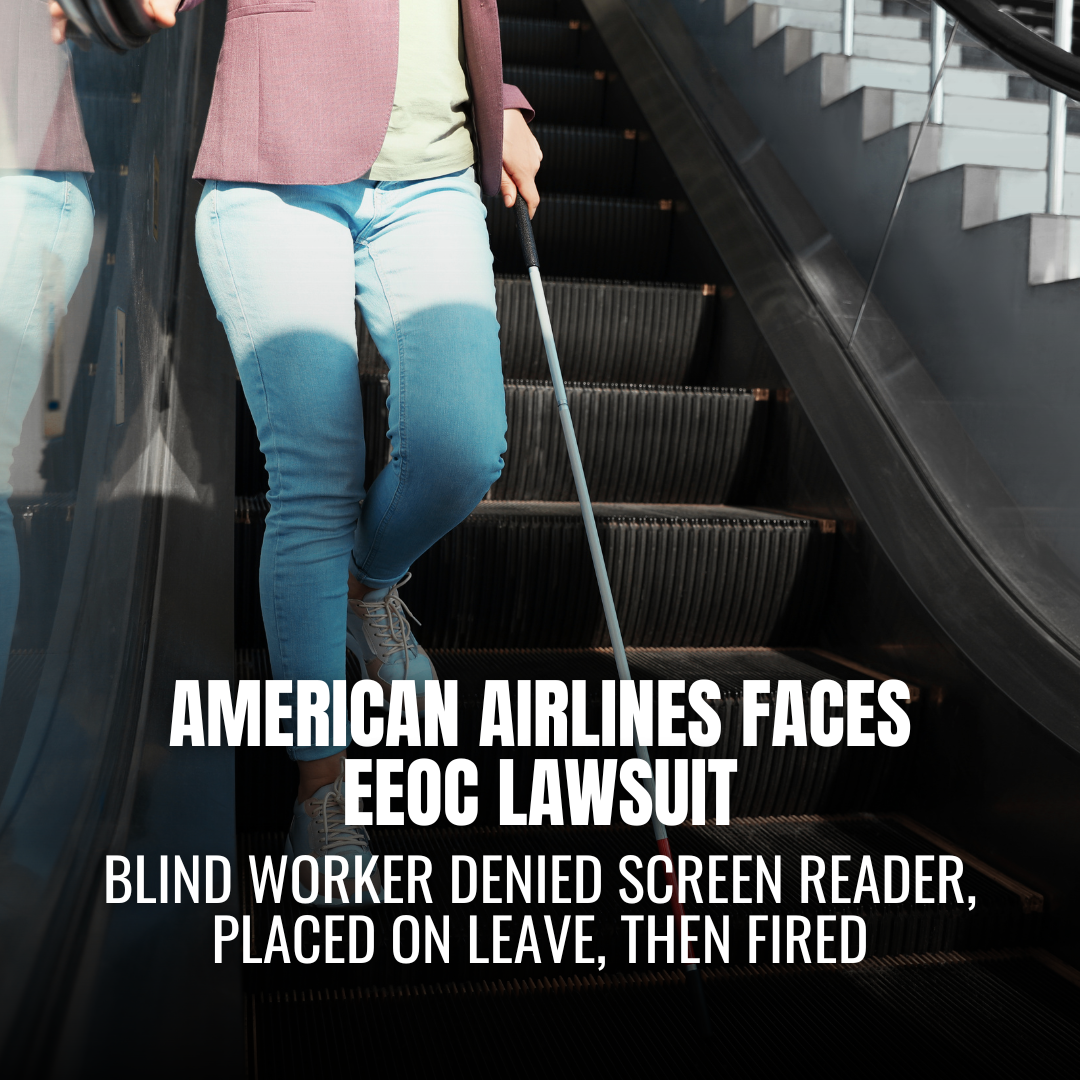
The U.S. Equal Employment Opportunity Commission (EEOC) has filed a lawsuit against American Airlines, Inc., alleging the company violated federal disability law. The case centers on the treatment of a blind reservations representative who requested reasonable accommodations to continue her work but was ultimately terminated.
Incident Details
According to the complaint, the employee developed cortical blindness during her employment and requested the use of screen reader software to perform her duties. Screen reader software converts on-screen text into synthesized speech, enabling visually impaired workers to access digital systems. As an alternative, she also sought reassignment to another position that could accommodate her condition.
Instead of providing the requested accommodation or reassigning her, American Airlines placed the employee on unpaid, involuntary leave for nearly four years. The company later terminated her employment, effectively denying her the opportunity to return to work despite available solutions.
Legal Background
The alleged conduct falls under the protections of the Americans with Disabilities Act (ADA). The ADA requires employers to provide reasonable accommodations to qualified employees with disabilities unless doing so would cause undue hardship. Employers are also prohibited from terminating workers because of their disabilities, including instances where the employer fails to provide necessary accommodations that would allow the employee to continue working.
Settlement and Relief
As of now, the case remains active in the U.S. District Court for the Northern District of Texas, Fort Worth Division (Case No. 4:25-cv-01056-P). The EEOC is seeking monetary compensation for the affected employee, policy changes within American Airlines, and measures to ensure compliance with the ADA. These may include workplace training, reporting obligations, and steps to ensure that similar violations do not occur in the future.
Key Takeaways
- Failure to Accommodate – Employers must provide effective tools, such as screen reader software, to enable employees with disabilities to perform essential job functions.
- Unlawful Termination – Keeping an employee on involuntary leave and then terminating them without engaging in the accommodation process may constitute ADA violations.
- Employer Obligations – Companies are required to engage in an interactive process with employees to identify reasonable accommodations rather than delaying or avoiding compliance.
Conclusion
The lawsuit against American Airlines highlights the importance of proactive compliance with disability accommodation laws. Employers must recognize that assistive technologies and reasonable adjustments are not optional but required by law. This case underscores the risks organizations face when they fail to provide accommodations, from significant legal consequences to reputational harm.