HR Compliance Solutions
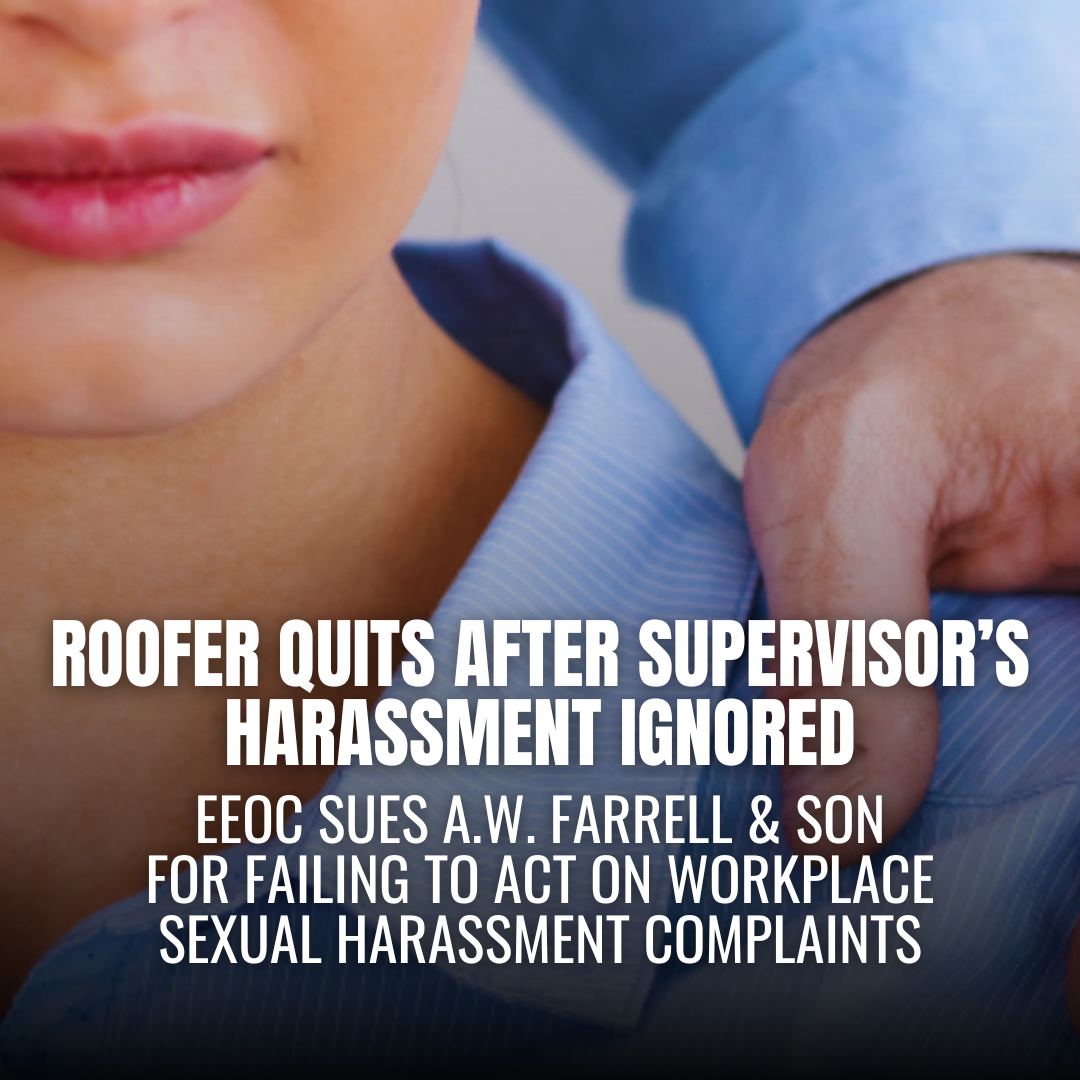
EEOC Sues Roofing Contractor for Ignoring Sexual Harassment Complaints That Led to Employee’s Resignation
Background
A.W. Farrell & Son, Inc., a commercial roofing company with operations in New York and Pennsylvania, is facing a federal lawsuit filed by the U.S. Equal Employment Opportunity Commission (EEOC). The case centers on allegations that the company failed to protect one of its journeyman roofers from ongoing sexual harassment by a supervisor—behavior that ultimately forced the employee to resign.
Incident Details
According to court filings, the roofer endured months of unwelcome and inappropriate behavior from his supervisor. The harassment allegedly included verbal comments and repeated incidents of physical contact, one of which was so severe that the employee required medical attention.
When the roofer reported the harassment to management, the company failed to take meaningful corrective action. Instead, the roofer was told to give his supervisor “another chance.” Feeling unsafe and unsupported, the employee decided to resign, concluding that the company had no intention of addressing the misconduct or preventing it from recurring.
Legal Background
This case was brought under Title VII of the Civil Rights Act of 1964, a federal law that prohibits workplace discrimination based on sex, including sexual harassment. Title VII also makes it unlawful for an employer to retaliate against an employee who reports or opposes harassment.
Under this law, an employer can be held liable if it fails to take prompt and appropriate action to stop harassment once it becomes aware of it. When the conditions of employment become intolerable as a result of inaction, and an employee is compelled to resign, it can amount to what is legally defined as a “constructive discharge.”
Settlement and Relief
The EEOC filed the lawsuit (EEOC v. A.W. Farrell & Son, Inc., et al., Case No. 25-cv-00953) in the U.S. District Court for the Western District of New York after pre-litigation settlement efforts were unsuccessful. The agency seeks monetary compensation for the affected worker, as well as injunctive relief requiring the company to implement new policies, training, and accountability measures to prevent future instances of sexual harassment and retaliation.
Key Takeaways
- Employers must act promptly when harassment is reported—inaction can result in liability even if the employee resigns.
- Constructive discharge occurs when an employee is forced to quit because the workplace becomes intolerable due to unaddressed misconduct.
- Strong anti-harassment training and policies are critical to preventing violations and fostering a safe, compliant work environment.
Conclusion
The EEOC’s lawsuit against A.W. Farrell & Son underscores the legal and reputational risks employers face when they fail to address sexual harassment complaints. Beyond potential financial penalties, companies risk damaging employee trust and workplace morale when reports are ignored. This case serves as a clear reminder that employers must uphold their duty to investigate, act, and protect employees from all forms of harassment.
Recommendation: Strengthen Prevention with TAP Series Training
Preventing workplace harassment starts with education and accountability. TAP Series, a leader in online compliance training, offers comprehensive Sexual Harassment Prevention Training designed to help businesses meet legal obligations and build safer workplaces.
We understand that employers and HR teams are busy, which is why TAP Series delivers flexible, accessible, and effective training solutions that simplify compliance. Partnering with TAP Series ensures your organization not only meets federal and state requirements but also fosters a respectful and inclusive workplace culture.