TAP Series Compliance Training
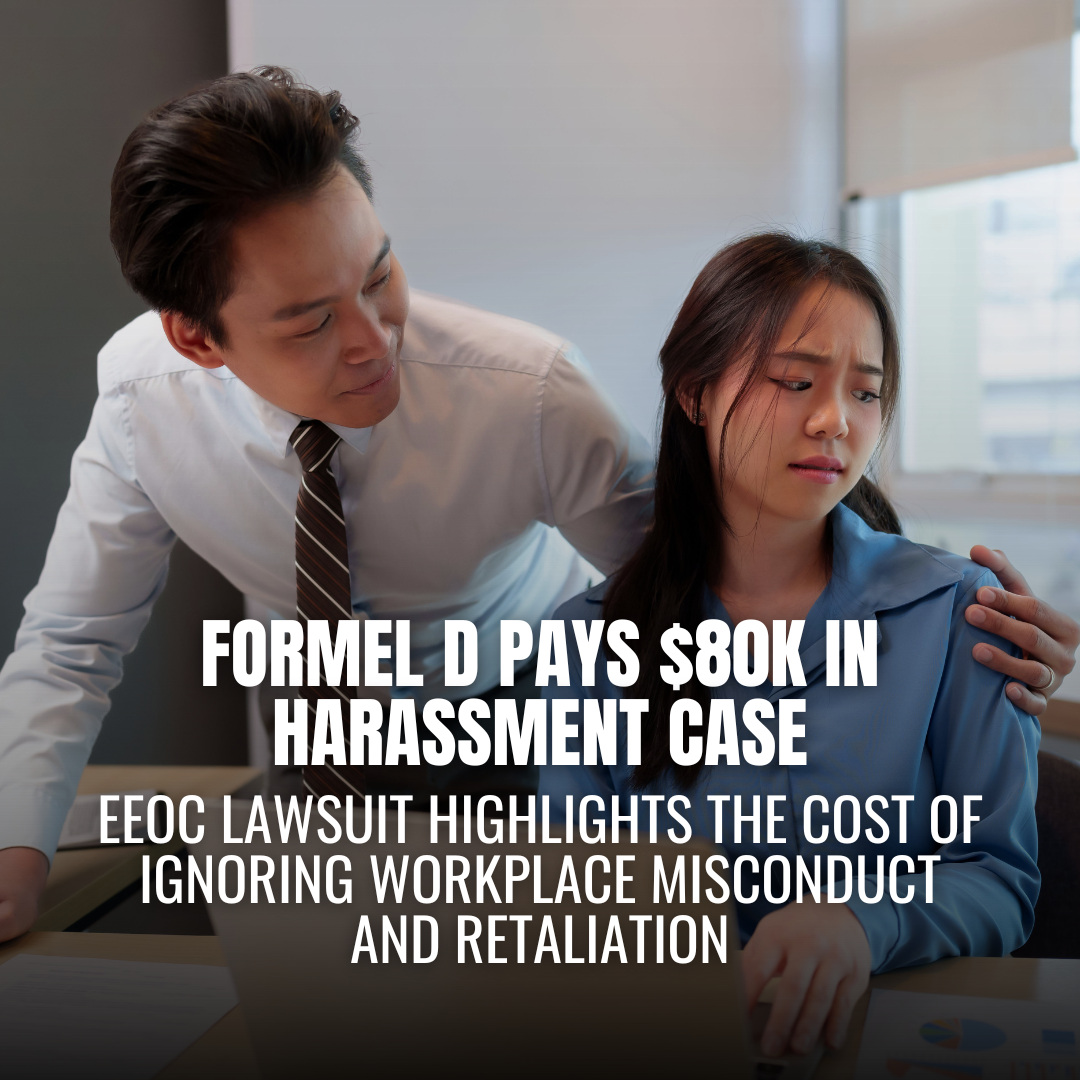
Formel D USA to Pay $80,000 After Firing Employee Who Reported Sexual Harassment
Background
Formel D USA, Inc., a national automotive quality control company operating in multiple U.S. states, faced a federal lawsuit after a female employee was subjected to repeated sexual harassment and retaliation. The U.S. Equal Employment Opportunity Commission (EEOC) alleged that the company failed to protect the worker despite her complaints, ultimately terminating her employment.
Incident Details
The case stemmed from a series of incidents involving a male supervisor who allegedly engaged in unwelcome behavior toward a newly hired female employee. Reports indicate that the supervisor made persistent sexual advances, hugged and kissed her without consent, and even showed her a sexually explicit video during work hours.
When the employee firmly rejected his advances, the supervisor retaliated by cutting her work hours. The worker escalated her concerns to higher management, but the company took no corrective action. Instead, the harassment continued until she was laid off and later terminated.
Legal Background
The EEOC determined that Formel D USA’s actions violated Title VII of the Civil Rights Act of 1964, which protects employees from sexual harassment and retaliation for opposing workplace discrimination. Title VII mandates that employers must take prompt and effective action to prevent and address harassment once they are aware of it.
The EEOC filed suit in the U.S. District Court for the Eastern District of Michigan (Case No. 23-cv-11479) after attempting to resolve the issue through conciliation.
Settlement and Injunctive Relief
To resolve the lawsuit, Formel D USA agreed to pay $80,000 in monetary relief to the affected employee. The court-approved consent decree also mandates several measures to ensure compliance and prevent future misconduct, including:
- A six-year injunction against discrimination and retaliation.
- Comprehensive sexual harassment and retaliation training for all employees.
- Specialized training for HR staff and investigators handling harassment complaints.
- Revised harassment policies and posting of employee rights notices.
- A 24-hour anonymous third-party complaint hotline for employees.
- EEOC monitoring of the company for six years to ensure compliance.
- A written job reference for the affected employee.
Key Takeaways
- Employer accountability: Companies must respond promptly and appropriately to harassment complaints to avoid legal and reputational damage.
- Protection from retaliation: Firing or penalizing an employee for reporting harassment is a direct violation of federal law.
- Long-term compliance: Consent decrees often include multi-year oversight, ensuring that organizational culture and policy reform take place.
Conclusion
This case underscores the severe consequences employers face when they fail to act on reports of workplace harassment. Formel D USA’s settlement not only compensates the victim but also enforces systemic changes to prevent future violations. It sends a clear message that accountability and preventive measures are essential in maintaining a respectful and lawful work environment.
Recommendation: Prevent Workplace Harassment with TAP Series
Workplace harassment cases like this one show how critical prevention and education are. TAP Series offers Sexual Harassment Training designed to protect both employees and employers by fostering awareness, respect, and compliance with workplace laws.
As a leader in online compliance training, TAP Series simplifies learning for busy professionals with accessible, effective, and up-to-date courses. Partnering with TAP ensures your organization is equipped to prevent harassment, protect employees, and maintain compliance with federal regulations.