Affordable Homeownership
How Much House Can You Really Afford? A Financial Planning Guide
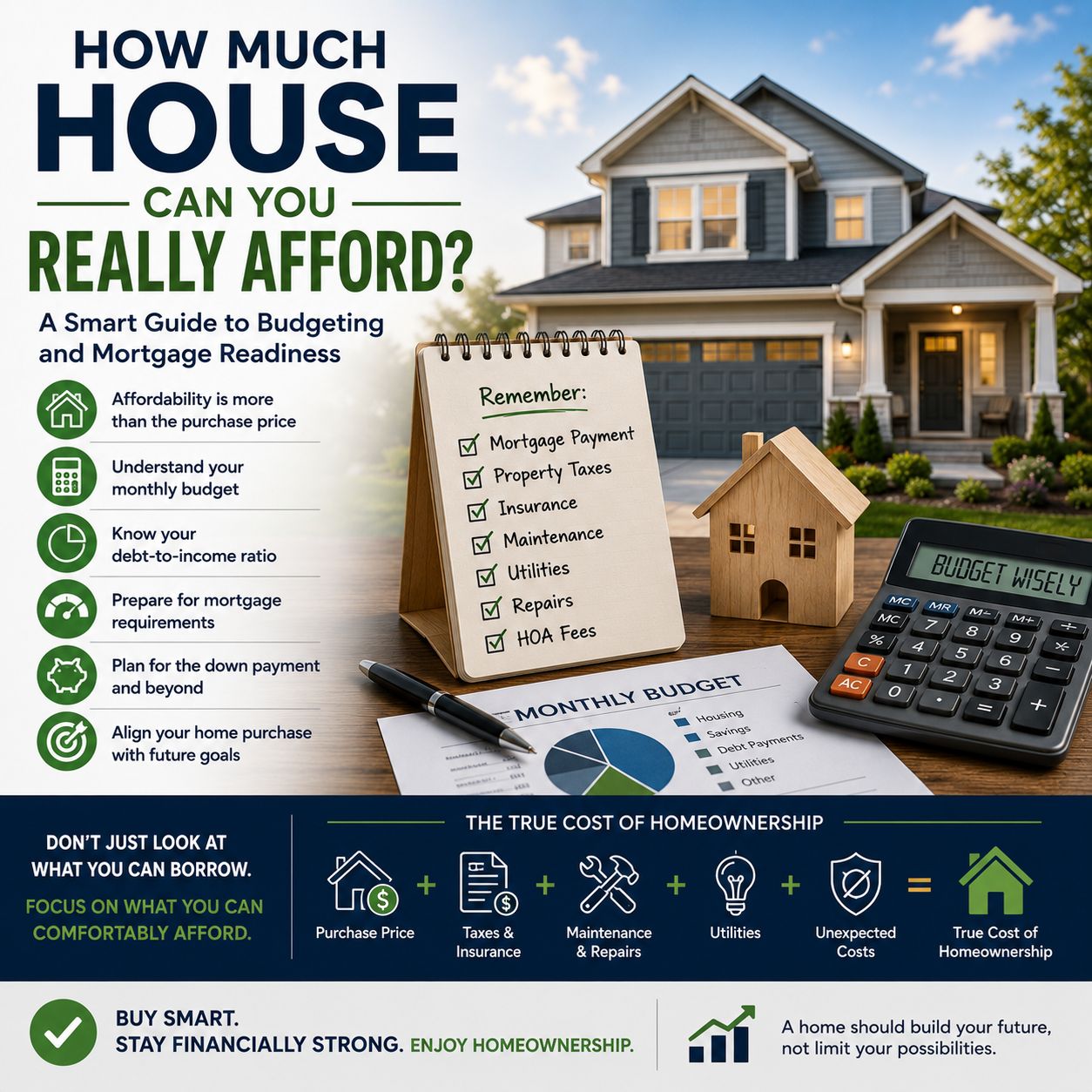
For many aspiring homeowners, one of the first questions that comes to mind is, “How much house can I afford?” While mortgage calculators and lender pre-approvals can provide a quick estimate, the true answer goes far beyond what a bank is willing to lend.
Just because you qualify for a certain loan amount does not necessarily mean you should borrow the maximum available. Buying a home is one of the largest financial commitments most people will ever make, and affordability should be based on long-term financial health rather than borrowing capacity alone.
Understanding your budget, debt obligations, and mortgage readiness can help ensure that homeownership strengthens your financial future instead of creating unnecessary financial stress.
Affordability Is More Than the Purchase Price
Many buyers focus primarily on the price of the home itself. However, the cost of homeownership extends well beyond the monthly mortgage payment.
A realistic affordability assessment should account for expenses such as property taxes, homeowners insurance, maintenance, utilities, and potential repairs. These costs can significantly impact your monthly budget and should be considered before making an offer on a property.
The goal is not simply to buy a home, it is to buy a home that allows you to maintain financial stability while continuing to save, invest, and meet other life goals.
Start With Your Monthly Budget
Before looking at homes, take a close look at your current financial situation. Understanding how much money comes in and where it goes each month provides a clearer picture of what you can comfortably afford.
Begin by reviewing your:
- Monthly income
- Fixed expenses
- Debt payments
- Savings contributions
- Discretionary spending
This exercise helps identify how much room exists in your budget for housing expenses. Buyers who stretch their finances too far often find themselves "house poor," meaning a large portion of their income goes toward housing costs, leaving little flexibility for other financial priorities.
A sustainable budget should allow room for emergencies, retirement savings, vacations, and unexpected expenses, not just mortgage payments.
Understanding Debt-to-Income Ratio
One of the most important financial metrics lenders evaluate is the debt-to-income ratio, commonly referred to as DTI.
This ratio compares your monthly debt obligations to your gross monthly income. It helps lenders determine whether you can responsibly manage additional debt.
Debt obligations may include:
- Car loans
- Student loans
- Credit card payments
- Personal loans
- Existing mortgages
A lower debt-to-income ratio generally improves your chances of securing favorable mortgage terms and demonstrates stronger financial health.
However, even if a lender approves a higher DTI ratio, buyers should carefully evaluate whether the resulting monthly payment aligns with their personal financial goals. Mortgage approval and affordability are not always the same thing.
Mortgage Readiness Goes Beyond Credit Scores
Many buyers associate mortgage readiness solely with having a strong credit score. While credit plays an important role, lenders evaluate several factors when reviewing mortgage applications.
Key areas include:
Income Stability
Lenders want to see consistent income and employment history. Stable earnings reduce the perceived risk of lending.
Savings and Cash Reserves
Beyond the down payment, buyers should maintain savings for closing costs, moving expenses, and emergencies. A strong cash reserve can provide additional financial security after purchasing a home.
Credit History
A positive credit history can improve loan approval chances and help buyers secure more competitive interest rates. Even small differences in mortgage rates can have a significant impact on long-term borrowing costs.
Existing Debt
Managing current debt responsibly demonstrates financial discipline and improves overall mortgage readiness.
The Importance of a Down Payment
A larger down payment can improve affordability in several ways.
First, it reduces the amount that must be borrowed, leading to lower monthly mortgage payments. Second, it may help buyers qualify for better loan terms. Finally, it can provide immediate equity in the property.
However, buyers should avoid using all available savings for a down payment. Homeownership often comes with unexpected expenses, and maintaining an emergency fund remains essential.
Finding the right balance between a competitive down payment and adequate savings is often a smarter strategy than maximizing one at the expense of the other.
Consider Future Financial Goals
One of the biggest mistakes buyers make is focusing only on their current financial situation.
A home purchase should support long-term financial objectives rather than limit them.
Ask yourself:
- Will I still be able to save for retirement?
- Can I continue building an emergency fund?
- Will I have flexibility if my income changes?
- Am I planning major life events such as marriage, children, or career changes?
Financial planning requires looking beyond today's numbers and considering how a mortgage fits into future goals.
Avoid Buying Based on Approval Amount Alone
Mortgage pre-approval can be an important step in the buying process, but it should not determine your budget.
Lenders calculate affordability based on financial formulas and lending guidelines. They do not account for your personal spending habits, lifestyle preferences, or future priorities.
A buyer approved for a larger mortgage may still choose a lower-priced property to maintain greater financial flexibility.
The smartest home purchase is often not the most expensive home you can buy, it is the one that comfortably fits within your overall financial plan.
Final Thoughts
Determining how much house you can really afford involves much more than calculating a mortgage payment. It requires a careful evaluation of your budget, debt obligations, savings, financial goals, and long-term stability.
By understanding your debt-to-income ratio, preparing for mortgage requirements, maintaining healthy savings, and prioritizing affordability over maximum borrowing power, you can make a more informed home-buying decision.
Ultimately, successful homeownership is not about purchasing the largest house possible. It is about finding a home that supports both your lifestyle and your financial future, allowing you to build wealth while maintaining the flexibility and security needed for life's unexpected challenges.