Evaluating A Property Location
How Nearby Development Can Affect Your Home Buying Decision
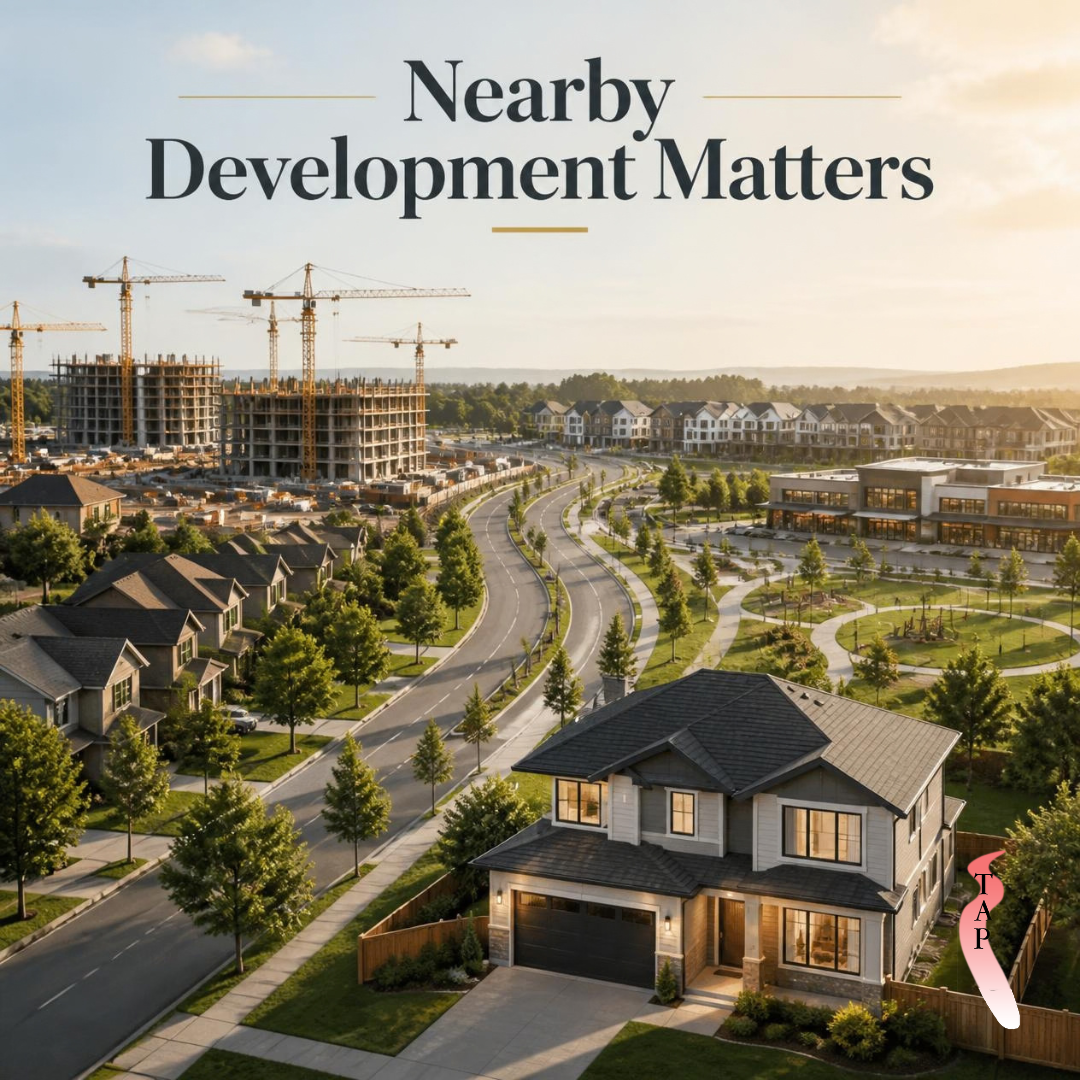
When buying a home, it is important to look beyond the property itself. Nearby development can change the surrounding area over time, affecting traffic, noise, convenience, privacy, and the overall character of the neighbourhood.
Planned roads, new housing, commercial projects, and public infrastructure may bring benefits, but they can also create disruptions. Understanding what is planned nearby can help buyers consider how the area may change after they move in.
Planned Roads and Transportation
New roads, road expansions, public transport routes, and intersections can improve access to important destinations. However, they may also increase traffic or noise near a property.
Check for planned transportation projects and consider how they could affect daily travel, access, and the surrounding streets.
Commercial and Housing Development
New shops, restaurants, offices, and services can make a neighbourhood more convenient. New housing can also bring additional amenities and support local services.
However, increased development may mean more traffic, parking demand, noise, or higher population density. Consider the size and location of proposed projects rather than assuming all development will have the same effect.
Public Infrastructure and Community Projects
Schools, parks, hospitals, community facilities, and utility projects can change how an area is used. Some may improve access to services and recreation, while larger projects could bring additional traffic or construction activity.
Look at local planning information to understand what may be proposed near the property.
Consider Construction Activity
Even if a development may benefit the area in the long term, construction can create temporary disruption. Depending on the project, this could include noise, dust, heavy vehicles, road closures, and changes to pedestrian or vehicle access.
Consider both the expected construction period and the project's intended final use.
How to Research Future Development
Local government planning departments, zoning records, development applications, and infrastructure plans can provide useful information about proposed projects.
When viewing a property, look beyond the immediate street. Check vacant land, large undeveloped areas, and nearby construction sites. Visiting at different times of day can also help you understand existing traffic and noise patterns.
Keep in mind that proposed projects can be changed, delayed, or cancelled, so future development should be treated as potential rather than certain.
Think About the Bigger Picture
A home's surroundings can change significantly during the years you own it. Researching nearby development gives buyers a better understanding of how roads, housing, businesses, infrastructure, and construction could affect the area.
Rather than focusing only on whether development is good or bad, consider how the specific changes could affect your daily routine, preferences, and expectations for the property.