Heating And Cooling Considerations For Homebuyers
How to Evaluate a Home's Heating and Cooling Needs
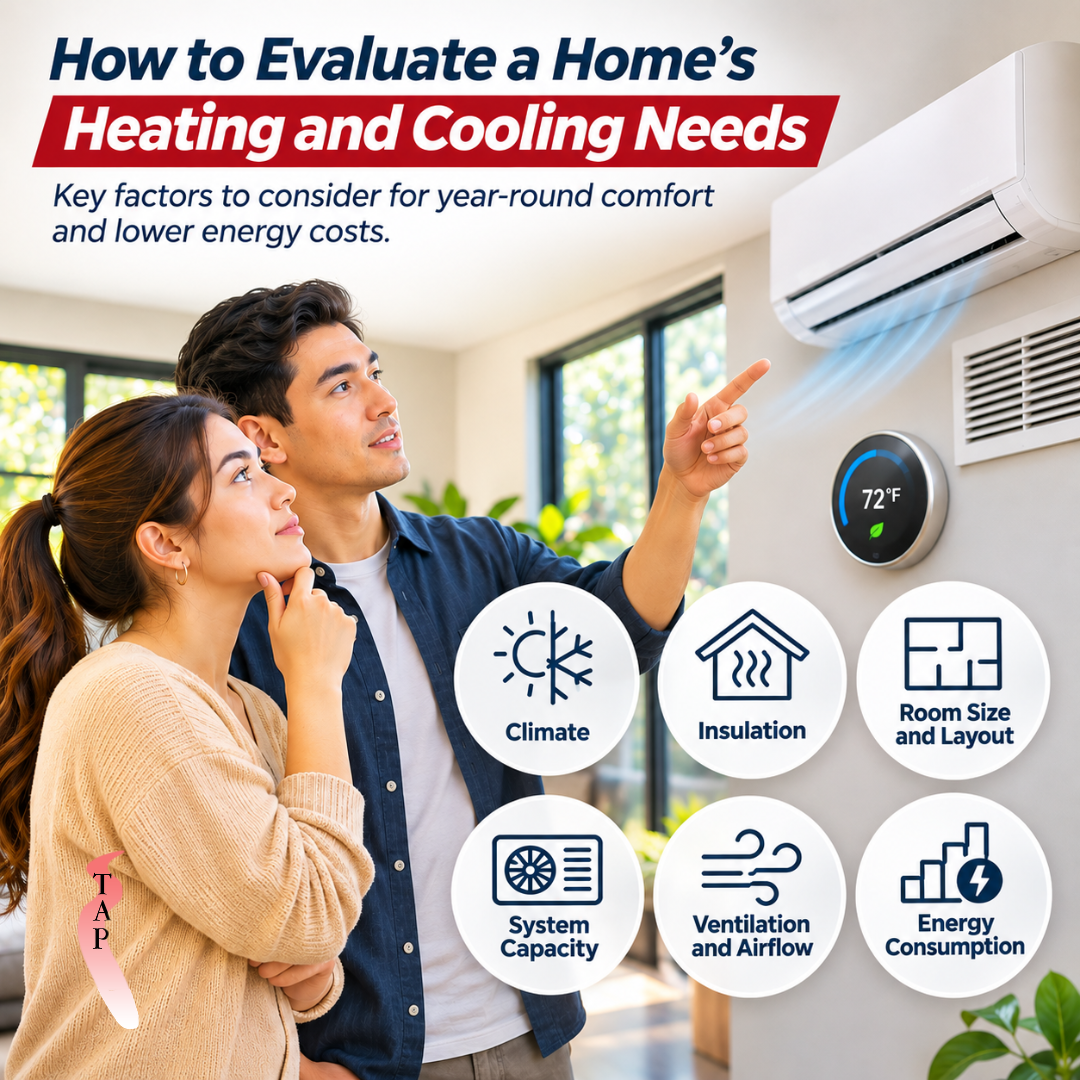
Heating and cooling play an important role in making a home comfortable throughout the year. Whether a property is located in a region with hot summers, cold winters, or changing seasonal temperatures, its ability to maintain comfortable indoor conditions can affect everyday living and household expenses.
For prospective buyers, understanding how to evaluate a home's heating and cooling needs involves more than checking whether an air conditioner or heating system is installed. Climate, insulation, room sizes, ventilation, equipment capacity, and energy consumption all influence how efficiently a property maintains indoor temperatures.
Examining these factors before purchasing can help buyers understand potential comfort concerns, maintenance responsibilities, and ongoing operating costs.
Consider the Local Climate and Seasonal Temperatures
A property's location influences how much heating or cooling it may require throughout the year.
Homes in warmer climates may depend heavily on air conditioning, while properties in colder regions may require heating for extended periods. Areas with significant seasonal temperature changes may need both systems.
Humidity also affects indoor comfort. In humid climates, cooling equipment may need to manage both temperature and moisture levels. In dry regions, different ventilation and humidity considerations may apply.
Buyers should research typical seasonal conditions, including summer heat, winter temperatures, humidity, and extreme weather patterns.
It is also useful to consider how the property's orientation and exposure to sunlight affect indoor temperatures.
A home with large west-facing windows, for example, may experience additional afternoon heat during warmer months.
Understanding local climate conditions provides context for evaluating whether the property's existing systems are appropriate.
Evaluate Insulation and Building Materials
Insulation helps reduce unwanted heat transfer between indoor and outdoor environments.
A well-insulated home may maintain more consistent indoor temperatures and reduce the amount of heating or cooling required to achieve comfortable conditions.
During a property evaluation, buyers should ask about insulation in the attic, roof, walls, and floors where applicable.
The effectiveness of insulation depends on its type, installation quality, condition, and coverage.
Building materials can also influence thermal performance. Roof construction, exterior walls, and window materials affect how heat enters or leaves the home.
Visible gaps around doors and windows may allow conditioned air to escape and outdoor air to enter.
Buyers should remember that insulation is only one part of a home's overall energy performance. Air sealing, ventilation, window design, and heating and cooling equipment also contribute to comfort.
Assess Room Sizes and Home Layout
The size and arrangement of rooms can influence how effectively heating and cooling systems distribute conditioned air.
Large open-plan spaces may have different temperature control needs from smaller enclosed rooms.
High ceilings, multiple floors, long hallways, and rooms with extensive glazing can also affect heating and cooling requirements.
During a viewing, consider whether the system serves all frequently occupied areas.
A property with several bedrooms may require different temperature management arrangements from a smaller home with one main living space.
Buyers should also consider how they intend to use the rooms. A home office occupied throughout the day may have different comfort needs from a guest bedroom used occasionally.
The goal is to understand whether the existing heating and cooling arrangement suits the household's expected routines.
Check Heating and Cooling System Capacity
Heating and cooling equipment must be appropriately sized for the property.
A system that is too small may struggle to maintain comfortable temperatures during demanding weather conditions.
An oversized system can also create problems. Depending on its design, it may cycle frequently, affect humidity control, or operate less effectively than intended.
System capacity is influenced by more than floor area. Insulation, air leakage, ceiling height, window exposure, climate, and building layout all affect heating and cooling loads.
Buyers should ask about the age, type, and maintenance history of installed equipment.
Common systems include central air conditioning, heat pumps, furnaces, ductless mini-splits, and other heating or cooling arrangements.
A qualified HVAC professional can assess whether the equipment is suitable for the property's requirements.
Observe Temperature Differences Between Rooms
Uneven indoor temperatures may indicate limitations in heating and cooling distribution.
During a property viewing, notice whether some rooms feel significantly warmer or cooler than others.
Temperature differences can result from several factors, including sunlight exposure, inadequate insulation, blocked vents, ductwork problems, or equipment performance.
Upper floors may also experience different temperatures from lower levels, particularly in homes with open staircases or substantial roof exposure.
Buyers should consider whether these differences are temporary or recurring.
A single viewing may not reveal how the home performs during extreme weather, so available maintenance records and previous energy consumption information can provide additional context.
Persistent temperature differences may warrant professional investigation.
Understand the Role of Ventilation and Airflow
Ventilation helps manage indoor air quality, moisture, and the movement of air throughout a property.
Natural ventilation may occur through operable windows and other openings, while mechanical systems use fans or dedicated equipment.
During a viewing, check whether windows open properly and whether bathrooms, kitchens, and laundry areas have suitable ventilation.
Poor airflow may contribute to stale indoor conditions, condensation, or uncomfortable temperature differences.
Heating and cooling systems also depend on appropriate airflow to operate effectively.
Blocked vents, dirty filters, damaged ducts, or poorly maintained equipment can reduce performance.
Buyers should consider how ventilation works alongside heating and cooling rather than treating these features as separate concerns.
Review Energy Consumption and Operating Expenses
Heating and cooling can represent a significant portion of household energy consumption, although actual expenses vary considerably between properties.
Energy use depends on local climate, equipment efficiency, insulation, household size, thermostat settings, and occupancy patterns.
Where available, buyers can review previous electricity or gas bills to understand historical consumption.
However, past utility expenses should be interpreted carefully. Previous occupants may have different comfort preferences, schedules, and energy usage habits.
Equipment efficiency ratings can provide additional information, but they do not guarantee specific operating costs.
Buyers should also consider potential maintenance expenses, including filter replacement, servicing, repairs, and eventual equipment replacement.
Understanding these responsibilities can help households develop a more realistic picture of ongoing ownership costs.
Look for Signs of Poor Heating and Cooling Performance
Some warning signs may suggest that a home's heating and cooling systems require closer attention.
These include:
- Unusual noises when equipment operates.
- Weak airflow from vents or indoor units.
- Significant temperature differences between rooms.
- Excessive condensation or persistent indoor humidity.
- Visible damage, corrosion, or poorly maintained equipment.
- Incomplete servicing records or recurring repair issues.
These observations do not automatically indicate major equipment failure.
However, they can help buyers identify areas that may benefit from additional inspection.
Where possible, ask to observe the heating or cooling system operating during the viewing.
A professional assessment may be appropriate when performance concerns are noticeable or equipment information is incomplete.
Create a Practical Heating and Cooling Evaluation Checklist
A simple checklist can help buyers compare properties more consistently.
- Climate: Consider seasonal temperatures, humidity, and local weather conditions.
- Insulation: Review available information about roof, wall, and floor insulation.
- Layout: Assess room sizes, ceiling heights, and how conditioned air reaches different spaces.
- Equipment: Check system age, capacity, maintenance history, and visible condition.
- Comfort: Observe airflow, ventilation, and temperature differences between rooms.
- Expenses: Review available energy records and consider maintenance or replacement needs.
Recording these observations can help identify which questions remain unanswered before purchasing.
Making an Informed Heating and Cooling Assessment
A home's heating and cooling needs depend on how its location, construction, layout, and mechanical systems work together.
An efficient system may still struggle in a poorly insulated property, while a well-designed home may require less heating and cooling to maintain comfortable temperatures.
Buyers should evaluate the entire property rather than focusing only on the installed equipment.
By considering climate, insulation, room sizes, ventilation, system capacity, and energy consumption, prospective homeowners can better understand a property's comfort and potential operating expenses.
This broader assessment supports practical decision-making and helps buyers prepare for the responsibilities associated with maintaining a comfortable home.
This article is for general educational purposes only and is not a substitute for professional HVAC inspection, building, or financial advice.