Accessible Workplace Policies
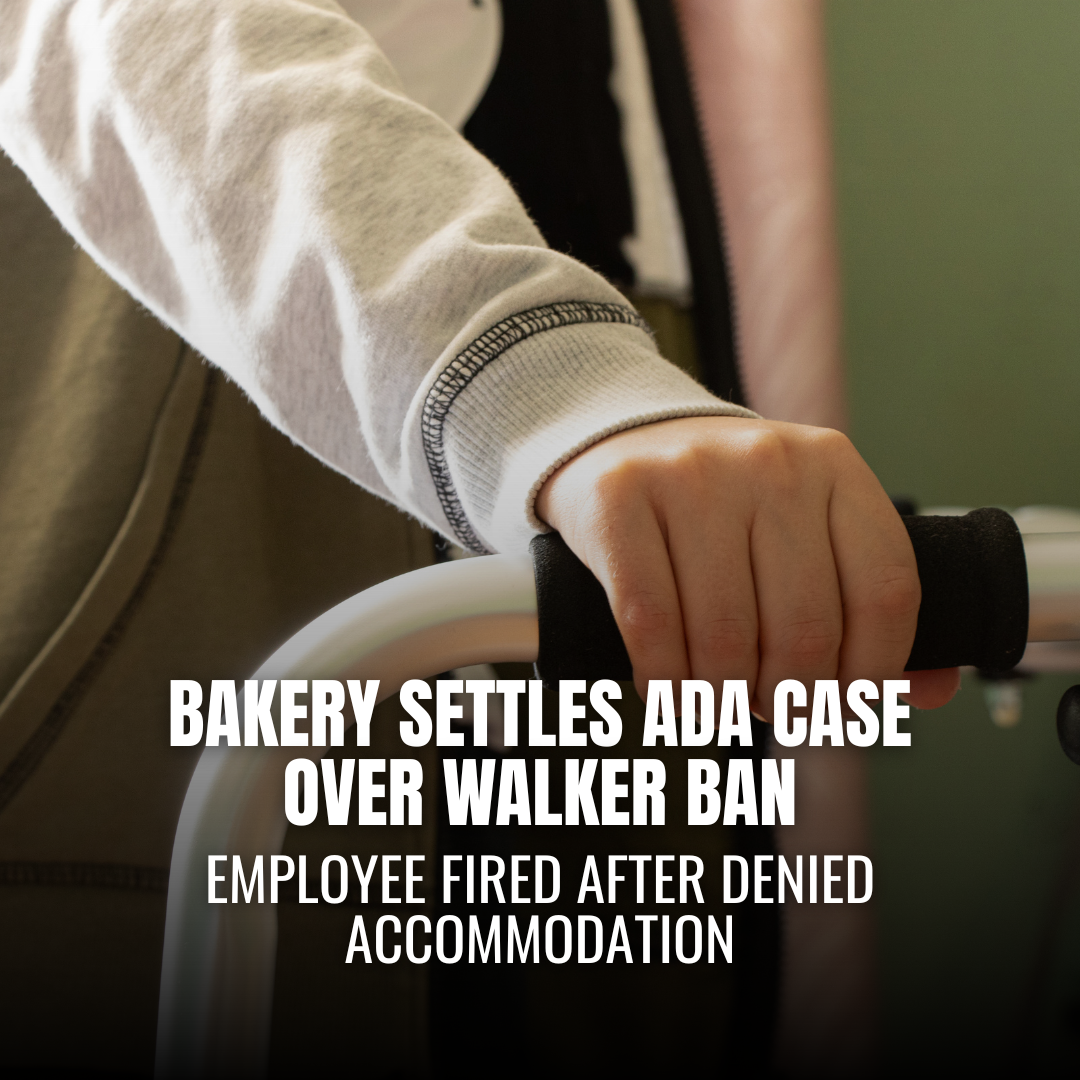
Indiana Bakery Settles Disability Discrimination Case After Firing Worker Who Needed Walker
Background
Holsum of Fort Wayne, Inc., a wholesale bakery operating two facilities in northern Indiana, faced federal scrutiny after a long-time employee reported being denied a reasonable accommodation related to her disabilities. The issue centered on her need for a walker while performing her job duties inside the production area. The case ultimately led to a lawsuit filed by the U.S. Equal Employment Opportunity Commission (EEOC).
Incident Details
According to court filings, the employee had been permitted by a supervisor in August 2020 to use her walker in the production area, despite an existing company policy that restricted personal items in that space. This allowance enabled her to move safely throughout the facility and continue performing her job.
Approximately one year later, Holsum informed the employee that she could no longer bring the walker into the production area because it violated the personal items policy. The employee explained that the device was medically necessary due to her disabilities, but the company declined to make an exception. She was placed on medical leave shortly afterward.
Several months later, Holsum terminated her employment, stating she could not return to work without the walker—an item they refused to allow.
Legal Background
The Americans with Disabilities Act (ADA) prohibits employers from discriminating against qualified individuals with disabilities. Key provisions include:
- Reasonable Accommodation Requirement: Employers must provide accommodations that enable employees with disabilities to perform essential job functions, unless doing so would cause undue hardship.
- Interactive Process Obligation: Employers must participate in a good-faith dialogue to identify and evaluate potential accommodations.
- Prohibition on Adverse Actions: Employers cannot fire or otherwise penalize an employee for requiring or requesting an accommodation.
The EEOC filed suit in the U.S. District Court for the Northern District of Indiana (Case No. 3:24-CV-00702-CCB-SJF) after conciliation efforts failed.
Settlement and Relief
The case was resolved through a three-year consent decree that requires Holsum to:
- Pay $50,000 to the affected employee.
- Update and amend workplace policies to ensure compliance with the ADA.
- Provide annual ADA training for managers and HR staff.
- Submit yearly reports to the EEOC documenting reasonable accommodation requests and how they were handled.
These measures aim to prevent future violations and reinforce the company’s responsibility to accommodate workers with disabilities.
Key Takeaways
- Policies cannot override ADA rights—even long-standing rules must be flexible when a reasonable accommodation is available.
- Consistency matters—allowing an accommodation and later withdrawing it without justification increases legal exposure.
- Employers must engage in dialogue—placing an employee on leave instead of exploring workable accommodations risks violating the ADA.
Conclusion
The settlement underscores the importance of adhering to ADA obligations and ensuring that workplace policies do not hinder necessary accommodations. Employers across industries can use this case as a reminder to regularly review internal policies, assess accommodation requests fairly, and maintain compliance to avoid similar legal outcomes.