New Jersey Labor Law Responsibilities
Inside New Jersey’s 2025 Labor Law Updates: What Employers and Workers Need to Know
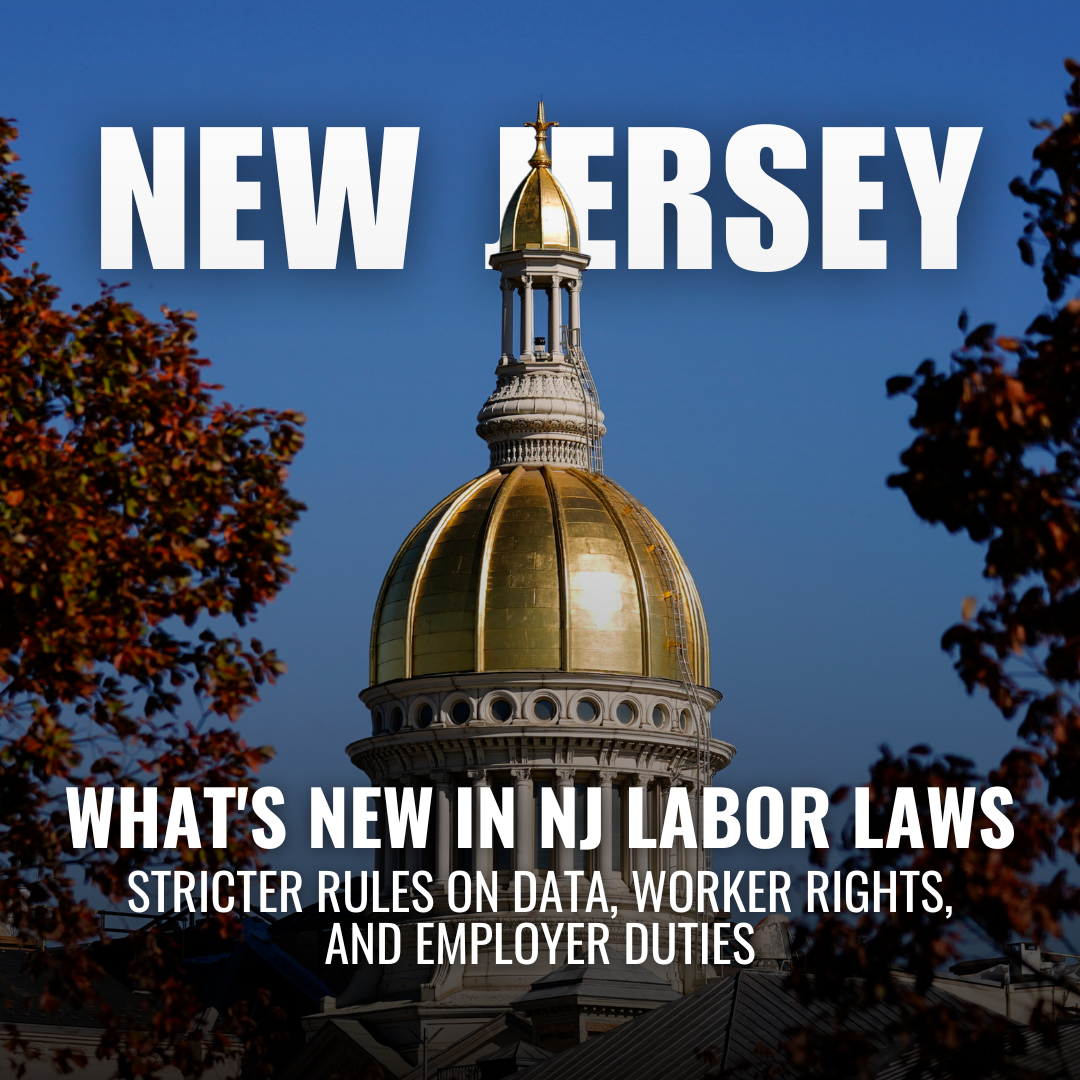
A lot has changed in the way New Jersey handles workplace rules—and 2025 is no exception. From how businesses collect and protect your data to how they classify workers, the Garden State is raising the bar. Whether you’re an employer trying to stay compliant or a worker curious about your rights, this review breaks down the biggest updates in a way that’s easy to digest—no legal jargon, just real talk.
The New Jersey Data Protection Act: What It Means for Workplaces
Starting January 15, 2025, businesses in New Jersey are required to follow stricter data privacy standards, particularly if they handle personal information from employees or customers. This law is part of a growing trend nationwide, but it comes with its own unique flavor.
What businesses need to do:
- Limit personal data collection to only what’s truly necessary and relevant.
- Implement reasonable security practices to safeguard personal data.
- Provide privacy notices that explain how data is used and processed.
- Allow consumers (including employees) to revoke consent for data processing at any time.
- Conduct data protection impact assessments if dealing with sensitive categories of personal data.
- Keep records of these data protection efforts for accountability.
Applies to businesses that:
- Process 100,000+ consumers’ data, or
- Process 25,000+ consumers’ data and profit from selling it.
Exemptions include:
- Non-profits
- Financial institutions already covered by federal laws like GLBA
- Health organizations governed by HIPAA/HITECH
- Insurance companies and credit-reporting agencies
Sensitive data now includes things like:
- Racial/ethnic background, religious beliefs, or health conditions
- Financial access information (e.g., account numbers, PINs)
- Sexual orientation, immigration status, or gender identity
- Genetic/biometric data
- Precise geolocation and any data collected from children
Bottom line? If your business handles any of the above, you may need explicit consent from individuals and a full assessment of your data handling practices. It’s not just about protecting information—it’s about earning trust in the workplace.
Worker Misclassification Notice: Clearing Up a Common Grey Area
Misclassifying employees as independent contractors isn’t just a mistake—it’s illegal. And in 2025, New Jersey is doubling down on enforcement.
What’s considered misclassification?
It’s when a worker is labeled as an “independent contractor” even though their role, hours, or expectations align more with that of an employee. This could mean missing out on important protections like:
- Minimum wage and overtime pay
- Legal protections around pay and deductions
- Access to unemployment, workers’ compensation, and family leave
- Paid sick time and temporary disability benefits
Paying workers “off the books” in cash? That’s often a red flag for potential misclassification.
This policy update also comes with a new notice requirement—employers must inform workers about their classification rights. It’s a move designed to empower employees and hold employers accountable.
Mandatory Workplace Posters & Notices: More Than Just Paper on a Wall
Posters may not seem like a big deal, but in New Jersey, they’re a legal requirement—and 2025 brings a few more expectations.
Employers must:
- Display updated labor law posters in places that are clearly visible to all employees—think break rooms or HR offices.
- Include posters in English, Spanish, and any language spoken by 10%+ of their workforce.
- Distribute notices when needed—not just display them.
- If you have a digital workplace, electronic posting (via intranet or email) is encouraged, especially for notices like the NJ Family Leave Act or the Law Against Discrimination.
Why does this matter?
Because a missing or outdated poster could lead to fines, penalties, or even lawsuits. The point is to make sure everyone knows their rights, no matter how they clock in.
Final Thoughts: A Step Forward in Worker Protections—With a Few Speed Bumps
New Jersey’s updated labor laws are clearly worker-focused, with data privacy and fair employment practices at the core. But like any new regulation, these changes come with adjustments for businesses too.
For workers:
- You get stronger data privacy, clearer information about your classification, and more access to your rights in your native language.
- But you’ll also need to stay informed and advocate for yourself—especially in workplaces slow to adapt.
For employers:
- These laws mean new responsibilities, more documentation, and possibly restructuring how data is handled.
- But on the flip side, compliance builds trust, reduces risk, and can lead to happier, more informed teams.
Important Note to Consider
This content is intended for informational purposes only. Although we strive to present accurate and up-to-date information, we cannot guarantee that it is completely free from errors or omissions. We encourage users to verify any important details independently and not rely solely on the information provided here.