Disability Retaliation Prevention
Maryland Car Dealership to Pay $30,000 in Service Dog Disability Discrimination Case
Background
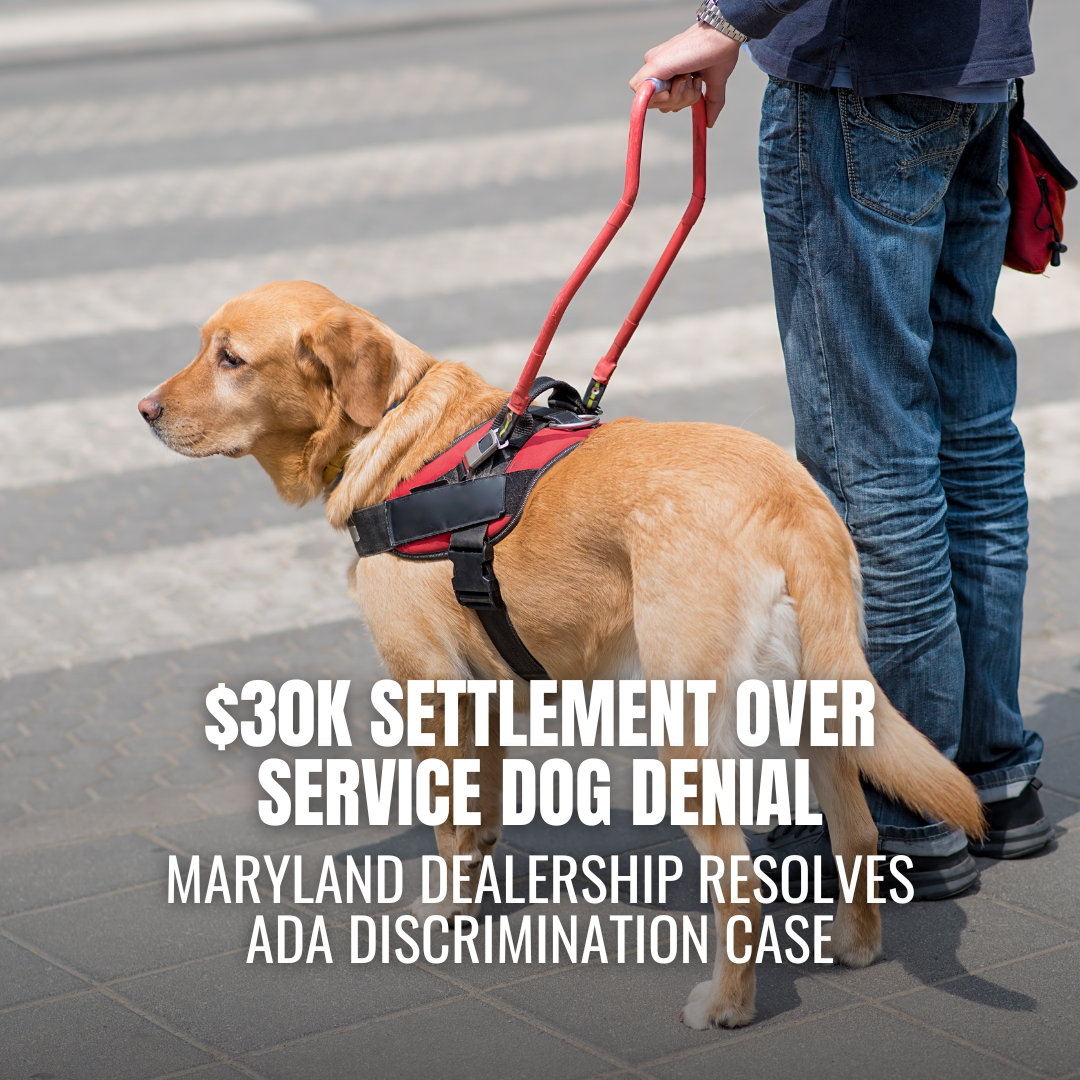
Criswell Chevrolet, Inc., an automobile dealership based in Gaithersburg, Maryland, has agreed to settle a federal disability discrimination lawsuit filed by the U.S. Equal Employment Opportunity Commission (EEOC). The case arose from allegations that the dealership failed to accommodate an employee with post-traumatic stress disorder (PTSD) who required the assistance of a service dog at work.
Incident Details
According to the EEOC’s lawsuit, the employee, who had PTSD, requested permission to have his trained service dog accompany him at work as a reasonable accommodation. The request was denied. Without the ability to use his service dog, the employee claimed he could not perform his job effectively and ultimately left his position.
Legal Background
The Americans with Disabilities Act (ADA) prohibits employers from discriminating against qualified individuals with disabilities and requires them to provide reasonable accommodations unless doing so would cause undue hardship. Service animals are recognized under federal law as a potential reasonable accommodation when necessary to assist an employee with a disability in performing essential job functions. Denying such accommodations without valid justification can constitute a violation of the ADA.
Settlement Terms
The case, EEOC v. Criswell Chevrolet, Inc. (Case No. 8:25-cv-01632-TDC), was resolved through a consent decree in the U.S. District Court for the District of Maryland. The settlement includes:
- Payment of $30,000 in monetary relief to the former employee.
- Implementation of policy changes to ensure ADA compliance.
- Mandatory ADA training for managers and staff.
- Compliance reporting to the EEOC for a set monitoring period.
Key Takeaways
- Service Dogs Are Protected Under the ADA – Employers must consider allowing service animals as a reasonable accommodation when required by an employee’s disability.
- Policy Updates Are Critical – Written policies and staff training can prevent violations and legal disputes.
- Refusal to Accommodate Can Be Costly – Even small employers face significant financial and reputational consequences for failing to comply with the ADA.
Conclusion
The Criswell Chevrolet case underscores the importance of understanding and applying ADA requirements in the workplace. Providing reasonable accommodations—such as allowing service dogs—can help employees perform their roles effectively while keeping businesses in compliance with federal law. Employers who neglect these obligations risk legal action, financial penalties, and damage to their public image.