Workplace Safety And Compliance
Memphis Staffing Firms Settle EEOC Sexual Harassment and Retaliation Case for $215,000
Background
In Memphis, Tennessee, two companies—Prestigious Placement, Inc. and Prosero, Inc.—faced federal scrutiny following allegations that female employees were subjected to sexual harassment and later retaliated against for reporting the misconduct. The U.S. Equal Employment Opportunity Commission (EEOC) filed the lawsuit after efforts to resolve the issue through pre-litigation conciliation failed.
Incident Overview
The EEOC’s lawsuit detailed that a male lead employed by Prosero repeatedly made unwelcome sexual comments toward female employees placed at a warehouse by Prestigious Placement. When two employees reported the inappropriate behavior to their supervisors, their complaints were disregarded. Shortly after, both women were terminated under the pretext of performance issues.
This pattern of harassment and retaliation created a hostile work environment, violating the employees’ right to a safe and respectful workplace.
Legal Background
The actions described in the case violated Title VII of the Civil Rights Act of 1964, a federal law that protects employees from discrimination based on sex, race, color, national origin, and religion. Title VII explicitly prohibits sexual harassment, which includes unwelcome sexual advances, comments, or conduct that create a hostile work environment. It also prohibits retaliation against employees who report discrimination or participate in related investigations.
Employers and staffing agencies share responsibility for ensuring that workers under their supervision or placement are protected from such violations. Failing to act on harassment complaints can make both entities legally accountable.
Settlement and Relief
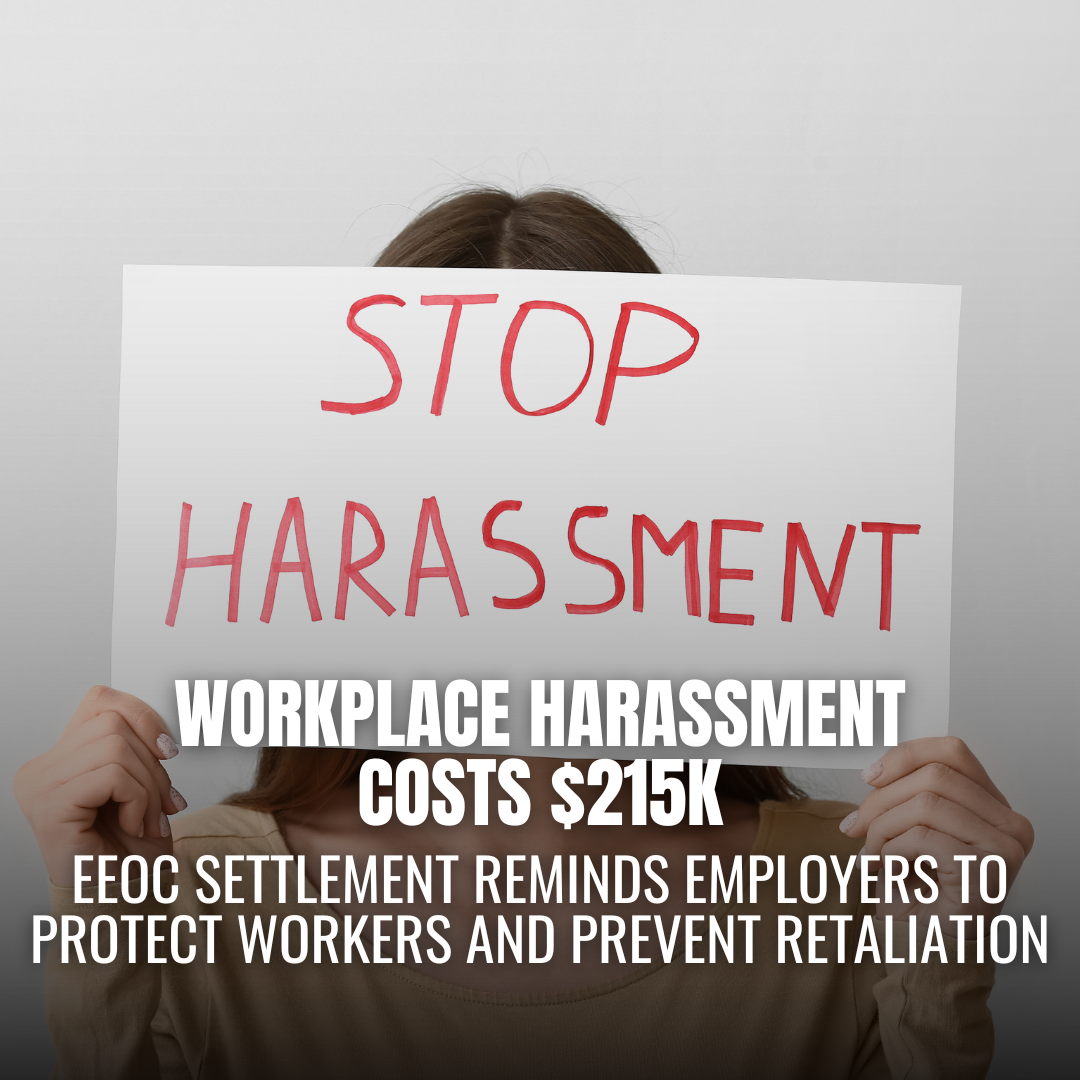
To resolve the lawsuit, Prestigious Placement and Prosero agreed to pay $215,000 in monetary relief to three former female employees.
Under a two-year consent decree, both companies must:
- Revise and distribute their anti-harassment and anti-retaliation policies.
- Post public notices in the workplace acknowledging the settlement and affirming employees’ rights.
- Provide mandatory sexual harassment prevention training for all supervisors, managers, and staff.
- Submit regular reports to the EEOC detailing any future harassment or retaliation complaints, including the nature of the allegations and how the company addressed them.
These measures aim to create a safer and more compliant work environment while preventing future incidents of harassment and retaliation.
Key Takeaways
- Shared Accountability: Both staffing agencies and client companies can be held liable for workplace harassment and retaliation.
- Reporting Protections: Employees have the right to report misconduct without fear of termination or retaliation.
- Compliance Is Preventive: Regular training and strong anti-harassment policies help prevent costly lawsuits and workplace harm.
Conclusion
This case underscores the ongoing need for vigilance and accountability in preventing workplace harassment. The EEOC’s enforcement action serves as a reminder that failure to address employee complaints can result in significant financial and reputational consequences. Companies must ensure that their supervisors and staff are equipped to recognize, report, and prevent harassment in all forms.
Recommendation: Prevent Harassment with TAP Series Training
To prevent similar incidents, organizations should invest in Sexual Harassment Prevention Training through TAP Series—a trusted leader in online compliance education. TAP Series offers accessible, engaging, and legally compliant courses designed to help employees and managers understand workplace conduct expectations, reporting protocols, and legal responsibilities.
With TAP Series, companies can:
- Foster a culture of respect and compliance.
- Reduce the risk of EEOC complaints and legal penalties.
- Provide convenient online training that fits any schedule.
TAP Series is a leading partner in promoting workplace integrity and equality. Protect your business—and your employees—by making sexual harassment prevention a priority.
👉 Visit TAPSeries.com to learn mor e about implementing effective sexual harassment prevention training for your team.