Employer Compliance New Mexico Laws
Navigating New Mexico’s 2025 Labor Law Changes — What Workers and Employers Need to Know Introduction
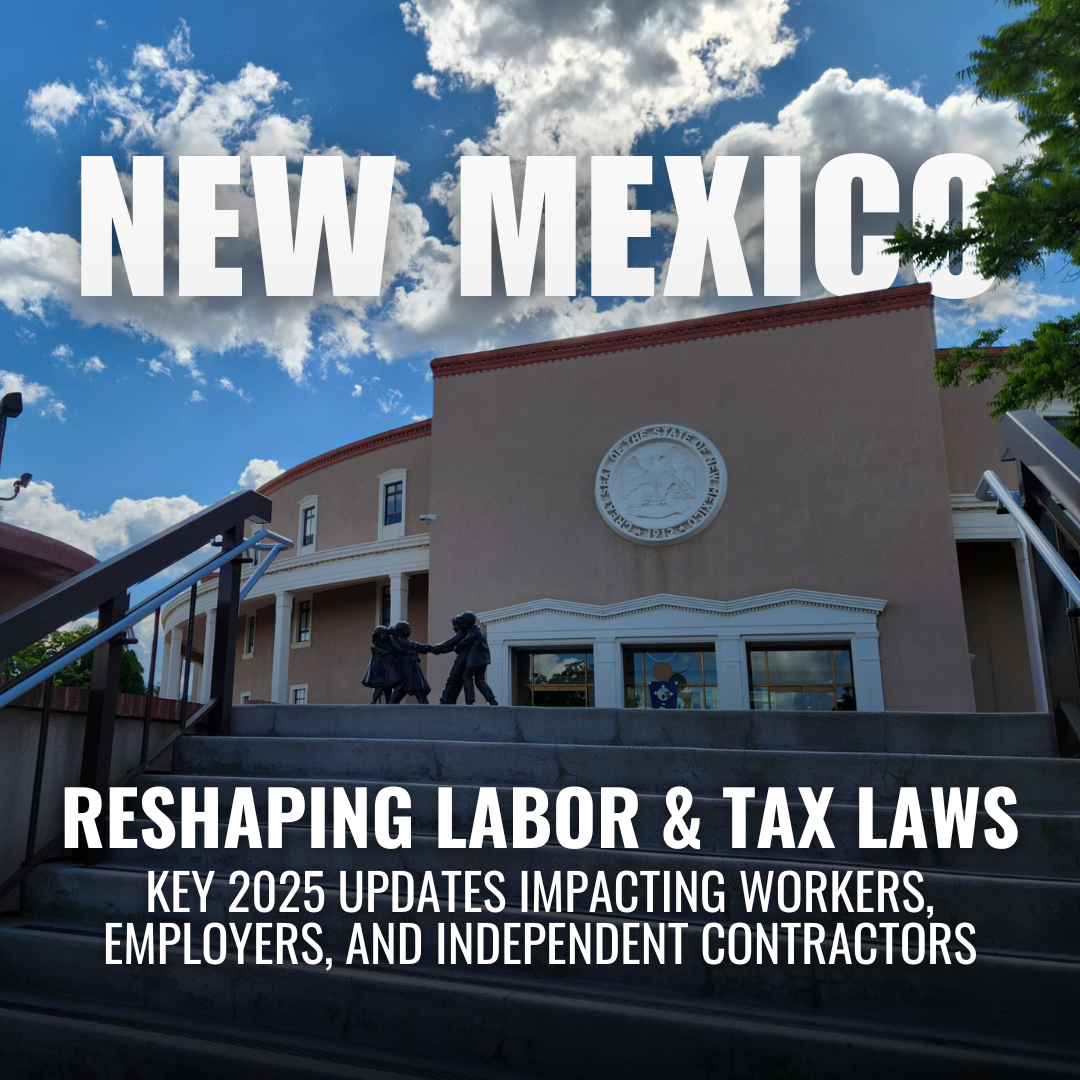
New Mexico isn’t exactly known for frequent changes to its labor laws, but 2025 is proving to be a big year. With a mix of tax reforms, updated income brackets, and tighter worker classification rules, these changes aren’t just legal jargon—they have real-world effects on families, freelancers, and business owners alike. Whether you’re punching a clock, running a small business, or working gigs on your own terms, here’s what’s new and why it matters.
Let’s break down the most significant changes in a way that makes sense—and more importantly, shows how they actually affect people.
Income Tax Bracket Adjustments (House Bill 252)
New Mexico hasn’t touched its income tax brackets since 2005—but that changes in 2025 with House Bill 252, aiming to bring some relief to working families.
What’s changing?
- Lower taxes for low and middle-income earners.
A couple earning $50,000 (joint filing) might save around $303/year. - Tax structure targets relief at the bottom, rather than across the board.
- Still no inflation adjustment, so brackets may not stretch with rising wages.
- The marriage penalty stays—married couples still hit higher tax brackets faster than if they filed separately.
Why it matters:
It’s a step forward for income fairness, especially in a state where many households live paycheck to paycheck. But it doesn’t fix everything—especially for growing families or those whose income just pushes them into a higher bracket.
Capital Gains Deduction Tweaks
This one affects people selling a New Mexico-based business or cashing in on investments.
What’s changing?
- Starting in 2025, the deduction increases from $1,000 or 40% of net gain to $2,500 or 40% (capped at $1 million) from a New Mexico business sale.
- Expected to raise over $60 million annually for the state.
Why it matters:
Entrepreneurs stand to gain, but it’s clearly tailored toward business owners—not everyday stock investors.
Independent Contractor Classification & Federal Rule Enforcement
The gig economy just got a little more complicated. A new federal rule—upheld by a judge in New Mexico—tightens how workers can be classified.
What’s changing?
- New rule (as of March 2025) says workers must be classified as employees if they’re “economically dependent” on a company.
- Courts will now consider:
- Who controls the work
- How permanent the job is
- If the worker can profit or lose independently
- If the worker provides their own tools/equipment
- Independent contractors will continue to pay gross receipts tax unless exempt.
- The IRS definition still applies for tax purposes, but now businesses face more scrutiny when classifying.
Why it matters:
- For workers: Could mean more access to benefits like overtime, minimum wage, unemployment insurance, and more.
- For employers: More paperwork, potential increase in labor costs, and less flexibility with hiring.
Industries like trucking, healthcare, construction, and gig platforms are particularly impacted. A small trucking company in Rio Rancho (Colt & Joe) already challenged the rule—and lost.
Final Thoughts: What This Means in 2025
New Mexico’s labor law changes show a clear trend: more protections for workers, more responsibility for employers, and a tax system trying to catch up with inflation and modern work realities.
For workers:
- You might see more take-home pay if you’re in a lower bracket.
- You could be reclassified as an employee if you do consistent gig work for a company.
- Business sellers and entrepreneurs have more room for deductions.
For employers:
- There's a bigger compliance burden when it comes to classifying your workforce.
- Budgeting for taxes and labor costs in 2025 may require a second look.
- Those relying on freelancers may need to rethink hiring models to avoid misclassification risks.
Important Note to Consider
This content is intended for informational purposes only. Although we strive to present accurate and up-to-date information, we cannot guarantee that it is completely free from errors or omissions. We encourage users to verify any important details independently and not rely solely on the information provided here.