Employer Liability Harassment
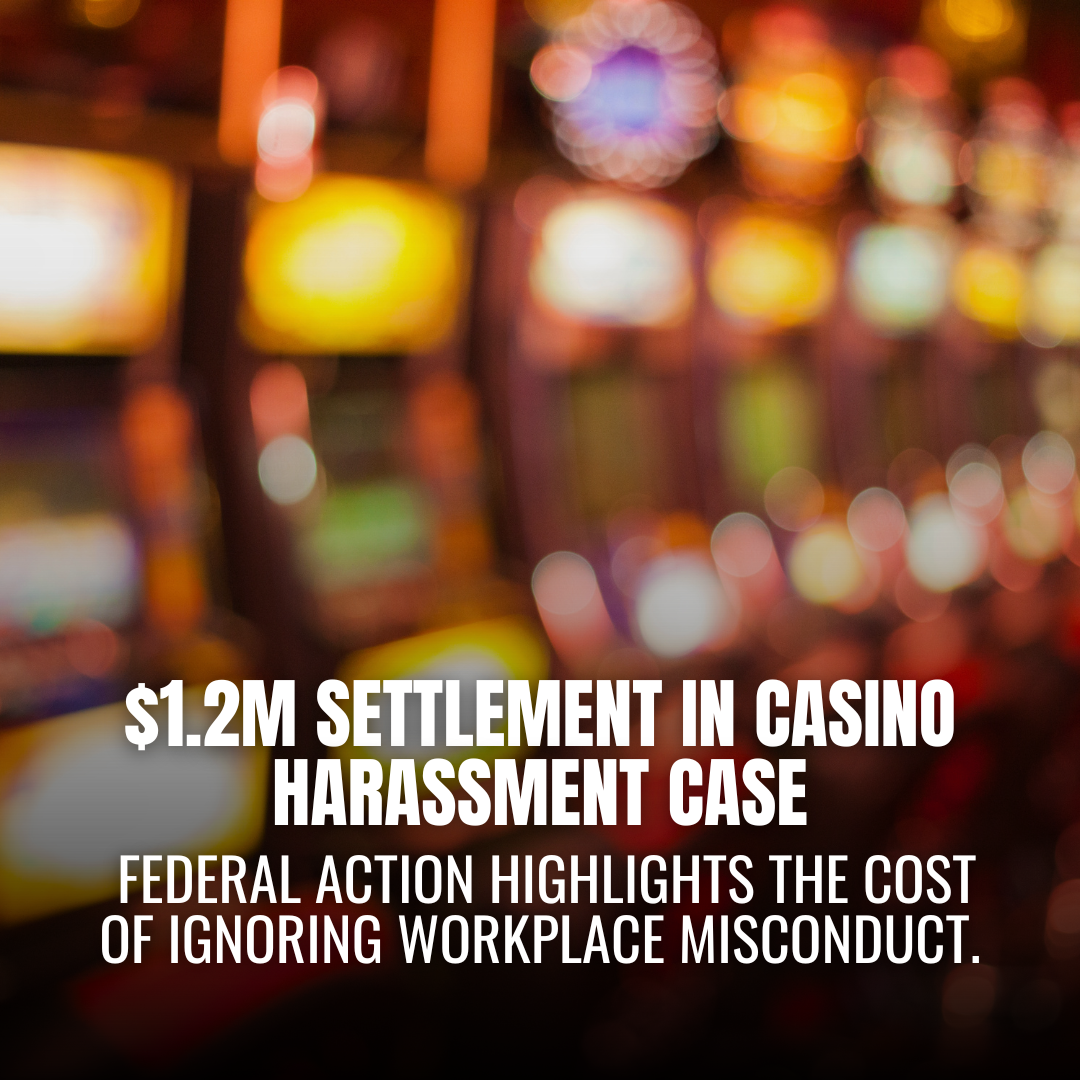
Nevada Casino Operator to Pay $1.2M After Widespread Sexual Harassment Claims
Background
Nevada Restaurant Services, Inc.—the company behind a large chain of gambling parlors, hotel casinos, and the Laughlin River Lodge Hotel & Casino—faced federal legal action after multiple employees reported ongoing sexual harassment across several locations. The allegations surfaced over several years and raised concerns about the company’s handling of workplace misconduct.
Details of the Incident
According to the federal lawsuit, male and female employees reported experiencing verbal and physical sexual harassment from both co-workers and supervisors as early as 2018. Complaints included inappropriate comments, unwelcome physical contact, and repeated misconduct that created a hostile working environment.
The lawsuit stated that company leadership was aware of multiple complaints but failed to take adequate corrective action. In some cases, working conditions allegedly deteriorated to the point where employees felt compelled to resign, amounting to constructive discharge.
Legal Background
The alleged conduct violated Title VII of the Civil Rights Act of 1964, which prohibits sexual harassment and hostile work environments based on sex. Employers are legally required to address harassment complaints promptly and prevent retaliation.
The EEOC filed the lawsuit in the U.S. District Court for Nevada after unsuccessful attempts to resolve the matter through its administrative conciliation process.
Settlement and Relief
Nevada Restaurant Services agreed to a $1.2 million monetary settlement through a three-year consent decree. In addition to financial compensation for eligible workers, the agreement requires the company to implement extensive corrective measures, including:
- Mandatory sexual harassment training for all employees, with additional training for supervisors and HR staff
- A new online complaint reporting system
- Centralized tracking of harassment reports
- Distribution of updated anti-harassment policies
- Follow-up questionnaires to employees who previously reported harassment
- Appointment of an external equal employment opportunity monitor
- Posting workplace notices informing employees of their rights and the settlement terms
The consent decree also outlines a formal process for current and former employees to submit claims and participate in the distribution of settlement funds.
Key Takeaways
- Failure to address harassment promptly can lead to significant financial and operational consequences.
- Consistent documentation and reporting procedures are essential for compliance and employee protection.
- Workplace culture must prioritize safety, respect, and accountability at every level.
Conclusion
This case reinforces the importance of proactive measures to prevent harassment and protect employees from misconduct. Employers who do not respond quickly and effectively to complaints risk legal action, financial penalties, and long-term damage to their workplace culture.
Recommendation: Sexual Harassment Training with TAP Series
Preventing harassment starts with equipping every employee—from staff to supervisors—with the right knowledge. TAP Series, a leader in online compliance training, offers comprehensive Sexual Harassment Training designed for today’s busy workplaces. Their courses help organizations strengthen reporting practices, reinforce respectful conduct, and maintain compliance with federal requirements.
Whether you're managing a small team or an entire workforce, TAP Series provides accessible, high-quality training that supports a safer and more accountable workplace. Investing in prevention is not only smart—it’s essential.