How Tips Are Taxed In 2025
No Tax on Tips: What It Means for Workers?
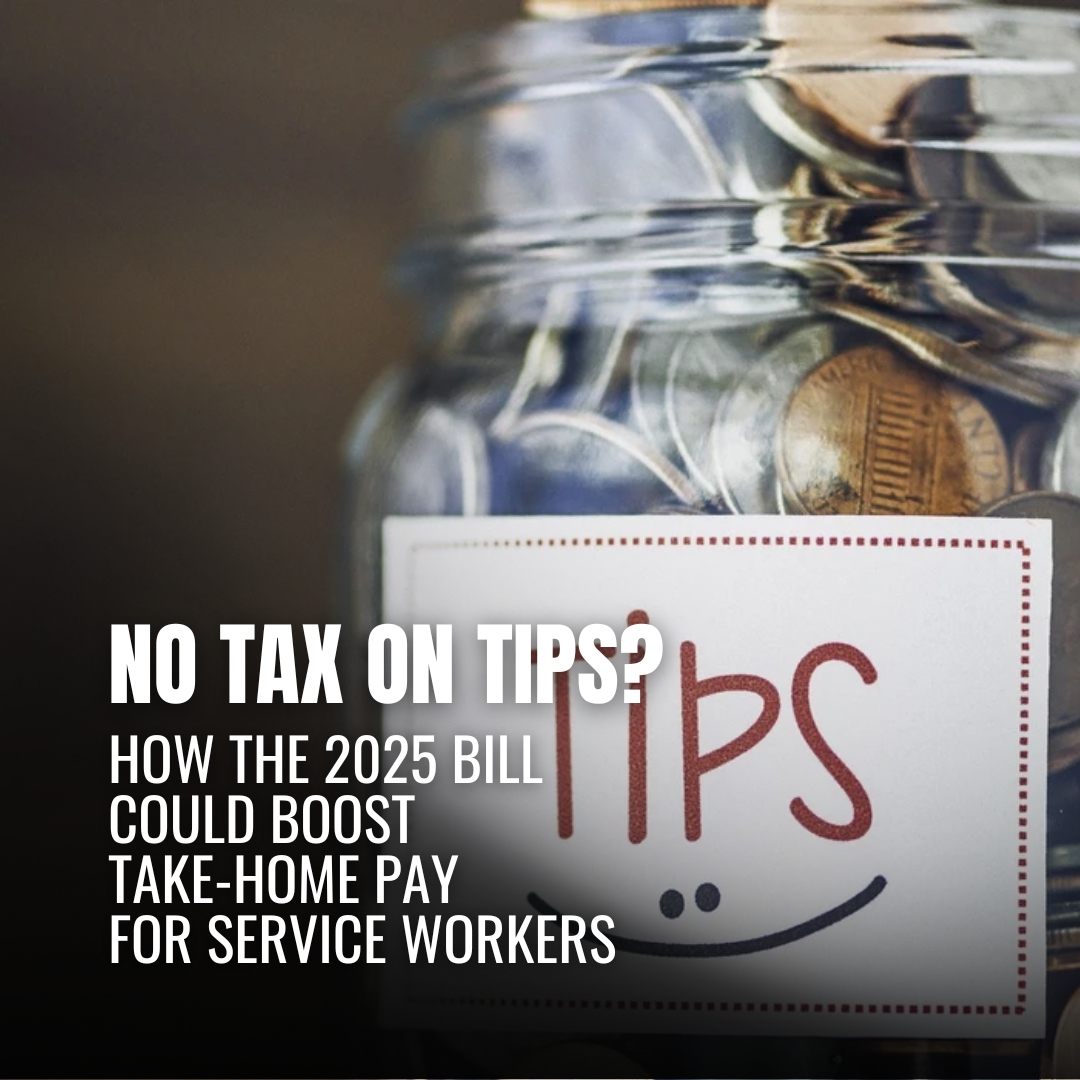
In May 2025, the U.S. Senate passed the No Tax on Tips Act. This new law says that workers who get tips—like restaurant servers, bartenders, hairstylists, and others—would not have to pay federal income tax on up to $25,000 in tips each year.
That’s a big change because right now, workers pay taxes on every dollar they earn in tips, just like they do on their regular wages.
💡 What Do Workers Pay Now?
Right now, if you earn tips, you must pay:
➡️ Federal Income Tax (anywhere from 10% to 22% or more)
➡️ Social Security Tax (6.2%)
➡️ Medicare Tax (1.45%)
Combined, this can add up to about 20% to 25% of your tip income.
For example:
- If you earn $25,000 in tips, you could currently pay between $4,900 and $7,400 in taxes on that amount.
💡 What Will Change Under the New Law?
With the new law:
✅ You won't pay federal income tax on the first $25,000 in tips.
✅ You will still pay Social Security and Medicare taxes (these help fund retirement and healthcare).
This means more money in your pocket.
For example:
- On $25,000 in tips, you would now only pay about $1,900 in Social Security and Medicare taxes.
- That’s a savings of about $3,000 to $5,500 compared to today!
💡 How Much Could You Keep?
Here’s a quick look at how much more money you’d keep:
- 💵 $10,000 in tips → Save around $1,300 to $1,700
- 💵 $15,000 in tips → Save around $1,800 to $2,800
- 💵 $20,000 in tips → Save around $2,500 to $4,000
- 💵 $25,000 in tips → Save around $3,000 to $5,500
These are just estimates. Exact savings depend on your other income and tax bracket.
💡 Why Is This Important?
- Many people in the service industry rely on tips for most of their income.
- This change lets workers keep more of what they earn—potentially thousands of extra dollars every year.
- It could help people working in restaurants, salons, hotels, coffee shops, delivery, and more.
💡 What Happens Next?
➡️ The bill will now go to the House of Representatives for a vote.
➡️ If passed, the President will sign it into law.
➡️ The change could start as soon as this tax year (2025)—affecting tax returns filed in 2026.