EEOC Legal Action
Smithfield Fresh Meats Sued for Firing Pregnant Employee After Denying Accommodation
Background
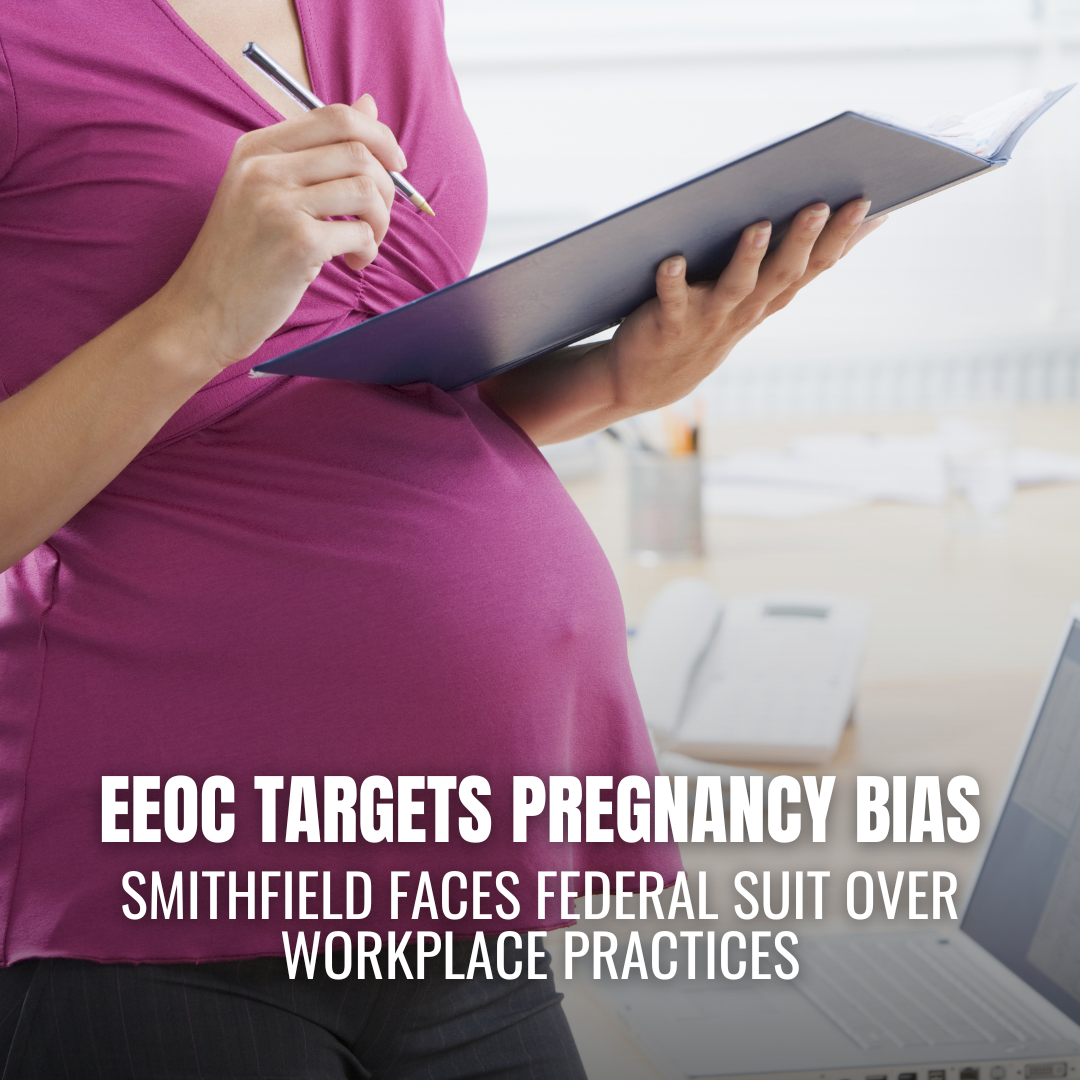
Smithfield Fresh Meats Corp., a Virginia-based company operating the world’s largest pork processing facility in Tarheel, North Carolina, is facing a federal lawsuit brought by the U.S. Equal Employment Opportunity Commission (EEOC). The case centers on allegations that the company discriminated against a pregnant employee by refusing reasonable accommodations, forcing her onto unpaid leave, and ultimately terminating her employment.
Incident Details
According to the lawsuit, the employee disclosed her pregnancy to Smithfield shortly after being hired. Following a workplace accident, she began experiencing pregnancy-related complications that required medical care. Her physician imposed restrictions, including limits on lifting.
The employee reported these restrictions to Smithfield and formally requested accommodations that would allow her to continue working. Instead of providing adjustments, the company informed her that accommodations for pregnancy were not available. Smithfield required her to take unpaid leave and, within two weeks, terminated her employment.
Legal Background
This case involves alleged violations of two federal laws:
- Pregnant Workers Fairness Act (PWFA): Enacted in 2023, the PWFA requires covered employers to provide reasonable accommodations for workers affected by pregnancy, childbirth, or related medical conditions, unless doing so would create undue hardship. Prohibited actions include denying accommodations, forcing employees onto unpaid leave when accommodations are available, and terminating employees because of pregnancy-related limitations.
- Title VII of the Civil Rights Act of 1964: Title VII, as amended by the Pregnancy Discrimination Act, prohibits discrimination in employment on the basis of pregnancy, childbirth, or related medical conditions. Employers cannot treat pregnancy-related conditions less favorably than other temporary medical conditions.
Lawsuit and Relief Sought
The EEOC filed suit in the U.S. District Court for the Eastern District of North Carolina (EEOC v. Smithfield Fresh Meats Corp., Case No. 7:25-cv-01410-M) after efforts to resolve the matter through conciliation failed. The agency seeks:
- Monetary Relief: Compensatory and punitive damages for the affected employee.
- Injunctive Relief: Court-ordered requirements for Smithfield to change workplace practices, provide accommodations under the PWFA, and prevent future unlawful conduct.
Key Takeaways for Employers
- Pregnancy accommodations are legally required. Employers must engage in an interactive process to provide reasonable accommodations when medically necessary.
- Unpaid leave is not a substitute. Forcing an employee to take unpaid leave when accommodations exist is a violation of federal law.
- Litigation risk is high. Failure to comply with the PWFA and Title VII can result in lawsuits, financial damages, and injunctive orders that mandate policy changes.
Conclusion
The lawsuit against Smithfield Fresh Meats highlights the growing enforcement of the Pregnant Workers Fairness Act, a law that strengthens protections for pregnant employees across industries. Employers must understand their obligations under both PWFA and Title VII to avoid liability. Beyond financial damages, cases like this can bring lasting reputational harm and mandatory court oversight, reinforcing the need for proactive compliance and training.