Virginia Business Law Changes
Virginia’s 2025 Labor Law Updates: New Protections, New Rules, and What They Mean for You
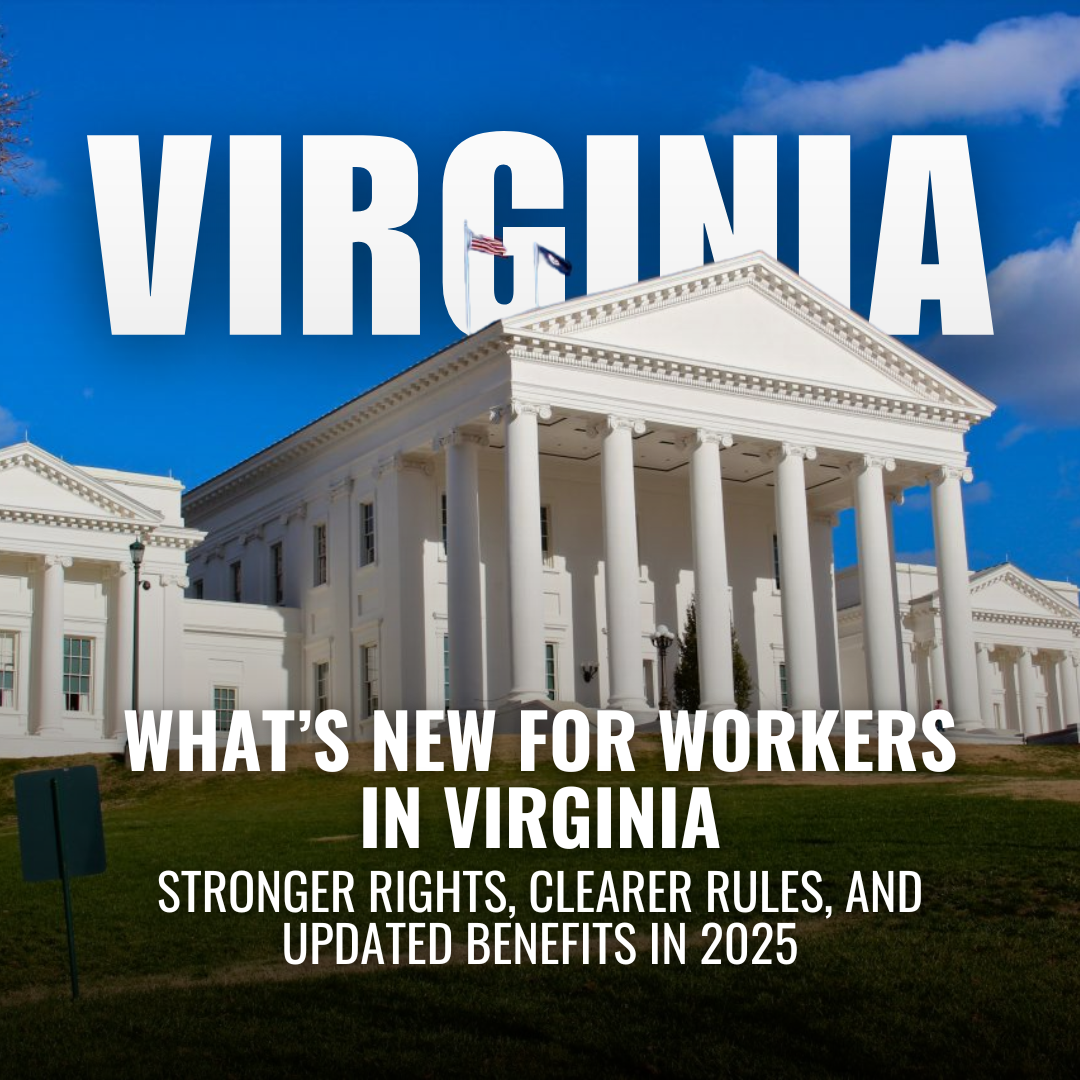
As we move deeper into 2025, Virginia’s labor landscape has seen significant changes—some subtle, others sweeping. Whether you're an employee looking to understand your rights or an employer trying to stay compliant, these updates carry lasting implications. From expanded anti-discrimination protections to retirement mandates and the rollback of federal salary thresholds, Virginia’s updates reflect a blend of progressive reform and regulatory recalibration. Here's a breakdown of what’s new, what it means, and how it might affect your work life or business operations.
Major Updates to Virginia Labor Laws in 2025
"Ethnic Origin" Now a Protected Class
What changed: Virginia amended its Human Rights Act to include ethnic origin as a protected category.
- Effective July 1, 2024, employers can no longer discriminate, harass, or retaliate against employees based on ancestry or ethnic background.
- This change was introduced through House Bill 18.
- Employers are now legally obligated to update policies, training, and procedures to reflect this new protection.
🔹 Benefit: Employees gain clearer legal recourse against ethnic-based discrimination.
🔹 Challenge for employers: HR departments must act quickly to revise handbooks, training, and complaint procedures.
RetirePath Virginia – Mandatory Retirement Plan Access
What changed: Virginia launched RetirePath, a state-run retirement savings program for workers whose employers don’t offer one.
- Applies to businesses with 25+ employees, in operation for 2+ years, and without a qualified retirement plan.
- Employees are automatically enrolled in a Roth IRA at a default 5% contribution rate (with an opt-out option).
- Contributions will increase 1% each year, capped at 10%.
- Employees can adjust contributions or select traditional IRAs instead.
🔹 Benefit: More workers get access to retirement savings, which are portable and stay with them.
🔹 Challenge for employers: Increased administrative obligations—registration, payroll integration, and employee communication.
Beneficial Ownership Reporting Under the CTA
What changed: Companies in Virginia must comply with federal Beneficial Ownership Information (BOI) reporting under the Corporate Transparency Act.
- Deadline: Most companies must file by March 21, 2025.
- A beneficial owner is anyone who owns or controls 25%+ of the company or exercises substantial control.
- Companies must report personal data of such owners to FinCEN through its BOI E-Filing System.
🔹 Benefit: Greater transparency deters money laundering and corporate fraud.
🔹 Challenge: Smaller businesses may find the filing process and federal compliance confusing and burdensome.
DOL Salary Threshold Increase Blocked
What changed: A federal judge struck down the planned salary threshold increases for exempt employees, rolling them back to 2019 levels.
- The now-invalidated rule would have raised the EAP threshold to over $55K, but it's reverted to $35,558 annually.
- The HCE threshold remains at $107,432.
- The court also blocked automatic indexing for future increases.
🔹 Benefit for employers: Avoids wage hikes or reclassification efforts.
🔹 Drawback for employees: Some salaried workers miss out on overtime protections they almost had.
SUI (State Unemployment Insurance) Tax Rates Increasing
What changed: Virginia's Employment Commission will raise unemployment insurance tax rates starting January 1, 2025.
- Rates had been frozen since COVID-19, but the unemployment trust fund shortfall triggered a hike.
- Employers will pay more per employee, increasing operational costs.
🔹 Benefit: Helps replenish state unemployment reserves, safeguarding future claims.
🔹 Challenge: Adds financial strain to small businesses already juggling post-pandemic recovery.
Expanded Non-Compete Protections for Low-Wage and Non-Exempt Workers
What changed: Virginia is tightening its non-compete laws again in 2025.
- A “low-wage employee” is now anyone earning less than $1,463.10 per week or $76,081.20 annually.
- Starting July 1, 2025, this protection expands to include all non-exempt workers, regardless of pay.
- Employers cannot enforce, threaten, or enter non-compete agreements with these employees.
- Violations can result in lawsuits and fines up to $10,000 per case.
🔹 Benefit for workers: Greater job mobility, especially in hourly and service roles.
🔹 Challenge for employers: Fewer options to prevent loss of trade secrets or client relationships via staff turnover.
Conclusion: A Mixed Bag of Progress and Pressure
Virginia’s 2025 labor law updates show a clear shift toward worker-centric protections—from safeguarding ethnic identity to ensuring access to retirement savings and easing mobility through fair non-compete rules. But these reforms also place new obligations on employers, many of whom must adapt fast to stay compliant.
Whether you’re a small business navigating reporting mandates or a worker gaining new rights, these changes highlight the evolving balance between regulation and equity in today’s workplace. And while some may view them as growing pains, others see a step toward a fairer, more transparent employment environment.
Important Note to Consider
This content is intended for informational purposes only. Although we strive to present accurate and up-to-date information, we cannot guarantee that it is completely free from errors or omissions. We encourage users to verify any important details independently and not rely solely on the information provided here.