Professional Workplace Culture
When Workplace Jokes Cross the Line
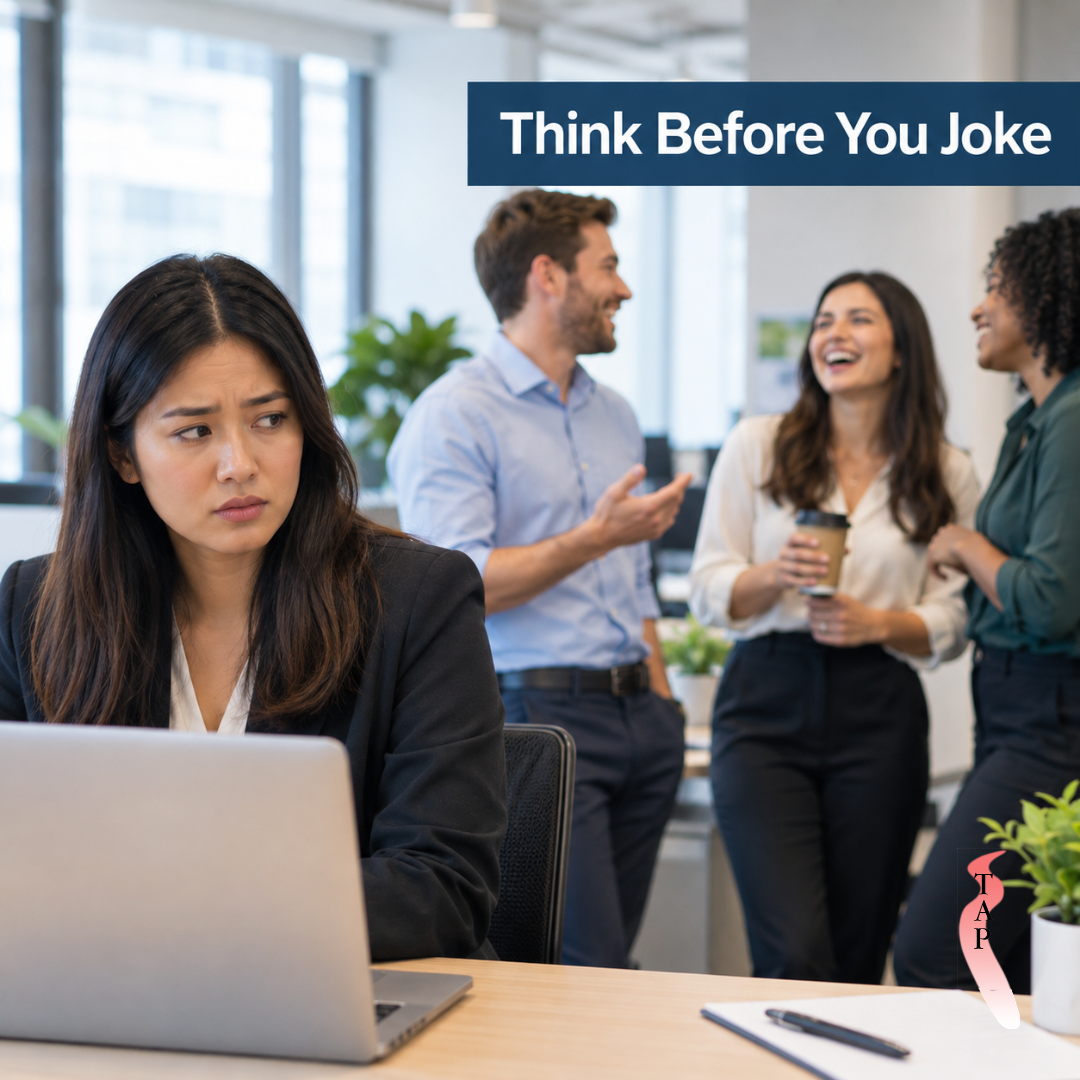
Workplace conversations often include humor, teasing, jokes, and casual comments. While these interactions can help employees build relationships, not every joke is appropriate for a professional setting.
A comment that one employee considers harmless may make another employee uncomfortable or unwelcome. For employers, understanding the difference between intended humor and its impact can be an important part of maintaining a respectful workplace.
When Humor Becomes a Workplace Concern
Not every inappropriate joke or comment will necessarily constitute unlawful harassment. However, repeated or unwelcome comments can contribute to an uncomfortable workplace environment and may conflict with an employer's workplace conduct policies.
Concerns can involve different forms of communication, including:
- Sexual or suggestive jokes
- Comments about someone's appearance or personal life
- Teasing about gender or relationships
- Memes or images shared through workplace communication channels
- Repeated jokes directed at a particular employee
- Conversations that make coworkers uncomfortable
- Comments that continue after someone has indicated they are unwelcome
Employers should consider both their legal obligations and their own workplace policies when addressing these situations.
Intent and Impact Are Not Always the Same
An employee may say that a comment was "only a joke" or that they did not intend to offend anyone. However, the absence of harmful intent does not automatically mean the conduct was appropriate.
For example, an employee may share a meme believing coworkers will find it funny, while another employee may find it uncomfortable or inappropriate. Similarly, repeated teasing may be intended as friendly workplace banter but may be experienced differently by the person receiving it.
This is why workplace expectations should focus not only on what someone intended, but also on whether the conduct is appropriate, welcome, and consistent with professional standards.
Digital Communication Matters Too
Workplace humor is no longer limited to conversations around the office. Employees may communicate through email, messaging platforms, group chats, collaboration tools, and social channels used for work.
Memes, GIFs, images, comments, and jokes shared through these channels can affect workplace relationships and contribute to concerns about inappropriate conduct.
Employers should make sure workplace conduct expectations apply consistently across both in-person and digital communications.
Employees Should Know When to Stop
Employees may not always know how a coworker feels about a particular comment. However, when someone indicates that a joke, comment, or conversation is unwelcome, continuing the behavior can create a greater concern.
Employees should understand the importance of:
- Respecting coworkers' boundaries
- Avoiding repeated unwanted teasing
- Considering the workplace context before sharing jokes or memes
- Listening when someone expresses discomfort
- Following workplace policies and reporting procedures
- Asking a supervisor or HR for guidance when they are unsure about appropriate conduct
Supervisors Have an Important Role
Supervisors can help establish expectations for professional communication. They should avoid dismissing concerns simply because an employee describes the conduct as a joke.
When an employee raises a concern, supervisors should listen, avoid making assumptions, follow established reporting procedures, and involve the appropriate personnel when necessary.
Supervisors should also model respectful communication in their own interactions. Employees are more likely to understand workplace expectations when those expectations are consistently demonstrated by leadership.
The Importance of Sexual Harassment Training
Sexual Harassment Training | TAP Series® can help employees recognize inappropriate workplace conduct and better understand expectations for professional communication.
Training can help employees understand that workplace conduct is not only about what someone intends to communicate. It also involves awareness of how comments, jokes, conversations, and other behavior may affect coworkers.
Training can reinforce:
- Employee awareness of inappropriate conduct
- Clear reporting procedures
- Supervisor responsibilities
- Respectful workplace communication
- Prevention strategies
- Awareness of workplace boundaries
Key Takeaways for Employers
Employers can reinforce respectful workplace communication by:
- Establishing clear standards for workplace jokes and conversations.
- Including digital communications in workplace conduct expectations.
- Training employees to recognize when humor may become inappropriate.
- Encouraging employees to raise concerns through established channels.
- Training supervisors to respond appropriately to concerns.
- Addressing repeated or unwelcome conduct consistently.
Broader Implications for Employers
A respectful workplace does not require employees to avoid humor altogether. Instead, employees should understand that professional communication involves awareness, judgment, and consideration for coworkers.
Clear policies and regular training can help employees recognize that saying "I was only joking" does not necessarily resolve a workplace concern. Employers can use training to create greater awareness of professional boundaries and encourage employees to communicate respectfully.
Conclusion
Workplace humor can contribute to positive relationships, but jokes and comments should remain appropriate for the professional environment. Employees may have different perspectives on what is funny, welcome, or comfortable.
By establishing clear expectations, providing reporting procedures, training supervisors, and reinforcing respectful communication, employers can help employees better understand the importance of considering both intent and impact in workplace interactions.