Home Size Considerations For Buyers
How Property Size Affects Long-Term Homeownership Costs
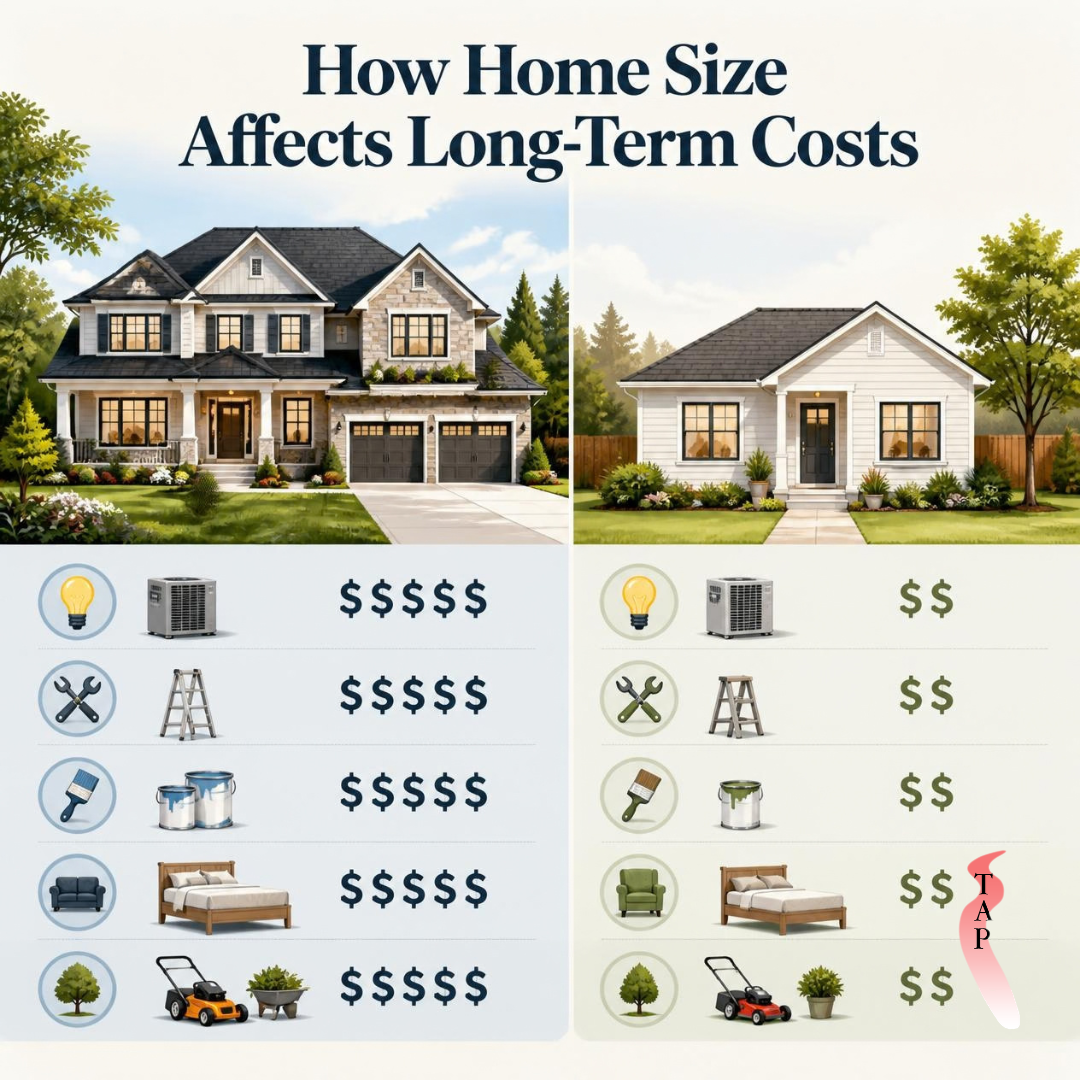
When comparing homes, size is often one of the most noticeable differences. A larger property may offer more bedrooms, living space, storage, and outdoor areas, while a smaller home may require less space to maintain.
However, the purchase price is only one part of the financial picture. Property size can also influence ongoing costs such as utilities, maintenance, repairs, insurance, furnishing, and general upkeep.
Understanding these differences can help buyers consider not only what they can purchase, but also what they will need to maintain over time.
Utilities and Energy Use
A larger home generally has more space to heat, cool, light, and power. It may also contain more rooms, appliances, and fixtures that contribute to household energy use.
For example, a larger property with several bedrooms may require cooling or heating across more areas than a smaller home. Homes with large outdoor areas may also have additional water requirements for landscaping.
However, size is not the only factor affecting utility costs. Insulation, windows, appliances, building materials, climate, energy efficiency, and household habits can all make a difference.
A smaller home can therefore have higher utility use than a larger, more efficient property in some circumstances. Buyers should consider the property's overall efficiency rather than relying on floor area alone.
Maintenance and General Upkeep
More space can mean more surfaces, rooms, fixtures, and outdoor areas that require attention.
A larger property may have additional flooring, walls, windows, bathrooms, landscaping, fencing, or exterior surfaces to clean and maintain. These responsibilities can add both financial costs and time commitments.
Smaller properties generally have fewer areas to maintain, although the actual requirements depend on the home's design, materials, age, and condition.
Buyers should consider what maintaining the property will involve on a regular basis, rather than focusing only on its size.
Repairs and Replacement Costs
Property size can also influence the scale of certain repairs.
For example, replacing flooring throughout a larger home may involve more materials and labor than replacing flooring in a smaller property. A larger roof or exterior area can similarly require more materials when repairs or replacement become necessary.
The same principle can apply to painting, fencing, landscaping, and other property improvements.
At the same time, repair costs are not determined by size alone. The age, construction quality, materials, and condition of a property can have a significant influence on future maintenance needs.
Insurance and Other Property-Related Costs
Some property-related costs may be influenced by the size and characteristics of a home. A larger property can have a greater replacement value, while additional structures or features may also affect insurance requirements and costs.
Insurance premiums vary according to location, property characteristics, coverage, and the insurer's assessment of risk. Buyers should therefore review actual insurance costs for a property rather than assuming that size alone determines the price.
Other ongoing expenses, such as property taxes or local charges, may also be influenced by property characteristics depending on the location and applicable rules.
Furnishing a Larger Home
A larger home can require more furniture and household items to make use of the available space.
A buyer moving from a small apartment into a substantially larger property may need additional beds, seating, storage furniture, lighting, window coverings, and other household items.
These expenses can occur gradually rather than immediately, but they are still part of the practical cost of living in a larger home.
Smaller homes can require less furniture overall, although compact spaces may sometimes require specialized storage or multifunctional furniture that can also involve additional costs.
Outdoor Space and Landscaping
Property size can extend beyond the building itself. A larger block may provide more outdoor space, but it can also create additional maintenance responsibilities.
Lawns may need mowing, gardens may require care, trees may need attention, and outdoor structures may require periodic maintenance.
For buyers who enjoy gardening or outdoor activities, this additional space may be useful. For others, maintaining a large yard may represent an ongoing responsibility that they would rather avoid.
The key consideration is whether the outdoor space fits the household's lifestyle and willingness to maintain it.
Larger Does Not Always Mean More Expensive to Own
It is easy to assume that a larger property will automatically cost more to operate, but property size is only one part of the equation.
Two homes with similar floor areas can have very different ownership costs because of differences in age, construction, energy efficiency, location, landscaping, fixtures, and condition.
For example, a newer, energy-efficient home may have different ongoing costs from an older property of similar size that requires more maintenance. A smaller property with extensive gardens or older systems may also require more upkeep than its floor area suggests.
This is why buyers should look beyond square footage when assessing long-term costs.
Consider How Much Space You Actually Need
The practical value of additional space depends on how it will be used.
A larger home may make sense for a household that needs several bedrooms, a dedicated home office, storage, entertaining space, or room for changing family needs. However, unused rooms still require cleaning, maintenance, furnishing, and utilities.
A smaller property may provide enough space for a buyer's current lifestyle while reducing some of the responsibilities associated with maintaining additional rooms and outdoor areas.
Neither option is automatically more suitable. The important question is whether the property's size matches the household's actual needs.
Think Beyond the Purchase Price
When comparing properties, buyers can consider both the upfront cost and the ongoing responsibilities associated with the space.
Useful questions include:
- How much space needs to be heated or cooled?
- How much landscaping will need regular maintenance?
- How many bathrooms and fixtures require upkeep?
- What major systems or materials may eventually need replacement?
- How much furniture will be needed?
- Are there additional structures, pools, gardens, or outdoor areas?
- How much time will regular maintenance require?
- Are the property's energy efficiency and condition likely to affect ongoing expenses?
These questions can provide a more complete picture of what owning each property may involve.
Final Thoughts
Property size can influence long-term homeownership costs through utilities, maintenance, repairs, furnishing, landscaping, and general upkeep. However, size should not be considered in isolation.
A larger home can provide useful space and flexibility, but it may also involve more areas to maintain and furnish. A smaller home may reduce some ongoing responsibilities, but its costs will still depend on factors such as condition, efficiency, design, and location.
Before choosing between properties, buyers can consider how much space they genuinely need and what responsibilities come with maintaining that space. Looking at both the benefits and ongoing costs can provide a more realistic understanding of the long-term homeownership experience.