Employer Harassment Compliance
How Employers Can Prepare for Harassment Concerns Involving Senior Leadership
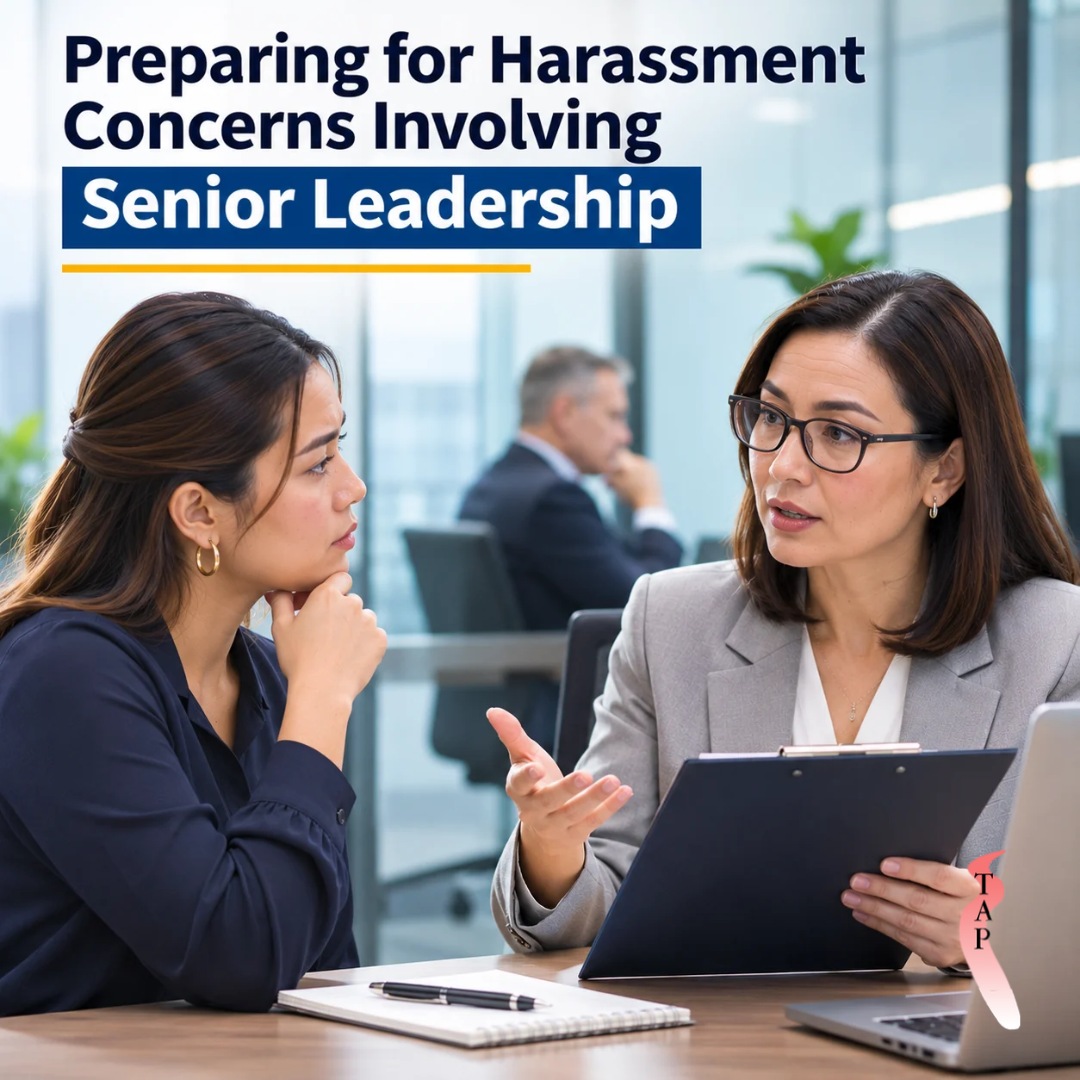
Workplace harassment complaints involving executives or high-ranking managers can present additional challenges for employers. Employees may hesitate to report inappropriate conduct when the person involved has authority over their employment, career advancement, or workplace responsibilities.
Preparing for sexual harassment concerns involving senior leadership requires accessible reporting alternatives, impartial investigations, accurate documentation, and consistent accountability.
Employers should establish procedures that allow complaints to be addressed appropriately, regardless of an individual's position.
Why Senior Leadership Complaints Require Special Attention
Senior executives often influence workplace decisions, including promotions, compensation, assignments, and employee evaluations.
When harassment concerns involve these individuals, employees may worry about retaliation or question whether their complaints will receive fair consideration.
Potential challenges include:
- Employees feeling uncomfortable reporting concerns through their direct supervisors.
- HR personnel having limited independence from senior leadership.
- Witnesses fearing negative consequences for participating.
- Conflicts of interest affecting investigation decisions.
- Concerns about preferential treatment or inconsistent accountability.
Employers should recognize these challenges when developing complaint-handling procedures.
Establishing Alternative Reporting Channels
Employees should have reporting options that do not require them to approach the individual involved in the alleged misconduct.
Depending on the organization's structure, alternatives may include:
- Reporting directly to another designated HR representative.
- Contacting an independent ethics or compliance officer.
- Using a confidential reporting hotline.
- Raising concerns with an appropriate board committee.
- Accessing an external reporting contact when appropriate.
Reporting procedures should be clearly communicated and accessible to all employees.
Ensuring Impartial Investigations
Complaints involving senior leadership may require additional safeguards to maintain investigative independence.
Employers should evaluate potential conflicts of interest before assigning an investigator.
When appropriate, an independent external investigator or another qualified individual outside the executive's reporting structure may conduct the investigation.
The person accused should not control the investigative process, determine which evidence is reviewed, or influence the findings.
Investigations should remain prompt, objective, and appropriate to the circumstances.
Maintaining Documentation and Accountability
Accurate documentation is important when addressing harassment complaints involving influential individuals.
Employers should record:
- Relevant allegations and reported incidents.
- Dates, communications, and supporting evidence.
- Witness statements and investigation steps.
- Potential conflicts of interest and how they were addressed.
- Findings and the reasons for corrective decisions.
- Follow-up measures and reported retaliation concerns.
Sensitive records should be securely maintained and accessible only to individuals with a legitimate need to know.
Corrective actions should reflect the findings and relevant circumstances, without granting preferential treatment based on seniority.
Preventing Retaliation
Employees may be particularly concerned about retaliation when reporting misconduct involving senior leadership.
Employers should communicate anti-retaliation protections, monitor for potential concerns, and respond appropriately to reports of negative treatment.
Temporary workplace adjustments may be necessary in some circumstances, but employers should avoid unnecessarily disadvantaging the employee who reported the concern.
Legal Background
Title VII of the Civil Rights Act of 1964 prohibits covered employers from engaging in unlawful sex discrimination, including sexual harassment that meets applicable legal standards.
An employer's potential liability may depend in part on the harasser's authority, the nature of the conduct, and whether a tangible employment action occurred. Employers may face heightened liability concerns when harassment involves supervisors or senior officials.
Title VII also prohibits retaliation for legally protected reporting or participation activities.
Applicable state and local laws may impose additional obligations.
The Importance of Sexual Harassment Training
Sexual harassment prevention training can help employees understand reporting alternatives and reinforce leadership accountability.
Sexual Harassment Training | TAP Series®
Training should address:
- Employee awareness: Recognizing inappropriate conduct regardless of the individual's position.
- Reporting procedures: Understanding alternative channels when senior leaders are involved.
- Supervisor responsibilities: Escalating complaints appropriately and identifying conflicts of interest.
- Workplace respect: Reinforcing professional boundaries across all levels of authority.
- Prevention strategies: Supporting impartial investigations, consistent accountability, and anti-retaliation safeguards.
Training should complement clear workplace policies and independent complaint-handling arrangements when necessary.
Key Takeaways for Employers
Employers can prepare for leadership-related harassment concerns by:
- Providing multiple reporting channels outside normal management structures.
- Identifying potential investigative conflicts of interest.
- Considering independent investigators when appropriate.
- Maintaining accurate and secure documentation.
- Applying accountability standards consistently.
- Protecting employees and witnesses from retaliation.
- Reviewing procedures regularly to identify improvement opportunities.
Conclusion
Harassment complaints involving senior leadership require careful attention to reporting independence, investigative fairness, and employee protection.
Employers should establish clear procedures before concerns arise and ensure that executives are subject to appropriate workplace conduct standards.
By strengthening alternative reporting channels, maintaining impartial investigations, and reinforcing leadership accountability, organizations can support responsible workplace harassment prevention practices.