Evaluating Pest Risks Before Buying A Home
How to Assess a Property's Pest and Termite Risk Before Buying
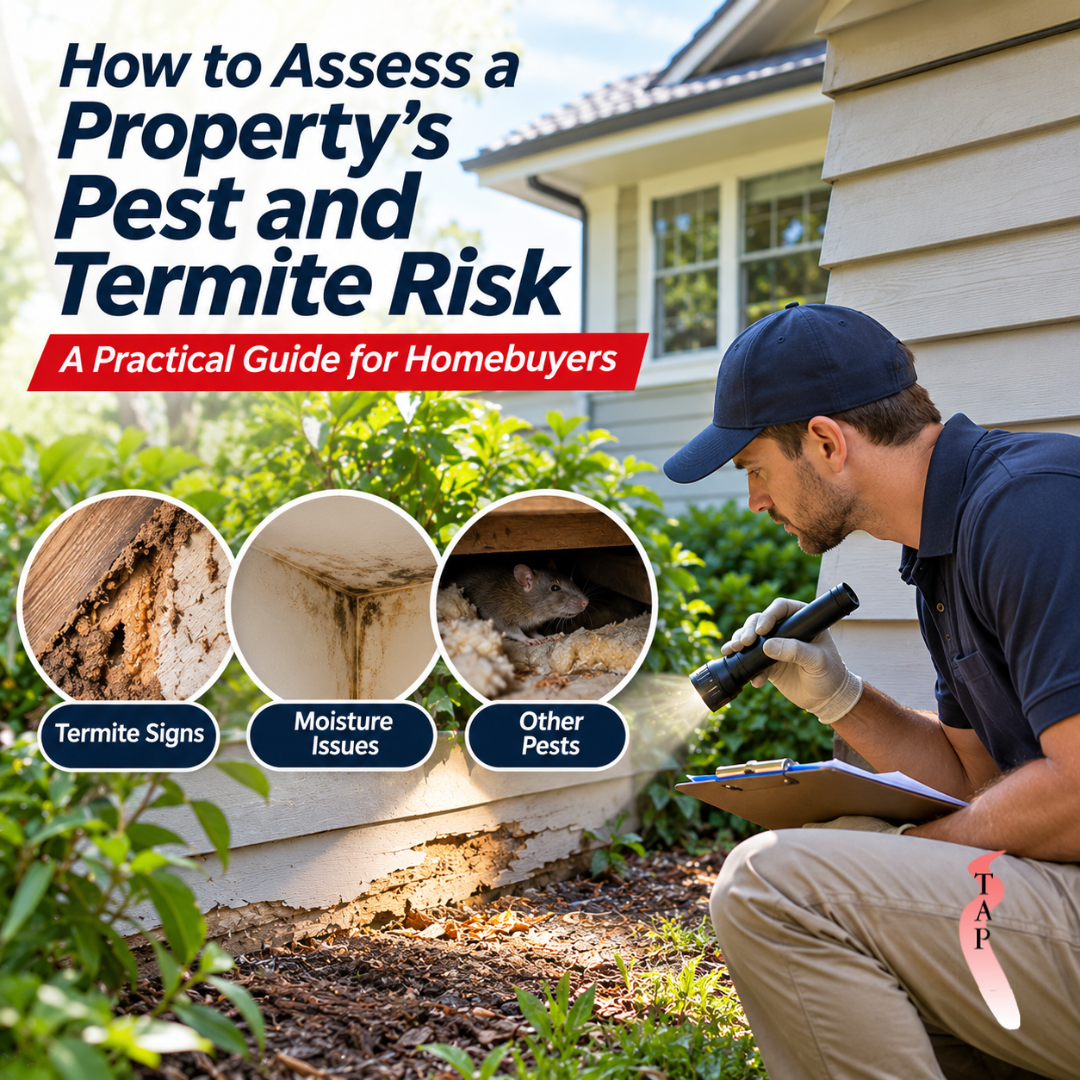
Buying a home involves evaluating its structural condition, maintenance history, and potential long-term expenses. One consideration that buyers may overlook is the possibility of pest activity, particularly termites and other wood-damaging organisms.
Assessing a property's pest and termite risk can help prospective buyers identify visible warning signs, understand environmental conditions that attract pests, and determine whether specialized inspections may be necessary.
Although pest activity does not automatically make a property unsuitable for purchase, untreated infestations can damage building materials and create unexpected maintenance responsibilities.
Understanding the factors that influence pest activity can help buyers make informed decisions before purchasing.
Why Pest and Termite Risk Matters When Buying Property
Different pests can affect a home's condition, cleanliness, and maintenance requirements.
Termites are particularly important because certain species feed on cellulose-based materials, including wood and some building products.
Over time, termite activity may weaken wooden framing, flooring, and other structural components.
Other common household pests include rodents, cockroaches, ants, and carpenter ants. Depending on the species, they may damage materials, contaminate stored food, or create sanitation concerns.
However, the presence of pests does not necessarily indicate extensive damage.
The significance of an infestation depends on the species involved, the extent of activity, and whether appropriate treatment or repairs have been completed.
Recognize Common Signs of Termite Activity
Termites can remain concealed inside walls, flooring, and structural materials, making infestations difficult to identify through casual observation.
Potential warning signs include:
- Mud tubes: Narrow tunnels made from soil and other materials, sometimes found along foundations or walls.
- Discarded wings: Wings left behind by reproductive termites, often near windows or doors.
- Damaged wood: Timber that appears hollow, weakened, or unusually fragile.
- Small pellets: Certain drywood termites leave distinctive droppings near infested materials.
- Blistered surfaces: Unusual changes in wood finishes that may sometimes be associated with concealed damage.
These observations are not definitive evidence of termites. Similar conditions can result from moisture damage or other insects.
Buyers should avoid disturbing suspected activity before a qualified pest professional has assessed the area.
Identify Signs of Other Household Pests
Termites are not the only pests worth considering during a property evaluation.
Rodents may leave droppings, gnaw marks, damaged insulation, or nesting materials in concealed areas.
Cockroach activity may be associated with droppings, egg cases, or sightings around kitchens, bathrooms, and utility spaces.
Carpenter ants may excavate galleries in wood, particularly where moisture has affected building materials.
Buyers can observe accessible storage areas, cabinets, basements, attics, and spaces around plumbing.
However, pest activity may be intermittent or concealed, so the absence of visible evidence during a viewing does not establish that a property is pest-free.
Understand Conditions That Attract Pests
Certain environmental and maintenance conditions can make properties more attractive to pests.
Moisture is an important consideration because many pests thrive in damp environments.
Leaking pipes, poor drainage, roof damage, and inadequate ventilation may create favorable conditions.
Other contributing factors include:
- Firewood or timber stored directly against exterior walls.
- Vegetation growing close to the building.
- Cracks and openings around foundations or utility connections.
- Accumulated debris in crawl spaces or storage areas.
- Poorly sealed doors and windows.
- Food waste or unsecured garbage containers.
These conditions do not automatically mean pests are present.
However, identifying them can help buyers understand whether preventive maintenance may be necessary.
Consider Climate and Geographic Location
Pest activity varies depending on climate, local ecosystems, and seasonal conditions.
Termites are particularly relevant in many warm and humid regions, although certain species also occur in cooler climates.
Rainfall, soil moisture, and temperature can influence pest behavior and activity.
For example, properties in humid environments may experience conditions favorable to subterranean termites, especially when moisture accumulates near foundations.
Drywood termites, by comparison, can infest suitable wood without direct contact with soil.
Buyers should research common pests in the property's region rather than assuming that all locations have identical risks.
Local university extension services and public environmental resources may provide useful information about regional pest species.
Evaluate Building Materials and Construction Features
A property's construction materials can influence its vulnerability to particular pests.
Homes with wooden framing, flooring, siding, or structural components may contain materials susceptible to wood-damaging insects.
However, masonry and concrete homes are not automatically protected from termites.
Termites may travel through concealed openings and reach wooden components, cabinetry, or other cellulose-based materials.
Construction details such as crawl spaces, foundation joints, and wood-to-soil contact can also influence potential access points.
Buyers should evaluate the complete building rather than relying solely on its exterior appearance.
Understand the Importance of Pest Inspections
A general home inspection may identify visible pest damage or conditions associated with infestation.
However, it may not include a comprehensive assessment of termites or other wood-destroying organisms.
A specialized pest inspection typically focuses on accessible areas where evidence of activity or damage may be present.
Depending on local practices, inspectors may examine foundations, crawl spaces, attics, exposed timber, and surrounding conditions.
Inspection findings can help identify visible activity, previous damage, or areas requiring additional evaluation.
However, inspections have limitations because concealed spaces may not be accessible.
Buyers should understand what the inspection covers and whether further structural assessment is appropriate when significant damage is suspected.
Review Previous Pest Treatments and Property Records
A history of termite treatment does not necessarily mean a property has an ongoing infestation.
Some homes receive preventive treatment, while others undergo treatment after activity is discovered.
Buyers can request available documentation showing previous inspections, treatment dates, products or methods used, and any follow-up recommendations.
Records may also indicate whether damaged materials were repaired or replaced.
It is useful to distinguish between treatment that addresses pest activity and repairs that address resulting structural damage.
Both may be relevant when evaluating the property's condition.
Consider Pest Prevention and Ongoing Maintenance
Pest prevention generally involves reducing favorable conditions and monitoring for signs of activity.
Depending on the property, maintenance may include improving drainage, repairing leaks, sealing accessible openings, and managing vegetation near the building.
Keeping wood and debris away from foundations can also help reduce certain pest risks.
Some properties may benefit from ongoing professional monitoring or treatment programs, particularly in regions where termites are common.
However, preventive measures cannot eliminate every possibility of infestation.
Buyers should consider whether the property's construction, environment, and maintenance requirements fit their long-term expectations.
Understand Potential Treatment and Repair Expenses
Pest-related costs depend on the species, extent of infestation, treatment method, and damage involved.
A limited pest problem may require relatively straightforward treatment.
More extensive termite damage could involve replacing structural timber, repairing flooring, or addressing moisture problems that contributed to the infestation.
Treatment expenses and building repairs are separate considerations.
For example, eliminating active termites does not restore wood that has already been structurally weakened.
When substantial damage is suspected, buyers may benefit from both pest inspection findings and an assessment by an appropriately qualified building professional.
Practical Pest and Termite Checklist for Buyers
Before purchasing, buyers can investigate several important questions:
- Are there visible signs of activity? Look for mud tubes, discarded wings, droppings, or damaged wood.
- Are moisture problems present? Examine drainage, plumbing, ventilation, and damp areas.
- Does the construction create potential access points? Consider wood-to-soil contact, foundation openings, and crawl spaces.
- What pests are common locally? Research regional climate conditions and relevant species.
- Are inspection and treatment records available? Review previous findings, treatments, and repairs.
- Is specialized inspection appropriate? Consider professional assessment when conditions or observations raise concerns.
These steps can help buyers identify information gaps without assuming that every warning sign indicates an active infestation.
Conclusion
Understanding residential pest risks involves examining visible evidence, moisture conditions, construction materials, local climate, and previous treatment history.
Termites and other pests can affect a property's condition, but their significance depends on the extent of activity, resulting damage, and available maintenance information.
By reviewing property records, considering preventive maintenance, and obtaining specialized inspections when appropriate, buyers can develop a clearer understanding of potential pest-related responsibilities.
Careful evaluation of termite and pest concerns can support informed property decisions and more realistic expectations about long-term home maintenance.
This article is intended for general educational purposes only and does not constitute pest control, structural engineering, property inspection, or financial advice. Pest risks and treatment requirements vary by location and property conditions.