Food Safety Compliance For Grocery Businesses
Inspection Failures in Grocery Stores: Why They Happen and How to Avoid Them
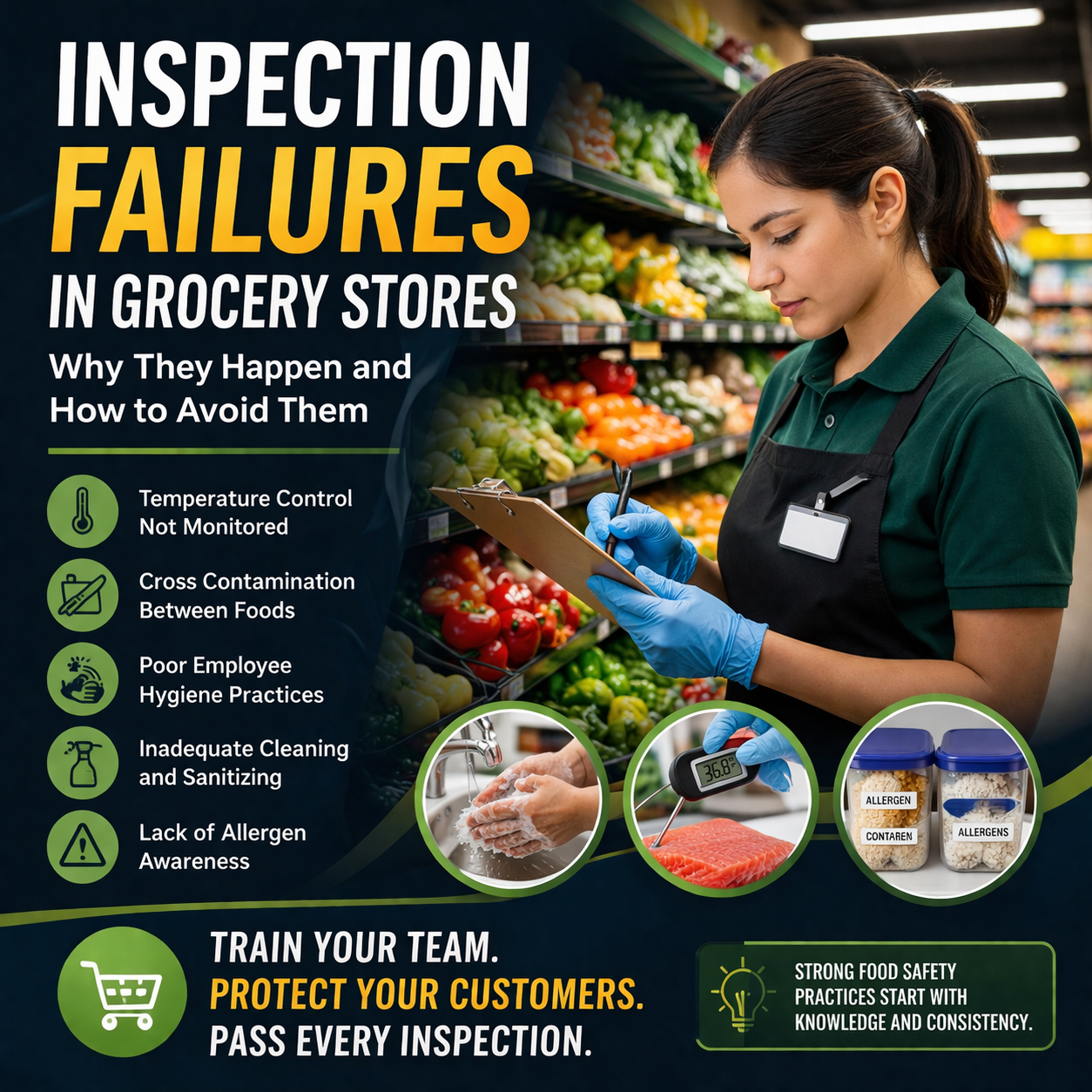
Grocery stores are trusted to provide safe, high quality food to their communities. However, failing a health inspection can quickly damage that trust and expose a business to fines, operational disruptions, and reputational harm. Inspection failures in grocery environments are often preventable and usually stem from gaps in training, inconsistent procedures, or lack of awareness.
Understanding why grocery stores fail inspections is the first step toward building safer operations and maintaining compliance.
Why Grocery Stores Commonly Fail Inspections
Health inspectors evaluate grocery stores based on critical food safety standards. Many failures occur not because of intentional neglect, but because of overlooked daily practices.
Common causes include:
- Improper time and temperature control
- Cross contamination during food handling
- Poor employee hygiene practices
- Inadequate cleaning and sanitizing procedures
- Failure to identify and manage allergen risks
- Lack of consistent monitoring and documentation
These issues often arise in deli sections, bakeries, prepared food areas, and storage zones where food handling is frequent.
Time and Temperature Control Issues
Improper temperature management is one of the leading causes of inspection violations. When food is not stored or held at safe temperatures, harmful bacteria can grow rapidly.
Common problems include:
- Cold foods not kept at safe refrigeration levels
- Hot foods falling below required holding temperatures
- Inconsistent thermometer use or calibration
- Lack of temperature monitoring logs
Employees must understand how time and temperature directly impact food safety and foodborne illness risks.
Cross Contamination Risks in Grocery Operations
Cross contamination is a major concern in grocery stores that handle raw and ready to eat foods in close proximity.
Risks increase when:
- The same tools are used for different food types without proper cleaning
- Raw meats are stored near ready to eat items
- Employees fail to change gloves between tasks
- Surfaces are not properly sanitized
Preventing cross contamination requires both awareness and strict adherence to cleaning protocols.
Employee Hygiene and Food Handling Practices
Employee behavior is closely observed during inspections. Poor hygiene practices can easily lead to violations.
Common issues include:
- Improper handwashing
- Handling food while sick
- Poor personal hygiene standards
- Incorrect glove usage
Employees must understand how their actions directly impact food safety and customer health.
Allergen Awareness Gaps
Grocery stores that offer deli, bakery, or prepared foods must manage allergen risks carefully. Failure to do so can lead to serious health consequences and inspection concerns.
Typical gaps include:
- Not identifying major allergens in food items
- Cross contact between allergen and non allergen foods
- Miscommunication about allergen free orders
- Lack of procedures for handling allergen related requests
Proper allergen awareness is essential for both compliance and customer safety.
How Food Handler Training Helps Prevent Inspection Failures
Consistent and practical training is one of the most effective ways to reduce violations and improve inspection outcomes.
The Food Handler Training course from TAP Series provides essential knowledge for employees working directly with food.
Learn more about the course here:
Food Handler Training | TAP Series®
This training equips staff with real world skills that support safe daily operations.
Key Learning Areas Include:
- Time and Temperature Control
Employees learn how temperature affects food safety and how to properly monitor and manage it. - Personal Hygiene and Safe Practices
Training reinforces the connection between employee behavior and foodborne illness prevention. - Contamination Prevention
Staff gain practical knowledge on how to prevent contamination at every stage of food handling. - Cleaning and Sanitizing Procedures
Employees learn proper methods to maintain a clean and safe food preparation environment. - Problem Solving in Food Safety
Training helps staff identify risks and apply solutions in real world scenarios.
Strengthening Allergen Safety with Targeted Training
Allergen risks are a growing concern in grocery environments. Employees must be prepared to handle allergen related situations accurately and responsibly.
The Allergen Awareness Training course provides critical knowledge for managing allergen safety.
Learn more about the course here:
Allergen Awareness | Tap Series®
What Employees Learn:
- Identify the major food allergens
- Understand how cross contact occurs
- Apply strategies to prevent allergen exposure
- Communicate allergen information clearly
- Recognize and respond to allergic reactions
This training helps reduce risks and supports safer customer experiences.
Building Inspection Ready Grocery Operations
Avoiding inspection failures requires more than preparing for inspection day. It requires consistent daily practices supported by proper training and accountability.
Grocery stores that invest in food safety training benefit from:
- Improved compliance with health regulations
- Reduced risk of foodborne illness incidents
- Increased employee confidence and accountability
- Stronger customer trust and brand reputation
By implementing structured training programs such as Food Handler Training and Allergen Awareness Training, grocery businesses can address common risk factors, improve operational consistency, and maintain high food safety standards across all departments.