Mandated Reporter Training Online Course
Mandatory Reporting in Education: Why Failure to Report Puts Staff at Risk
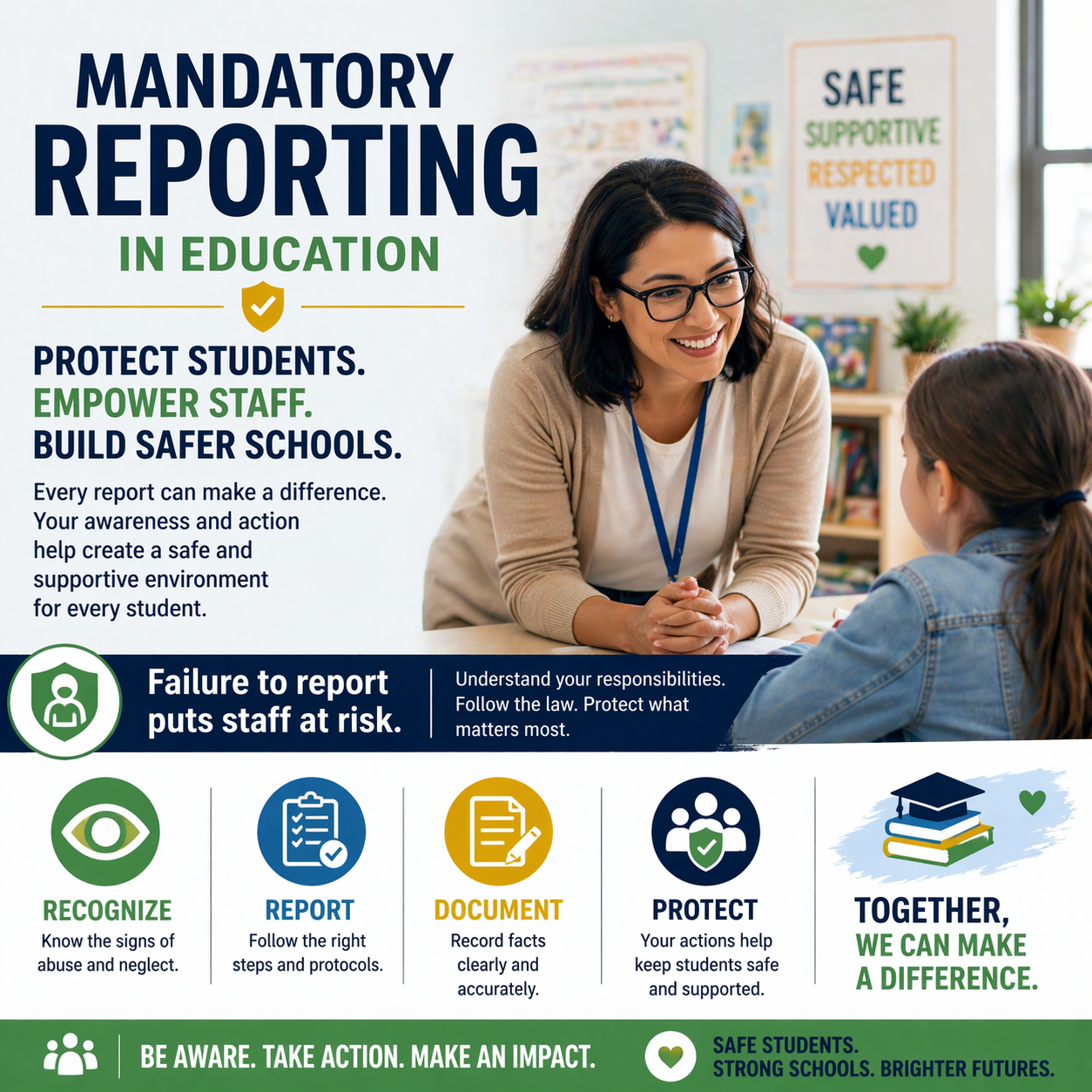
Schools are trusted environments where students should feel safe, supported, and protected. Educators and school staff are often the first to notice when something is wrong. Because of this, many professionals in education are legally designated as mandated reporters.
Failure to report suspected abuse or neglect does not just put students at risk. It also exposes staff and institutions to serious legal and professional consequences. Understanding these responsibilities is essential for maintaining both student safety and compliance.
What Mandatory Reporting Means for Education Professionals
Mandated reporting laws require certain individuals to report suspected child abuse or neglect to the appropriate authorities. In educational settings, this responsibility typically applies to:
- Teachers
- School administrators
- Counselors
- Support staff
- Coaches and activity leaders
These individuals are not expected to investigate or confirm abuse. Their responsibility is to report when there is reasonable suspicion based on observed signs or disclosures.
Why Failure to Report Creates Serious Risk
When staff fail to report concerns, the consequences can be severe for both the student and the employee.
Potential risks include:
- Continued harm or danger to the child
- Legal penalties or fines
- Loss of professional licenses or certifications
- Disciplinary action or termination
- Liability for the school or organization
Many staff hesitate because they fear being wrong or misinterpreting a situation. However, reporting laws are designed to protect those who act in good faith.
Recognizing Signs of Abuse and Neglect
Early recognition is critical in preventing further harm. Abuse and neglect may present in different ways, and educators must remain aware of potential indicators.
Common warning signs include:
- Unexplained injuries or repeated incidents
- Sudden behavioral or emotional changes
- Fear of going home or specific individuals
- Neglect of basic needs such as hygiene or nutrition
- Withdrawal, anxiety, or aggression
Recognizing these signs allows staff to take timely and appropriate action.
Understanding Types of Abuse
Education professionals must be familiar with the different forms of abuse to better identify concerns.
- Physical Abuse
Intentional physical harm inflicted on a child. - Emotional Abuse
Behavior that negatively impacts a child’s emotional development or self worth. - Sexual Abuse
Any form of sexual activity involving a child. - Neglect
Failure to provide basic care, supervision, or essential needs.
Each type may present differently, which makes training and awareness essential.
The Importance of Proper Documentation and Reporting
Accurate documentation is a key part of the reporting process. Staff must be able to record observations clearly and objectively.
Effective documentation includes:
- Factual descriptions of observed behavior or injuries
- Dates, times, and locations of incidents
- Statements made by the child when applicable
- Avoiding assumptions or personal opinions
Following proper reporting procedures ensures that concerns are handled appropriately and in compliance with legal requirements.
How Mandatory Reporter Training Supports Education Professionals
Handling suspected abuse situations can be overwhelming without proper guidance. Structured training helps staff understand their responsibilities and act with confidence.
The Mandatory Reporter Training course from TAP Series provides essential knowledge for education professionals.
Learn more about the course here:
Mandatory Reporter Training | Tap Series®
Key Skills Developed Through Mandatory Reporter Training
This training equips staff with practical skills needed to fulfill their role effectively.
Recognizing Signs of Abuse and Neglect
Employees learn how to identify physical, behavioral, and emotional indicators of concern.
Differentiating Types of Abuse
Training helps staff understand how different forms of abuse and neglect may appear.
Documenting Information Properly
Participants learn how to record observations accurately and responsibly.
Understanding Reporting Laws and Protocols
Staff gain clarity on legal requirements and the correct steps to take when reporting.
Creating a Safer Educational Environment
Mandatory reporting is a critical part of protecting students and maintaining safe learning environments. When staff understand their responsibilities and feel confident in the reporting process, they are more likely to take action when it matters.
Organizations that invest in training benefit from:
- Improved compliance with legal requirements
- Greater staff confidence in handling sensitive situations
- Stronger protection for students
- Reduced risk of legal and professional consequences
By implementing structured programs such as Mandatory Reporter Training, schools can support their staff, strengthen accountability, and ensure that student safety remains a top priority.