Employer Harassment Prevention
AI-Generated Images, Deepfakes, and Sexual Harassment in the Workplace
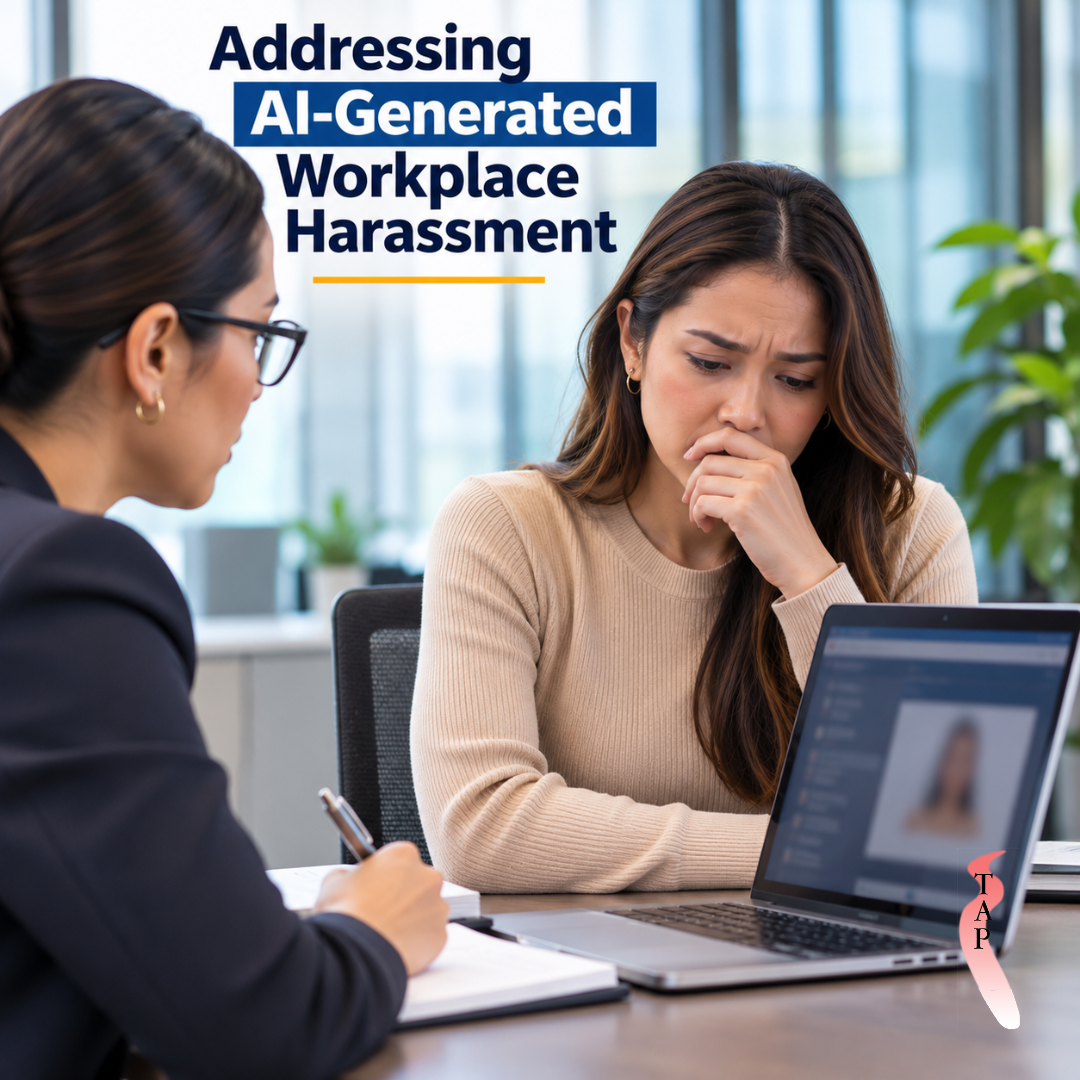
Artificial intelligence has made it easier to create realistic images, videos, and other digital content. However, these technologies can also be misused to produce manipulated sexual imagery involving coworkers without their consent.
AI-generated images and deepfakes can raise serious workplace sexual harassment concerns, particularly when inappropriate content is created, shared, or used to intimidate employees.
Employers should understand these emerging risks and establish clear policies, reporting procedures, and appropriate responses.
Understanding AI-Generated Images and Deepfakes
AI-generated images are created using artificial intelligence, while deepfakes involve digitally generated or manipulated media that can make someone appear to be doing or saying something they never did.
Inappropriate uses of these technologies may include:
- Creating fake sexual or sexually suggestive images of coworkers.
- Sharing manipulated images through workplace group chats.
- Using AI tools to alter an employee's appearance in a sexualized manner.
- Threatening to distribute fabricated intimate content.
- Forwarding or reposting inappropriate AI-generated material involving colleagues.
Even when the content is fabricated, its creation or distribution can cause distress, damage reputations, and contribute to a hostile work environment.
How Deepfakes Can Create Workplace Harassment Risks
AI-generated sexual imagery can be particularly harmful because it may falsely portray a real employee in an intimate or compromising situation.
Employees targeted by this conduct may experience embarrassment, anxiety, or concerns about their professional reputation.
Workplace harassment concerns may also arise when manipulated images are used to intimidate employees, make inappropriate jokes, or pressure someone into unwanted interactions.
Employers should recognize that fabricated content can still constitute inappropriate workplace conduct. Whether it amounts to unlawful harassment depends on the circumstances and applicable legal standards.
Establishing Clear Workplace Policies
Employers should ensure that harassment prevention policies address AI-generated content and other forms of digital misconduct.
Important measures include:
- Prohibited conduct: Clearly prohibit creating, sharing, or threatening to distribute sexualized AI-generated content involving coworkers.
- Digital communication: Apply workplace conduct expectations to messaging platforms, shared channels, and work-related social media.
- Reporting procedures: Explain how employees can report manipulated images or other inappropriate digital content.
- Privacy protection: Establish safeguards for handling sensitive images and personal information.
- Accountability: Explain that policy violations may result in appropriate corrective or disciplinary action.
Policies should also address misconduct involving personal devices or accounts when the behavior has a sufficient connection to the workplace.
Reporting and Responding to Concerns
Employees should have accessible ways to report concerns involving AI-generated or manipulated sexual imagery.
When a complaint is received, employers should:
- Take the report seriously and assess any immediate safety or privacy concerns.
- Preserve relevant digital evidence through appropriate procedures.
- Limit unnecessary access to or distribution of sensitive material.
- Conduct a prompt, impartial, and appropriate investigation.
- Take corrective action when warranted.
- Protect employees from retaliation for reporting concerns or participating in investigations.
Employees should not be expected to circulate sensitive images as proof. Employers should provide secure methods for submitting relevant evidence.
Legal Background
Title VII of the Civil Rights Act of 1964 prohibits covered employers from engaging in unlawful sex discrimination, including sexual harassment that meets applicable legal standards.
Creating or distributing manipulated sexual imagery involving a coworker may contribute to a hostile work environment when the conduct is sufficiently severe or pervasive.
Depending on the circumstances, additional federal, state, or local laws concerning privacy, nonconsensual intimate imagery, or digital misconduct may apply.
Employers should evaluate incidents based on the specific facts and seek appropriate legal guidance when necessary.
The Importance of Sexual Harassment Training
Sexual harassment prevention training can help employees recognize emerging forms of digital harassment and understand their responsibilities when using AI technologies.
Sexual Harassment Training | TAP Series®
Training should address:
- Employee awareness: Recognizing inappropriate AI-generated or manipulated content.
- Reporting procedures: Understanding how to report digital harassment and preserve relevant evidence.
- Supervisor responsibilities: Responding appropriately to complaints and escalating concerns.
- Workplace respect: Reinforcing professional boundaries and responsible technology use.
- Prevention strategies: Addressing digital misconduct through clear policies and practical workplace scenarios.
Training should complement appropriate technology policies, secure reporting channels, and consistent responses to misconduct.
Key Takeaways for Employers
Employers can strengthen prevention efforts by:
- Including AI-generated sexual imagery and deepfakes in harassment prevention policies.
- Establishing clear rules for responsible workplace technology use.
- Providing secure and accessible reporting procedures.
- Protecting employee privacy during investigations.
- Training supervisors to recognize and respond to digital harassment.
- Enforcing workplace policies consistently and preventing retaliation.
Conclusion
AI-generated images and deepfakes introduce additional challenges for employers addressing sexual harassment and digital misconduct.
Although manipulated content may be fabricated, its impact on employees and workplace relationships can be significant.
By establishing clear policies, protecting employee privacy, responding appropriately to complaints, and providing digital harassment prevention training, employers can reinforce professional conduct and address emerging workplace risks.