Evaluating Home Emergency Readiness
How to Evaluate a Property's Emergency Preparedness Features
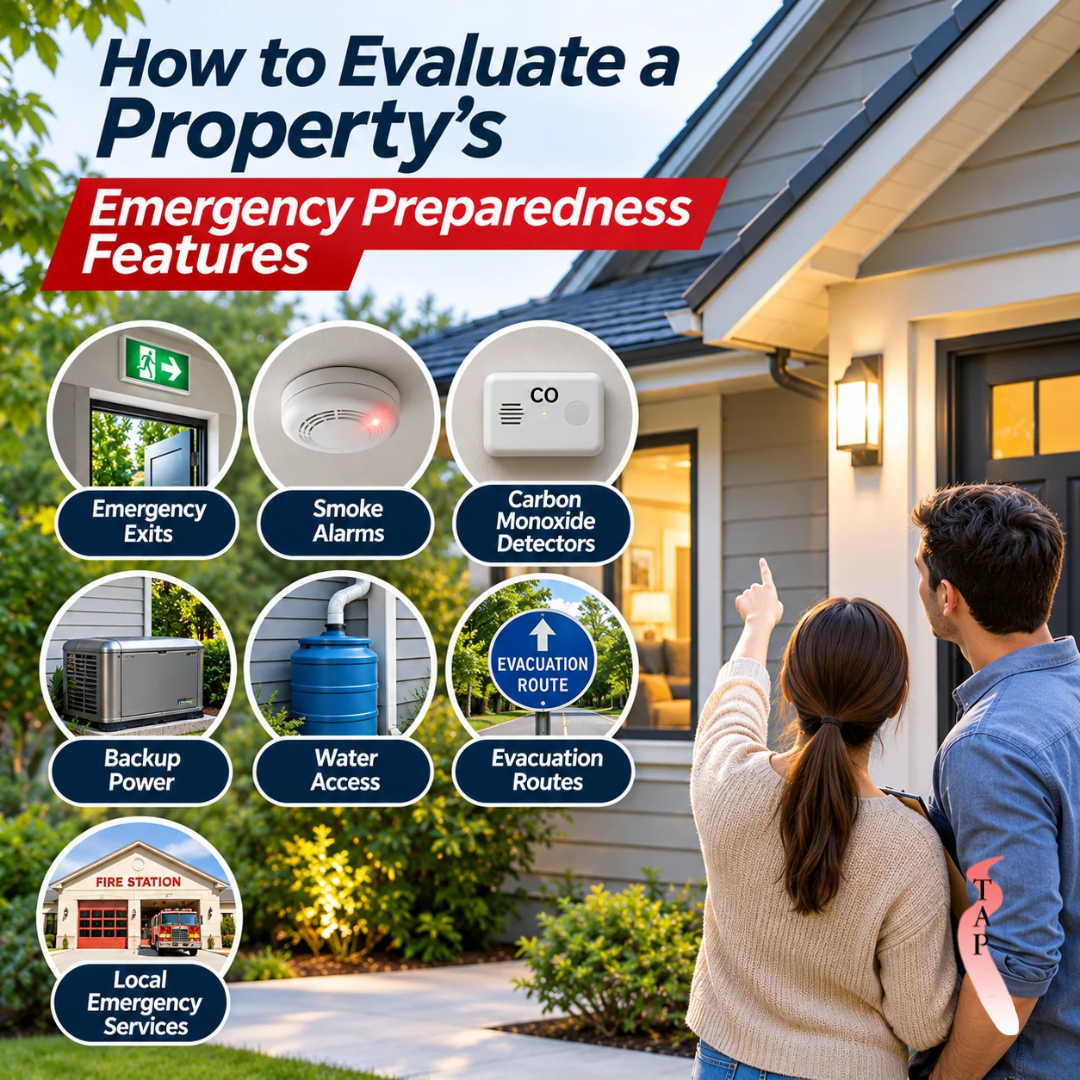
When buying a home, prospective homeowners often prioritize location, affordability, structural condition, and everyday comfort. However, a property's ability to support household safety during emergencies is another important consideration.
Property emergency preparedness features include emergency exits, smoke alarms, carbon monoxide detectors, backup power systems, and other provisions that may help residents respond to unexpected situations.
Although no property can eliminate every emergency risk, understanding its existing safety features and surrounding infrastructure can help buyers identify potential improvements and prepare for future homeownership responsibilities.
Evaluate Emergency Exits and Escape Routes
Emergency exits provide alternative ways to leave a property when normal access routes become unsafe or unavailable.
Buyers should examine the home's layout and consider how easily occupants can exit bedrooms, living areas, basements, and upper floors.
Important considerations include:
- Accessible exterior doors and escape windows.
- Unobstructed hallways and stairways.
- Functional door and window locks that allow occupants to exit safely.
- Appropriate emergency escape openings in basement bedrooms.
- Clear pathways leading away from the building.
Homes with multiple stories, converted living spaces, or unusual layouts may require additional consideration.
Accessibility is also important for households with children, older adults, or individuals with mobility limitations.
Local building and fire safety requirements may specify particular emergency escape provisions.
Check Smoke Alarms and Fire Detection Systems
Smoke alarms provide early warning when smoke is detected, giving occupants additional time to respond to a potential fire.
During a property viewing, buyers can observe whether smoke alarms are installed in appropriate locations, including bedrooms, areas outside sleeping spaces, and each level of the home.
Smoke alarms may be battery-powered, hardwired, or interconnected. Interconnected systems allow multiple alarms to sound when one device detects smoke.
Buyers should consider the age, condition, power source, and maintenance requirements of existing devices.
The presence of smoke alarms does not necessarily establish that they are functioning correctly. Testing and reviewing manufacturer replacement recommendations can help identify whether servicing or replacement is needed.
Assess Carbon Monoxide Detection
Carbon monoxide is a colorless, odorless gas that can be produced when fuels burn.
Potential household sources include gas furnaces, fireplaces, water heaters, fuel-burning generators, and vehicles operating near attached garages.
Carbon monoxide alarms are particularly important in properties containing fuel-burning appliances or attached garages.
Buyers should examine whether appropriate detectors are installed and whether their locations follow applicable requirements and manufacturer instructions.
Combination smoke and carbon monoxide alarms may also be present.
However, detection devices do not replace proper appliance installation, ventilation, and maintenance. Reviewing available service records can provide additional information about combustion equipment.
Consider Backup Power Options
Power outages can interrupt lighting, refrigeration, heating, cooling, communications, and other essential household functions.
Some properties have backup power systems designed to support selected appliances or electrical circuits during outages.
Common options include portable generators, permanently installed standby generators, battery storage systems, and solar installations configured to provide backup electricity.
Buyers should understand which household functions an existing system can support, its maintenance requirements, and any limitations on operating duration.
Solar panels alone do not necessarily provide electricity during a grid outage.
Fuel-burning generators must also be operated safely outdoors, at least 20 feet from the home, with exhaust directed away from doors, windows, and vents.
Existing backup power equipment may require specialized inspection to establish its condition and functionality.
Evaluate Water Access and Supply Reliability
Access to clean water is important during emergencies that disrupt normal utility services.
Properties connected to municipal water systems may experience interruptions following infrastructure damage, severe weather, or other disruptions.
Homes relying on private wells may face additional challenges if electric pumps cannot operate during power outages.
Buyers should identify the property's water source and understand whether continued access depends on electricity or other equipment.
Existing water storage tanks, backup pump systems, and alternative supply arrangements may provide additional flexibility.
However, stored water is not necessarily suitable for drinking unless it has been appropriately treated and maintained.
Understanding water supply limitations can help homeowners prepare for temporary service interruptions.
Research Neighborhood Evacuation Routes
Emergency preparedness extends beyond the property itself.
Neighborhood road networks, geographic conditions, and transportation infrastructure can influence how easily residents leave an area during emergencies.
Properties in areas affected by wildfires, flooding, hurricanes, or severe storms may have particular evacuation considerations.
For example, a neighborhood served by a single access road may have fewer alternative routes if that road becomes blocked.
Buyers can review local emergency management resources, evacuation maps, and road connections to understand available options.
In the United States, Ready.gov provides educational resources about evacuation planning and emergency preparedness.
Actual evacuation conditions can change, so residents should follow official instructions during an emergency.
Understand Access to Local Emergency Services
The location of emergency services is another relevant consideration when evaluating a property.
Nearby resources may include fire departments, hospitals, emergency medical services, police departments, and designated emergency shelters.
However, geographic proximity alone does not establish how quickly assistance will arrive.
Road conditions, service coverage, staffing, weather, and the nature of an emergency can influence response times.
Buyers researching rural or remote properties may find it particularly useful to understand local emergency service coverage and available communication systems.
Reliable cellular reception and access to local emergency alerts can also support household preparedness.
Consider Regional Environmental Risks
Emergency preparedness needs vary depending on a property's geographic location.
Homes in wildfire-prone regions may require greater attention to vegetation management and evacuation access. Properties in flood-prone areas may involve additional considerations regarding drainage and safe evacuation routes.
In regions affected by severe winter weather, backup heating and power reliability may be particularly relevant.
Buyers can research documented environmental hazards through local authorities and resources such as the Federal Emergency Management Agency.
Understanding regional conditions helps place a property's existing emergency features into practical context.
Review Maintenance and Future Preparedness Costs
Emergency preparedness features require ongoing attention to remain functional.
Smoke alarms and carbon monoxide detectors may need testing, battery replacement, or eventual replacement. Backup power systems may require servicing, fuel management, or battery maintenance.
Homeowners may also need to improve exterior lighting, clear escape pathways, or maintain emergency water supplies.
Associated expenses depend on the property's existing equipment, household requirements, and local conditions.
Buyers should distinguish between features already installed and improvements that may be necessary after purchasing.
Available installation records, maintenance documentation, and professional inspection findings can help clarify these responsibilities.
Conclusion
Evaluating a home's emergency readiness involves understanding both its physical safety features and the surrounding community's emergency infrastructure.
Accessible exits, functioning detection systems, reliable utilities, backup power, and evacuation options can all contribute to household preparedness.
By reviewing existing equipment, researching regional hazards, and understanding ongoing maintenance requirements, prospective homeowners can develop more realistic expectations about residential safety and emergency planning.
This article is intended for general educational purposes only and does not constitute professional fire safety, engineering, emergency management, property inspection, or financial advice. Applicable safety requirements and emergency procedures vary by location.