Evaluating A Home Solar System
What to Consider Before Buying a Property With Solar Panels
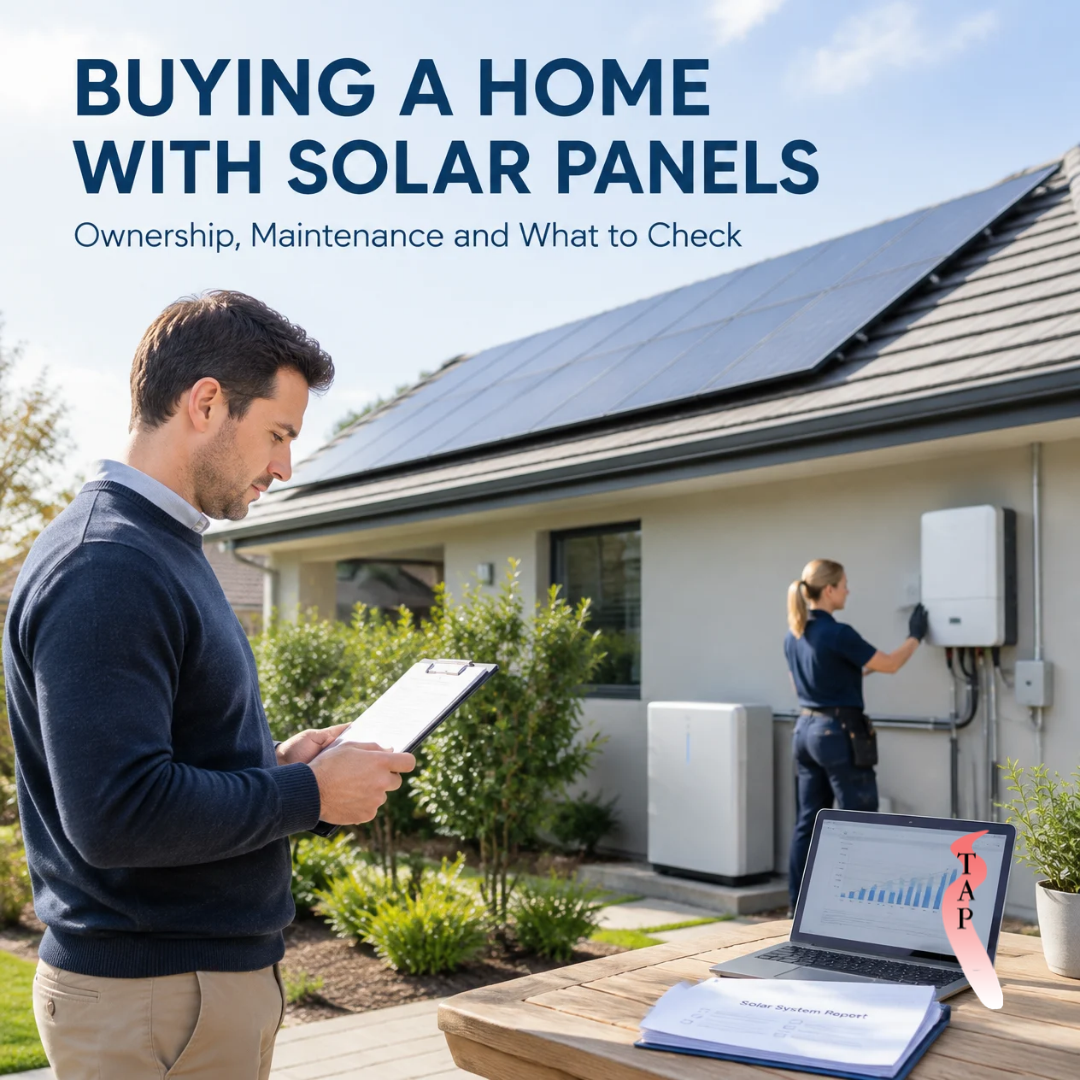
A property with solar panels may offer an opportunity to generate electricity on-site and potentially reduce reliance on power supplied by the grid. However, the value and practicality of a solar installation depend on more than the panels visible on the roof. Equipment age, ownership arrangements, maintenance requirements, energy production, warranties, and transfer conditions can all affect the experience of owning a solar-powered home.
For prospective buyers, understanding how the system works and what responsibilities come with it is an important part of evaluating the property. A solar installation may be a useful feature, but its condition and financial arrangements should be assessed alongside the home's other systems and ongoing ownership costs.
Determine Whether the Solar Panels Are Owned or Leased
One of the first things buyers should establish is who owns the solar equipment. Solar panels may be fully owned by the current homeowner, financed through an outstanding loan, or provided under a lease or power purchase agreement.
With an owned system, the equipment generally forms part of the property's existing assets, although the exact legal treatment depends on local rules and the purchase arrangements. Buyers should confirm that the seller has the right to transfer the system and that any outstanding financial obligations are understood.
A leased system works differently. The homeowner may pay a regular fee to use the equipment, while a third-party provider retains ownership. A power purchase agreement may involve paying for electricity generated by the system under agreed terms rather than paying directly for the equipment.
These arrangements can have different implications for monthly expenses, maintenance responsibilities, and the transfer of ownership. A buyer may need to qualify for an agreement transfer, obtain provider approval, or decide whether an existing contract is acceptable.
Before proceeding, review the relevant documents and establish whether the system is owned outright, financed, leased, or subject to another arrangement.
Check the Age and Condition of the Equipment
Solar installations contain several components, and each may have a different expected service life. Solar panels, inverters, batteries, mounting hardware, wiring, and monitoring equipment do not necessarily age at the same rate.
The inverter, which converts the electricity generated by the panels into usable alternating current, may require replacement before the panels themselves reach the end of their useful service life. If the system includes battery storage, the battery's age, condition, usable capacity, and replacement requirements also deserve attention.
Ask when the system was installed and whether any components have already been repaired or replaced. Installation records, maintenance reports, and equipment specifications can help establish its history.
During a property inspection, look for visible damage, loose or deteriorated mounting components, damaged cables, or signs of roof leakage near installation points. These observations do not replace a technical assessment, particularly because electrical and performance problems may not be visible from the ground.
A qualified solar technician can help evaluate the system's condition and identify components that may require attention.
Understand Energy Production and Household Usage
Solar panels do not produce the same amount of electricity every day. Production varies according to sunlight, weather, shading, panel orientation, roof angle, equipment condition, and seasonal changes.
A system that performs well during sunny periods may generate less electricity during prolonged cloudy weather or when nearby trees and buildings cast shadows. Dust and accumulated debris can also affect performance in some environments.
Buyers should request available production records rather than relying only on advertised system capacity. The system's rated capacity, usually expressed in kilowatts, describes its potential output under specified conditions. It does not indicate how much electricity it generates over an entire year.
It is also important to compare production with the household's electricity consumption. A system may generate substantial electricity during daylight hours but provide less direct benefit to a household that uses most of its power in the evening.
If the property has a battery, determine how much energy it can store and whether it is configured to supply power during outages. Standard grid-connected solar systems may shut down during a power failure for safety reasons unless they have suitable backup equipment.
Review Warranties and Maintenance Responsibilities
Solar equipment may come with separate warranties covering panels, inverters, batteries, mounting components, and installation workmanship. These warranties can have different durations, exclusions, and claim procedures.
Buyers should obtain the original warranty documents and confirm whether coverage can be transferred to a new owner. Some warranties require registration, approved installation practices, or maintenance records to remain valid.
It is also useful to establish who handles repairs. For an owned system, the homeowner may be responsible for arranging inspections, cleaning when appropriate, troubleshooting, and component replacement. Under a lease or service agreement, some responsibilities may belong to the provider.
Maintenance needs depend on the system and local environment. Dust, leaves, bird activity, corrosion, and severe weather may affect equipment over time. Roof penetrations and mounting points should also be checked for signs of water intrusion.
Understanding these responsibilities helps buyers consider the ongoing work and possible costs associated with keeping the installation operational.
Consider the Roof and Installation Quality
Solar panels should be evaluated as part of the roof rather than as a separate feature. If the roof is approaching the end of its useful life, repairs or replacement may require the panels to be removed and reinstalled.
That work can introduce additional expense and coordination requirements. Buyers should therefore review the roof's age, visible condition, drainage, and available repair history alongside the solar installation records.
Installation quality matters as well. Panels should be securely mounted, wiring should be appropriately protected, and the installation should meet applicable electrical and building requirements. Evidence of poorly managed cables, water damage, or incomplete documentation may justify further investigation.
Where concerns exist, a qualified roofer and solar professional may be able to assess the roof and equipment separately.
Understand Grid Connection and Energy Export Rules
The financial and practical benefits of a solar system depend partly on how it interacts with the local electricity network. Some systems supply electricity primarily for use within the home, while others may allow excess generation to be exported to the grid.
The rules and compensation arrangements for exported electricity vary by location, electricity provider, and contract. Buyers should not assume that excess power will automatically generate a payment or credit at a particular rate.
Check whether the system is properly connected, whether any required approvals or agreements are in place, and whether those arrangements can continue after the property changes hands.
If the property includes battery storage, understand how the system prioritises household consumption, battery charging, and grid export. These settings can influence how much generated electricity the household uses directly.
Evaluate the Solar System as Part of the Whole Property
Solar panels can be a useful property feature, but their presence alone does not establish their condition, performance, or financial value. An older system with limited documentation may require more investigation than a newer installation with clear ownership records and consistent production data.
Before purchasing, review the equipment details, ownership arrangements, production history, warranties, maintenance records, and roof condition. Confirm whether any contracts or financial obligations will transfer and whether the system's operation suits the household's electricity needs.
A careful assessment helps buyers understand both the potential benefits and the responsibilities that come with a solar-equipped home. By evaluating the installation alongside the property's overall condition and ongoing costs, buyers can make a more informed decision about whether it meets their expectations.
This article is for general educational purposes only and is not a substitute for professional electrical, legal, tax, or financial advice.