First Aid Certification
6 Steps for Performing CPR
6 Steps for Performing CPR
Foreign body airway obstruction, commonly known as choking, is the partial or complete blockage of breathing tubes to the lungs due to a foreign object. Choking can be a life-threatening emergency if not treated promptly as it affects an individual’s ability to breathe. Knowing how to recognize the signs of choking and what actions to take can make all the difference in a successful recovery.
Time is of the essence when it comes to responding to a choking episode. Asphyxiation occurs when the body does not receive enough oxygen. Asphyxiation as a result choking can lead to loss of consciousness, brain injury and even death.
If a choking victim becomes unconscious, you must then perform CPR. This blog teaches you the six steps required to successfully perform CPR. With these basics down, you can be prepared when faced with a potentially life-saving situation.
Foreign body airway obstruction is classified into three categories: complete obstruction, partial airway obstruction with poor air exchange and partial airway obstruction with good air exchange.
A complete airway obstruction is a serious medical health emergency. In complete airway obstruction, a person is unable to cough or speak with no outward air movement. It's important to recognize signs and symptoms of airway blockage so there can be an effective response. If someone is experiencing complete obstruction of their airway– seek medical help right away.
When partial airflow obstruction with bad air exchange occurs, a person is unable to speak due to the restricted airflow and coughing may become weak, subdued, or even silent as little or no air is able to pass through their trachea. Additionally, their cough may become weak, subdued, or even silent as there is very little air passing through the trachea leaving the individual helpless to resolve this issue on their own. Left untreated, partial airway obstruction can quickly progress and even become deadly if medical attention isn’t provided.
In cases of complete blockage and partial airway blockage with bad air exchange, urgent action is
needed – as the victim cannot dislodge the obstruction on their own.
In partial airway obstruction with good air exchange, individuals may be unable to speak but can still demonstrate good air exchange. In many cases especially in adults, the individual is able to actively cough and expel the foreign object without assistance. Pay close attention to whether they are coughing, talking or breathing. If they are, it is encouraged to let the person relieve obstruction on his or her own.
Step 1: Take action if a person is unresponsive. Have one person contact the local emergency number and get an AED (automated external defibrillator), while the other begins administering CPR. Utilizing an AED can be a life-saving device in certain situations.
If you are alone and have access to a phone, immediately contact 911 or the local emergency number. Timely intervention could save someone's life - so call first before administering CPR. Get an AED if one is available.
Step 2: Place the person on their back and kneel beside them. Tilt their head slightly back by lifting their chin.
Step 3: Check for any signs of breathing. Place your ear near the person's mouth and listen for breathing if nothing is heard for no more than 10 seconds start CPR.
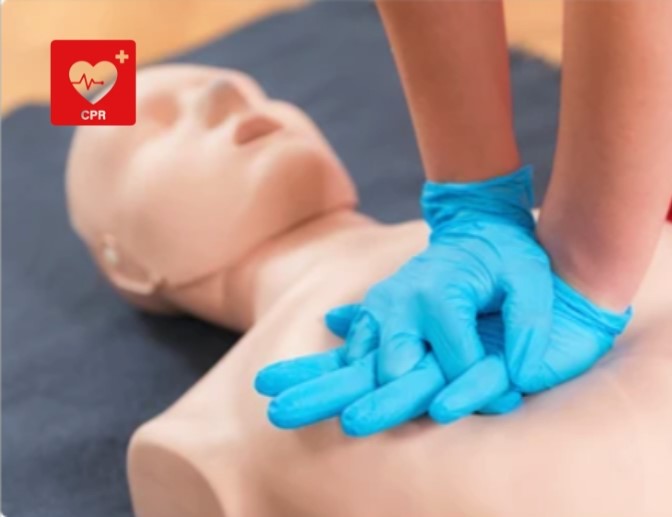
Step 4: Place your hands on top of the other and clasp them together. With the heel of the hands and straight elbows, push hard and fast in the center of the chest, slightly below the nipples. Begin with 30 chest compression at a rate of 100 compressions per minute.
Step 5: Perform two rescue breaths. Make sure their mouth is clear, tilt their head back slightly and lift their chin. Pinch their nose shut, place your mouth fully over theirs, and blow to make their chest rise.
Step 6: Repeat. Repeat the cycle of 30 chest compressions and two rescue breaths until the person starts breathing or help arrives. If an AED arrives, carry on performing CPR until the machine is set up and ready to use.
Emergency situations like a person choking can be shocking. The most important thing to do is stay calm and focus attention on saving lives. Enact CPR until professional medical personnel arrive at the scene; staying attentive and responsive is key.
It is essential to act rapidly and call 911 if someone you know is choking.