Alcohol Risk Management For Restaurants
Alcohol Service Liability in Restaurants: Understanding the Legal Risks of Serving Alcohol
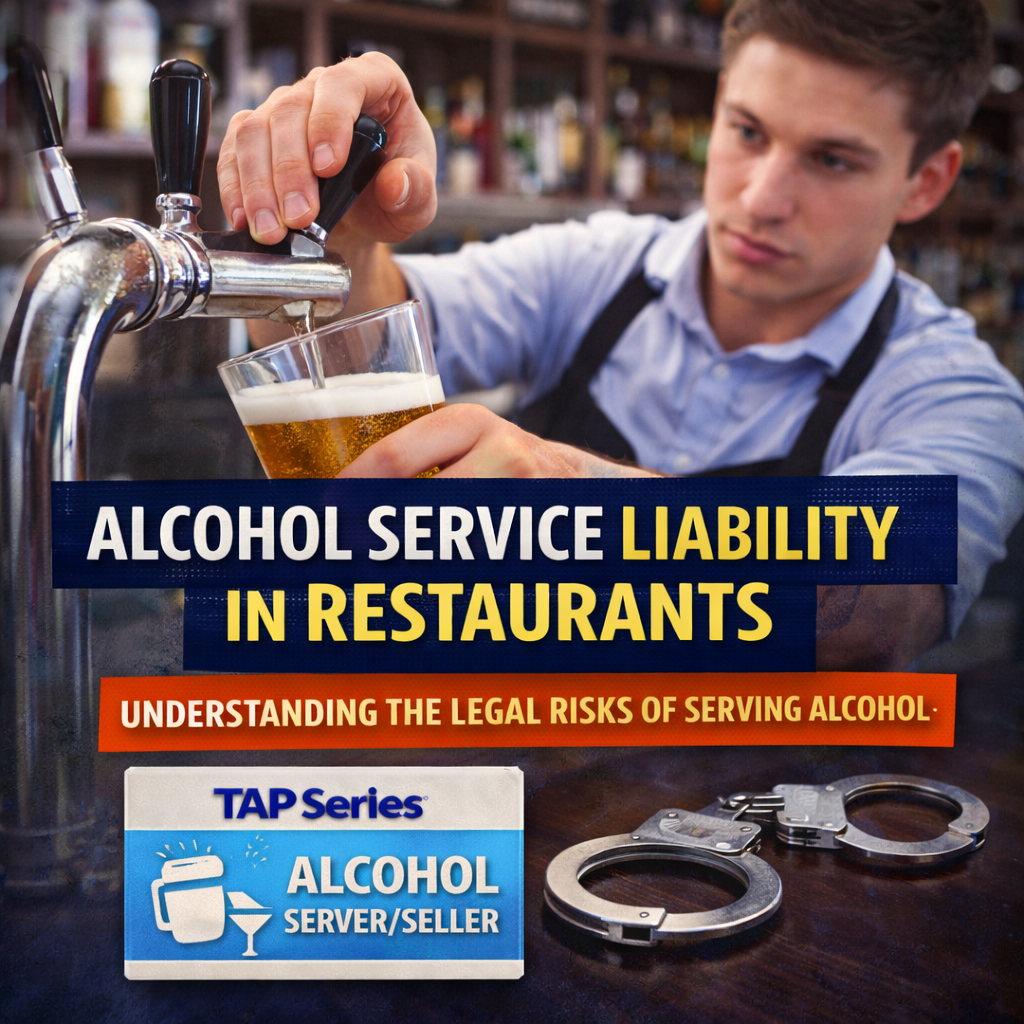
Alcohol service is a major revenue driver for many restaurants, but it also carries serious legal responsibility. In the United States, restaurants can be held legally liable for how alcohol is served, who it is served to, and what happens after a guest leaves the premises.
Alcohol liability cases often begin with a single service mistake. Over-serving a guest, failing to check identification, or ignoring signs of intoxication can quickly expose a restaurant to lawsuits, fines, license suspension, or permanent closure.
Understanding Alcohol Liability in Restaurants
Alcohol liability refers to the legal responsibility restaurants have when serving alcohol to guests. Most US states enforce dram shop laws, which allow injured parties to hold alcohol-serving establishments accountable for damages caused by intoxicated patrons.
Restaurants may be found liable if they:
- Serve alcohol to visibly intoxicated guests
- Serve alcohol to minors
- Fail to monitor alcohol consumption
- Ignore warning signs of impairment
- Lack proper alcohol service training
Even if an incident occurs off-site, liability can still extend back to the restaurant.
Common Alcohol Service Mistakes That Create Legal Risk
Alcohol-related violations often occur during busy service periods when staff are under pressure.
Common mistakes include:
- Inconsistent ID checks
- Serving multiple drinks too quickly
- Ignoring guest behavior that signals intoxication
- Allowing guests to leave while impaired
- Poor communication between servers and management
These mistakes are frequently cited in lawsuits, investigations, and license reviews.
The Cost of Alcohol-Related Legal Exposure
When alcohol service errors result in injury or property damage, the consequences can be severe.
Restaurants may face:
- Civil lawsuits and settlements
- Criminal penalties in some jurisdictions
- Liquor license suspension or revocation
- Increased insurance premiums
- Negative media coverage
- Long-term brand damage
In many cases, alcohol liability claims cost far more than the revenue generated from alcohol sales.
Why Alcohol Server Training Is Essential
Proper training equips restaurant staff with the knowledge and confidence to serve alcohol responsibly and legally.
Effective alcohol server training helps employees:
- Identify valid and invalid forms of identification
- Recognize signs of intoxication
- Refuse service safely and professionally
- Understand state and local alcohol laws
- Document incidents and protect the business
Training also demonstrates that a restaurant took reasonable steps to prevent alcohol-related harm, which can reduce liability exposure.
TAP Series Alcohol Server and Seller Training
TAP Series offers an Alcohol Server/Seller course designed for real-world restaurant environments and compliance requirements.
This training helps restaurants:
- Reduce alcohol-related legal risks
- Improve responsible alcohol service practices
- Support compliance with state alcohol laws
- Protect staff and management from liability
- Strengthen safety for guests and the community
The course is suitable for servers, bartenders, managers, and any employee involved in alcohol service.
👉 Learn more and enroll here:
Alcohol Training | TAP Series®
Protecting Your Restaurant Through Responsible Alcohol Service
Alcohol liability is not just a legal concern. It is a safety issue that affects guests, employees, and the surrounding community. Restaurants that invest in proper alcohol server training reduce risk, strengthen compliance, and protect their long-term success.
For US restaurant operators, proactive alcohol service education through TAP Series is a critical step toward reducing legal exposure and building a responsible service culture.