TAP Series Allergen Awareness
Allergen Lawsuits in Restaurants: How One Mistake Can Lead to Legal Action and Lost Trust
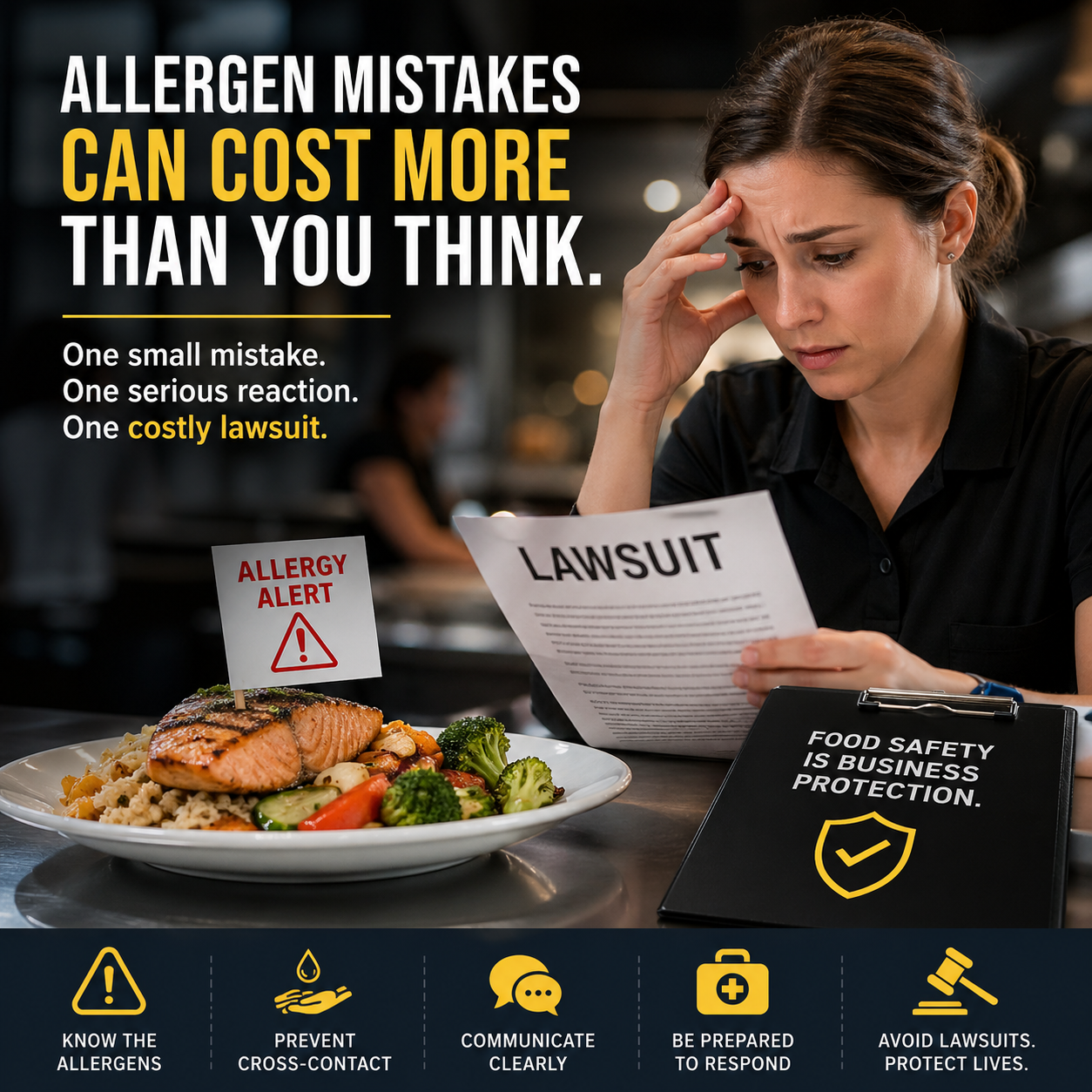
For restaurants across the United States, food allergies are no longer a minor operational concern. They are a serious safety issue with legal consequences. A single miscommunication about ingredients, improper food handling, or cross-contact incident can send a customer to the emergency room and expose a restaurant to lawsuits, regulatory penalties, and long-term reputational damage.
As food allergies continue to affect millions of Americans, customers are becoming more vocal about their dietary needs and less forgiving when restaurants fail to protect them. For restaurant owners, managers, and staff, allergen awareness is now a critical part of food safety and risk management.
Why Food Allergy Mistakes Are Increasing Legal Risk
According to Food Allergy Research & Education (FARE), approximately 33 million Americans live with food allergies, including 1 in 13 children. Many of these individuals rely on restaurants to provide accurate ingredient information and safe meal preparation.
When restaurants fail to meet that expectation, the consequences can be severe:
- Emergency medical costs
- Personal injury lawsuits
- Wrongful death claims
- Negative media coverage
- Social media backlash
- Loss of customer trust
- Increased insurance costs
Customers who clearly communicate their allergies expect restaurants to take reasonable precautions. When businesses fail to do so, courts often examine whether the restaurant acted negligently.
Learn more about food allergy statistics through Food Allergy Research & Education (FARE): https://www.foodallergy.org/
Common Restaurant Allergen Mistakes That Lead to Lawsuits
Many allergen-related legal cases stem from preventable mistakes that happen during daily operations.
1. Incorrect Ingredient Information
A server assures a guest that a dish is nut-free, dairy-free, or gluten-free without verifying ingredients with the kitchen.
This often happens when:
- Menu changes are not communicated
- Staff assume ingredients remain the same
- Employees fail to review sauces, dressings, or garnishes
One incorrect answer can trigger a severe allergic reaction.
2. Cross-Contact in the Kitchen
Cross-contact occurs when allergens are unintentionally transferred from one food item to another.
Examples include:
- Using the same cutting boards
- Shared fryers
- Reusing utensils
- Improper cleaning of prep surfaces
- Shared storage containers
Even trace amounts of allergens can cause dangerous reactions.
3. Poor Communication Between Front and Back of House
A guest informs the server about a shellfish allergy, but the information never reaches the kitchen.
This communication breakdown can happen because:
- Orders are entered incorrectly
- Allergy alerts are not flagged
- Staff rush during peak hours
- Employees lack proper training
4. Inadequate Staff Training
Untrained employees may not understand:
- The nine major allergens
- Cross-contact prevention
- Proper labeling procedures
- Emergency response protocols
Without training, mistakes become far more likely.
5. Failure to Respond Properly During an Emergency
If a customer experiences an allergic reaction and staff members panic or delay medical assistance, legal exposure can worsen.
Employees should understand:
- Common allergy symptoms
- When to call emergency services
- Internal emergency procedures
The Real Financial Cost of Allergen Lawsuits
Many restaurant owners underestimate how expensive allergen-related incidents can become.
Potential costs include:
- Legal fees
- Settlement payouts
- Medical reimbursements
- Regulatory fines
- Increased insurance premiums
- Staff turnover
- Revenue loss from damaged reputation
Online reviews and viral social media posts can amplify the damage within hours.
How Restaurants Can Reduce Allergen Liability
Restaurant operators can significantly reduce risks by creating stronger allergen management systems.
1. Train Every Employee
All employees should understand allergen safety, including:
- Servers
- Kitchen staff
- Managers
- Food runners
- New hires
Consistent training helps reduce preventable mistakes.
2. Standardize Ingredient Documentation
Maintain updated ingredient lists for:
- Sauces
- Marinades
- Dressings
- Seasonal menu items
- Supplier substitutions
3. Create Clear Allergy Communication Procedures
Use systems that ensure allergy requests are clearly communicated from guest to kitchen.
Examples include:
- POS allergy alerts
- Manager verification
- Separate preparation instructions
4. Prevent Cross-Contact
Implement strict food handling controls such as:
- Dedicated utensils
- Separate prep stations
- Proper cleaning protocols
- Safe storage practices
5. Prepare for Emergencies
Train employees on how to recognize allergic reactions and follow emergency procedures immediately.
Why Allergen Awareness Training Matters
Preventing lawsuits starts with prevention.
TAP Series Allergen Awareness Training helps restaurant teams build safer fo od handling practices by teaching employees how to:
- Identify the nine major food allergens
- Understand cross-contact risks
- Prevent allergen cross-contact
- Communicate allergen information clearly
- Recognize and respond to allergic reactions
This training helps restaurants reduce liability while creating safer dining experiences for customers.
Protect Your Guests and Your Business
Allergen lawsuits rarely happen because of complicated situations. They often begin with simple mistakes that could have been prevented through better communication, stronger procedures, and proper training.
For restaurants, allergen awareness is not just about compliance. It protects customers, employees, and your business from avoidable risk.
Investing in proper allergen training today can help prevent a costly lawsuit tomorrow.