Food Allergy Regulations For Restaurants
Allergen Lawsuits in Restaurants: How Small Mistakes Turn Into Major Legal Risks
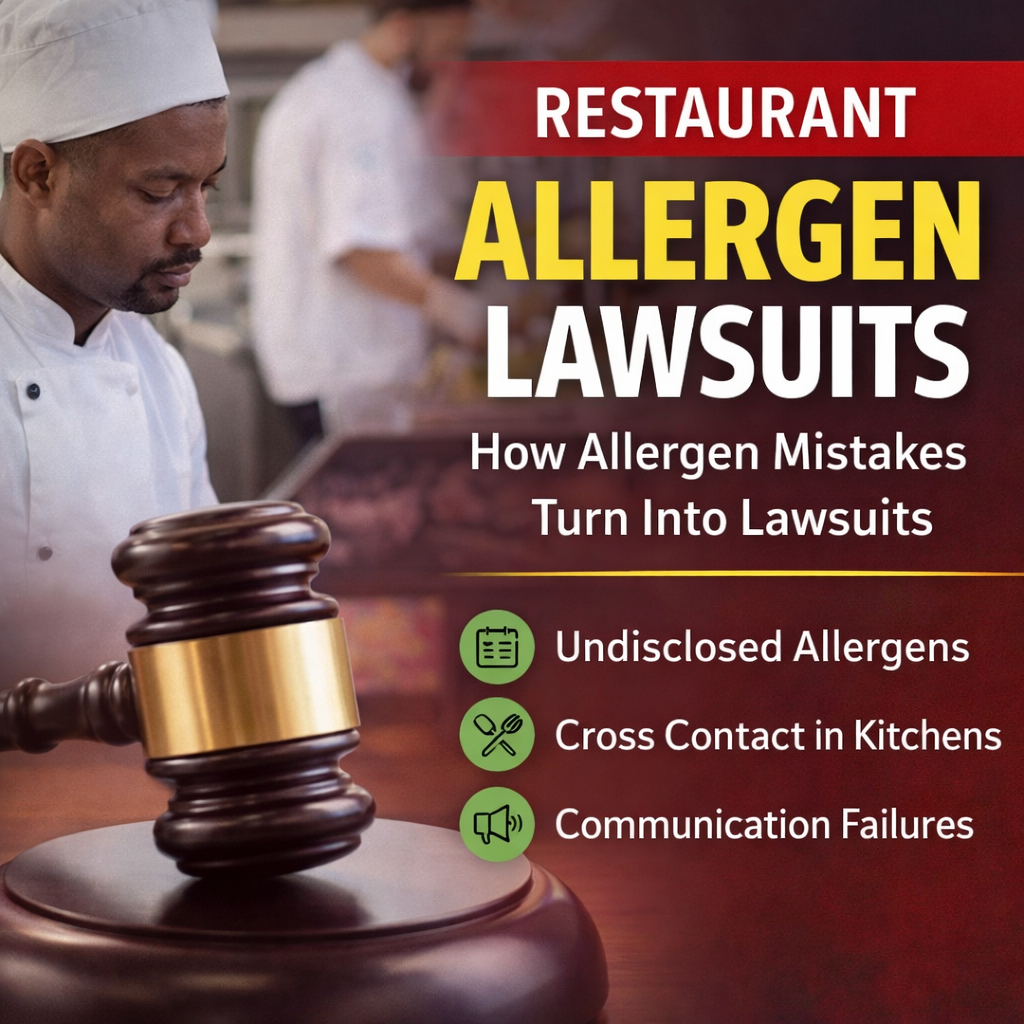
Restaurants across the United States face increasing pressure to manage food allergens safely. With millions of Americans affected by food allergies, even a small mistake in food preparation or communication can lead to serious health consequences. What may seem like a minor oversight in the kitchen can quickly escalate into a medical emergency and ultimately, a lawsuit.
Allergen related incidents are not only a safety issue but also a legal and financial risk for restaurant operators. Understanding how these mistakes happen is essential to preventing them.
How Allergen Mistakes Happen in Restaurant Operations
Allergen errors are rarely intentional. They often result from gaps in communication, training, or process consistency.
Common causes include:
- Miscommunication between staff and customers
- Incomplete or unclear menu labeling
- Failure to identify allergen ingredients in dishes
- Cross contact during food preparation
- Lack of staff awareness about allergen risks
In fast paced restaurant environments, these issues can occur quickly if proper systems are not in place.
When an Allergen Mistake Becomes a Lawsuit
An allergen incident can escalate rapidly from a service error to a legal case. If a customer experiences an allergic reaction due to incorrect information or unsafe food handling, the restaurant may be held liable.
Situations that often lead to legal action include:
- Serving food that contains an undisclosed allergen
- Providing incorrect allergen information to a customer
- Failing to prevent cross contact in the kitchen
- Not responding properly to an allergic reaction
Legal claims may involve negligence, failure to warn, or non compliance with food safety regulations. These cases can result in financial penalties, legal fees, and reputational damage.
The Role of Cross Contact in Allergen Incidents
Cross contact is one of the most common causes of allergen related issues in restaurants. It occurs when allergen proteins are unintentionally transferred from one food to another.
Examples include:
- Using shared cooking surfaces without proper cleaning
- Reusing utensils or equipment across different dishes
- Storing allergen containing ingredients near allergen free foods
- Handling multiple food items without changing gloves
Without proper procedures, even a small amount of allergen exposure can trigger a severe reaction.
Communication Failures That Increase Legal Risk
Clear communication is critical when handling allergen related requests. Many incidents occur not because of food preparation errors alone, but because of breakdowns in communication.
Key risks include:
- Staff not taking customer allergy disclosures seriously
- Orders not being properly marked or communicated to the kitchen
- Lack of coordination between front of house and back of house teams
- Employees providing uncertain or incorrect information
Restaurants must ensure that all staff understand how to handle allergen related conversations accurately and consistently.
How Allergen Awareness Training Helps Prevent Lawsuits
Proper training is one of the most effective ways to reduce allergen related risks. When employees understand the seriousness of food allergies and how to manage them, they are better prepared to prevent incidents.
The Allergen Awareness Training course from TAP Series provides essential knowledge and practical skills for restaurant teams.
Learn more about the course here:
Allergen Awareness | Tap Series®
Key Skills Developed Through Allergen Awareness Training
This training program equips employees with the tools needed to manage allergen risks effectively.
Identify the Major Food Allergens
Staff learn to recognize the most common allergens found in foodservice environments and understand where they may be present in menu items.
Understand Cross Contact Risks
Employees gain awareness of how allergens can spread during preparation, storage, and service.
Prevent Allergen Cross Contact
Training provides practical methods to reduce risk through proper food handling, equipment use, and cleaning procedures.
Communicate Allergen Information Clearly
Employees learn how to confidently communicate with customers and coworkers about allergen concerns.
Recognize and Respond to Allergic Reactions
Staff are trained to identify symptoms of allergic reactions and understand the importance of immediate action.
Building a Safer and More Compliant Restaurant Environment
Avoiding allergen related lawsuits requires more than reacting to incidents. It requires proactive systems, consistent training, and a culture of accountability.
Restaurants that prioritize allergen safety benefit from:
- Reduced risk of customer harm
- Stronger compliance with food safety regulations
- Improved staff confidence in handling allergen requests
- Greater customer trust and loyalty
By investing in structured programs such as Allergen Awareness Training, restaurant operators can reduce the likelihood of costly mistakes and create safer dining experiences for all customers.
Strong allergen management is not just about compliance. It is about protecting lives, safeguarding your business, and building long term trust in an increasingly risk aware industry.