TAP Series Food Safety Training
Cafeteria Compliance and Allergen Safety: Why Food Safety Matters in Schools
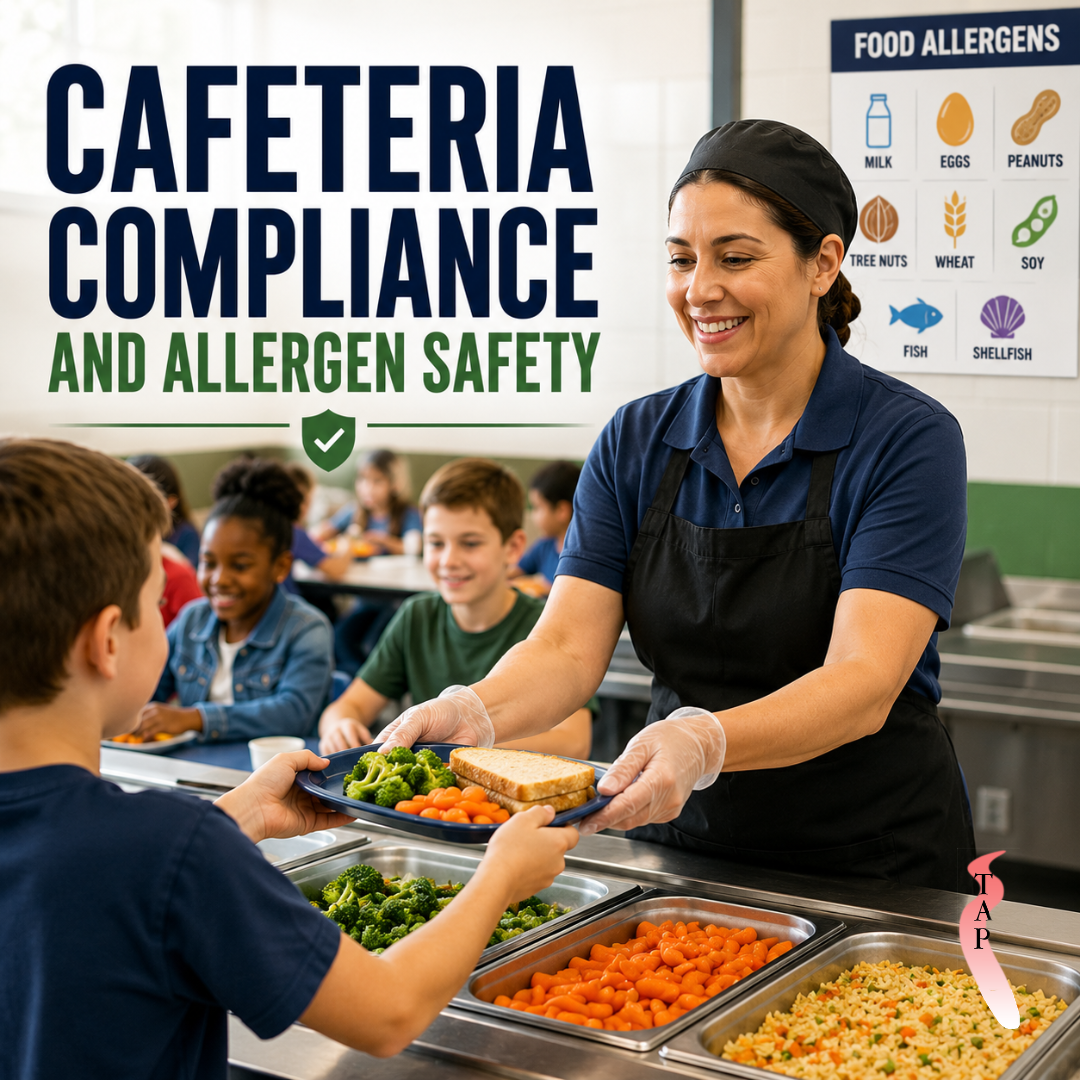
School cafeterias serve hundreds or even thousands of meals every day. With so many students relying on school meals, food safety must be treated as a daily responsibility, not simply a checklist for passing inspections.
From receiving ingredients to preparing and serving meals, cafeteria employees must follow proper food handling procedures to reduce the risk of foodborne illness. At the same time, schools must take additional precautions for students with food allergies, where a seemingly small mistake can have serious consequences.
For school districts and education organizations, strong food safety training helps cafeteria teams understand their responsibilities and create safer meal service environments for students and staff.
Why Food Safety Compliance Matters in School Cafeterias
School food service environments present unique food safety challenges. Employees may prepare large quantities of food, serve meals within limited time periods, and work with many different ingredients throughout the day.
Common food safety concerns include:
- Improper food temperatures
- Cross contamination
- Inadequate handwashing
- Improper cleaning and sanitizing
- Unsafe food storage
- Incorrect food handling procedures
- Poor employee hygiene
- Improper allergen controls
Even one overlooked food safety practice can potentially expose a large number of students to illness.
Temperature Control Is Critical During Meal Service
School cafeterias often prepare food hours before students eat. Maintaining appropriate temperatures throughout preparation, storage, transportation, and service is therefore essential.
Employees should understand the importance of:
- Monitoring food temperatures regularly
- Keeping cold foods properly refrigerated
- Maintaining hot foods at safe holding temperatures
- Following proper cooling procedures
- Using appropriate equipment for temperature monitoring
- Taking corrective action when temperatures are outside safe limits
Consistent temperature control helps prevent conditions that can allow harmful bacteria to multiply.
Preventing Cross Contamination in the Cafeteria
Cross contamination can happen when harmful microorganisms move from one food, surface, utensil, or employee to another.
School cafeteria employees can help reduce this risk by:
- Washing hands before handling food
- Keeping raw foods separated from ready-to-eat foods
- Cleaning and sanitizing food contact surfaces
- Using clean utensils and equipment
- Storing foods appropriately
- Changing gloves when necessary
- Following established food preparation procedures
These practices are especially important when cafeterias prepare multiple types of food at the same time.
Allergen Safety Requires Extra Attention
Food allergies are an important concern for schools because students may depend on cafeteria employees to provide accurate information about meals and ingredients.
Common food allergens can be present in foods such as:
- Milk
- Eggs
- Peanuts
- Tree nuts
- Wheat
- Soy
- Fish
- Shellfish
An allergen can also be unintentionally transferred through shared equipment, utensils, preparation surfaces, or improper handling.
For students with severe allergies, preventing allergen cross contact can be a critical part of creating a safe school environment.
Communication Can Help Prevent Allergen Mistakes
Allergen safety does not depend only on the person preparing the meal. Information needs to be communicated accurately throughout the food service process.
Cafeteria teams should understand:
- Which ingredients are present in menu items
- How allergen information is communicated
- How to respond when a student reports an allergy
- When to verify information instead of making assumptions
- How to prevent cross contact during preparation and service
- When to involve a supervisor or other responsible staff member
Employees should never guess when answering questions about allergens. When information is uncertain, it should be verified through the appropriate school food service procedures.
Training Helps Cafeteria Employees Follow Consistent Procedures
Food safety procedures are only effective when employees understand how and why to follow them.
Training can help cafeteria employees recognize potential hazards and make safer decisions during everyday tasks.
Food Handler Training | TAP Series®
This training helps food handlers build foundational knowledge of safe food preparation, personal hygiene, sanitation, temperature control, and other essential food safety practices.
Allergen Awareness Should Be Part of Cafeteria Training
Allergen safety deserves dedicated attention because preventing foodborne illness and preventing allergen exposure involve different risks and procedures.
Allergen Awareness | TAP Series®
The course helps employees understand food allergen risks, recognize situations that can lead to cross contact, and take appropriate precautions when preparing and serving food to customers with food allergies.
For school cafeterias, this knowledge can support safer meal preparation and help employees respond more confidently to allergen-related concerns.
Managers and School Leaders Set the Standard
Food safety is not only the responsibility of cafeteria employees. Supervisors, food service managers, and school administrators all have a role in maintaining a strong food safety culture.
Leaders can support compliance by:
- Providing appropriate employee training
- Reviewing food safety procedures regularly
- Monitoring cafeteria practices
- Addressing unsafe practices promptly
- Maintaining accurate records
- Reinforcing allergen safety expectations
- Encouraging employees to report food safety concerns
When leaders consistently prioritize food safety, employees are more likely to treat compliance as part of their everyday responsibilities.
Creating a Safer Cafeteria Starts With Prevention
School cafeterias have an important responsibility to provide meals that are prepared and served safely. Compliance should not be viewed simply as something to address when an inspection is approaching. It should be part of the daily culture of the school food service operation.
By combining proper procedures with Food Handler Training | TAP Series® and Allergen Awareness | TAP Series®, schools can give cafeteria employees the knowledge they need to reduce food safety risks, prevent allergen cross contact, and protect the students they serve.
A commitment to ongoing school cafeteria food safety training can help education organizations build safer, more consistent, and more compliant food service environments.