De-escalation Techniques For Retail Staff
Customer Conflict in Retail: De-Escalation Strategies That Protect Staff Safety
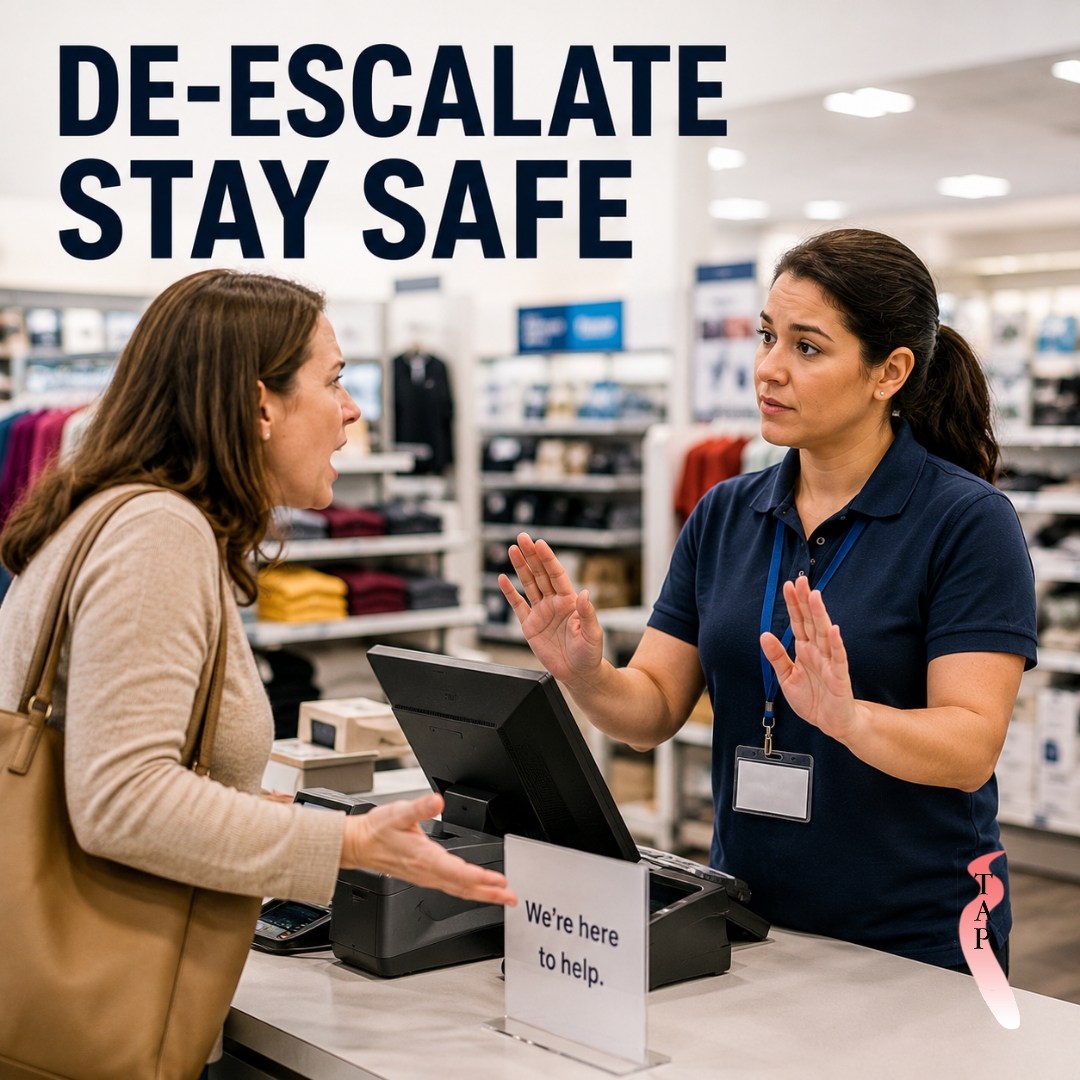
Retail employees interact with hundreds of customers every day, and while most interactions are positive, some situations can quickly become tense. Frustrated customers, long wait times, product shortages, or policy disagreements may lead to conflict that places employees at risk.
Knowing how to respond calmly and professionally can prevent difficult situations from escalating into verbal abuse or physical confrontation. De-escalation is an essential workplace safety skill that helps protect employees while supporting positive customer experiences.
Why De-Escalation Matters
Customer conflict can affect both employee well-being and business operations.
Effective de-escalation helps:
- Protect employee safety
- Reduce workplace stress
- Prevent conflicts from escalating
- Improve customer interactions
- Support a safer work environment
- Reduce potential liability
Remaining calm often changes the direction of a difficult conversation.
Common Causes of Customer Conflict
Many retail disputes begin with everyday situations.
Examples include:
- Product returns
- Pricing disagreements
- Long checkout lines
- Out-of-stock items
- Store policies
- Delivery delays
Understanding the source of frustration allows employees to respond more effectively.
Recognizing Escalating Behavior
Employees should recognize warning signs before situations become more serious.
Common indicators include:
- Raised voices
- Aggressive body language
- Threatening comments
- Refusal to cooperate
- Personal insults
- Increasing emotional reactions
Recognizing these behaviors early creates opportunities to reduce tension.
Effective De-Escalation Techniques
Employees can often reduce conflict by using simple communication strategies.
Helpful techniques include:
- Stay calm and professional.
- Listen without interrupting.
- Speak respectfully and clearly.
- Show empathy without making promises that cannot be kept.
- Offer appropriate solutions when possible.
- Request assistance from a supervisor if the situation continues to escalate.
Professional communication often prevents conflict from becoming more serious.
When Employee Safety Comes First
Not every situation can be resolved through conversation.
Employees should know when to:
- Step away from the interaction
- Contact a supervisor
- Follow company emergency procedures
- Request security assistance
- Call emergency services when necessary
Personal safety should always remain the highest priority.
The Role of Managers
Managers help create an environment where employees feel supported during difficult customer interactions.
Leadership responsibilities include:
- Establishing clear de-escalation procedures
- Supporting employees during incidents
- Responding consistently to customer complaints
- Reinforcing workplace safety expectations
- Reviewing incidents to identify improvements
- Encouraging employees to report concerns
Visible leadership helps employees respond with greater confidence.
Creating a Safer Retail Environment
Retail organizations can reduce conflict by making de-escalation part of everyday operations.
Best practices include:
- Provide regular employee training.
- Review store policies consistently.
- Encourage respectful communication.
- Practice realistic customer scenarios.
- Reinforce reporting procedures.
- Support employees after difficult incidents.
Preparation helps employees remain confident under pressure.
Why Retail De-Escalation Training Matters
Customer service skills alone may not be enough during emotionally charged situations. Employees benefit from practical guidance on recognizing conflict, managing communication, and responding safely when behavior becomes aggressive.
Retail De-Escalation Awareness Training | TAP Series® teaches employees how to recognize escalating behavi or, apply effective communication techniques, maintain professionalism, reduce workplace conflict, and prioritize personal safety while interacting with customers.
The course helps retail organizations strengthen workplace safety, improve employee confidence, and reduce the risk of customer-related incidents.
Safer Employees Create Better Customer Experiences
Every retail employee deserves a workplace where they feel safe and supported. By investing in de-escalation training, reinforcing clear procedures, and encouraging respectful communication, retailers can reduce workplace conflict while protecting both employees and customers.
Strong de-escalation skills help employees manage difficult situations professionally, reduce safety risks, and contribute to a more positive retail environment.