TAP Series Retail Training
Customer Conflict in Retail: Why De-Escalation Protects Staff and Strengthens Store Safety
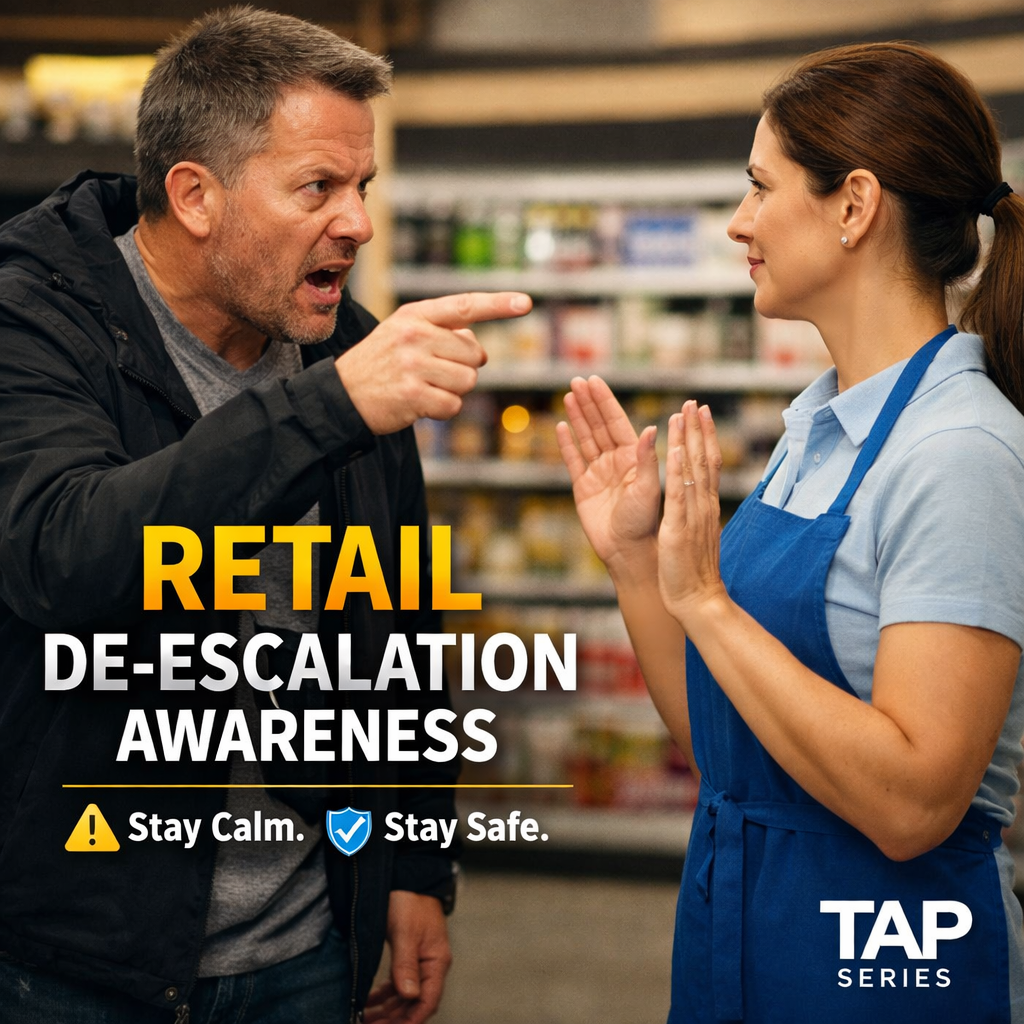
Customer conflict in the retail industry is no longer an occasional challenge. For many U.S. retailers, tense interactions, aggressive behavior, and emotionally charged disputes are becoming part of daily operations. From pricing disagreements to return policy frustrations, frontline staff are often the first to face rising emotions.
For retail leaders, this is not just a customer service issue. It is a workplace safety priority.
When conflict escalates, employees can feel threatened, productivity drops, and store environments become unstable. The solution is not confrontation. It is preparation. De-escalation training equips retail teams with the skills to respond calmly, confidently, and safely before situations spiral out of control.
Why Customer Conflict Is a Growing Retail Safety Concern
Retail employees regularly manage high-stress moments:
- Denied returns or exchanges
- Long wait times or stock shortages
- Coupon or discount disputes
- Theft or suspected shoplifting incidents
- Policy enforcement such as age verification
Without proper training, these situations can quickly escalate into verbal aggression or even physical threats. This places employees at risk and exposes businesses to liability, turnover, and reputational damage.
A reactive response often intensifies the problem. A proactive de-escalation strategy reduces it.
Understanding De-Escalation in Retail Settings
De-escalation is the intentional use of communication and behavioral techniques to reduce tension and prevent conflict from becoming confrontational.
In retail environments, effective de-escalation means:
- Recognizing early warning signs of escalating behavior
- Responding with calm, controlled communication
- Maintaining professional body language
- Creating space and safety while preserving dignity
It is not about “winning” an argument. It is about protecting people and restoring stability.
Common Triggers That Escalate Retail Interactions
Retail staff benefit from understanding what typically fuels customer conflict:
- Feeling unheard or dismissed
- Perceived unfair treatment
- Confusion about store policies
- External stress unrelated to the store
- Public embarrassment during disputes
By identifying triggers early, employees can shift their approach before emotions intensify.
Core De-Escalation Techniques Every Retail Employee Should Know
Effective de-escalation combines verbal and non-verbal strategies.
1. Calm and Empathetic Communication
- Use steady tone and measured pacing
- Acknowledge concerns without agreeing to unreasonable demands
- Avoid defensive language
2. Active Listening
- Let the customer finish speaking
- Paraphrase concerns to show understanding
- Focus on resolution, not blame
3. Non-Verbal Reassurance
- Maintain appropriate eye contact
- Keep hands visible and posture open
- Avoid aggressive gestures or proximity
4. Trigger Awareness
- Identify escalating cues such as raised voice or clenched fists
- Adjust positioning and tone immediately
There techniques help reduce tension while preserving professionalism and safety.
How De-Escalation Improves Safety and Customer Experience
Retail de-escalation is not just about preventing harm. It strengthens overall operations.
Safety Benefits
- Reduces risk of physical altercations
- Protects staff from verbal abuse escalation
- Lowers workers’ compensation claims
- Supports compliance with workplace safety standards
Business Benefits
- Improves customer satisfaction even during disputes
- Reduces employee turnover due to stress
- Enhances brand reputation
- Builds team confidence in handling difficult interactions
When employees feel prepared, they respond with confidence instead of fear.
Retail De-Escalation Awareness Training for U.S. Companies
TAP Series offers Retail De-Escalation Awareness Training designed specifically for retail environments.
This course helps organizations:
- Understand the concept and importance of de-escalation in retail settings
- Identify triggers and early warning signs of escalating behavior
- Communicate calmly and empathetically to diffuse tension
- Use non-verbal cues effectively
- Apply practical strategies in potentially volatile situations
- Strengthen both employee safety and customer satisfaction
The training is compatible with any LMS that supports SCORM, cmi5, xAPI, or AICC standards, making integration simple for corporate training teams.
Retailers across the United States can deploy this course organization-wide to create consistent safety standards and response protocols.
Building a Culture of Prevention, Not Reaction
Retail managers play a critical role in setting expectations around conflict response.
To strengthen de-escalation culture:
- Incorporate training into onboarding
- Reinforce skills during team meetings
- Encourage incident reporting and discussion
- Support employees after high-stress events
- Establish clear escalation protocols
When leadership prioritizes de-escalation, employees feel supported and empowered.
The Business Case for Retail Conflict Prevention
Investing in structured training reduces risk exposure while demonstrating commitment to employee wellbeing.
Retail conflict prevention protects:
- Frontline staff
- Customers
- Store assets
- Brand reputation
- Organizational stability
In today’s retail climate, preparation is not optional. It is operationally essential.
By equipping teams with practical skills through Retail De-Escalation Awareness Training, U.S. retailers can transform high-risk interactions into controlled, professional resolutions that protect people first.
Strengthening workplace safety through proactive retail conflict management creates safer stores, stronger teams, and more resilient businesses.