Workplace Safety Training For Retail Staff
Customer Conflict in Retail: Why De-Escalation Is Critical for Staff Safety
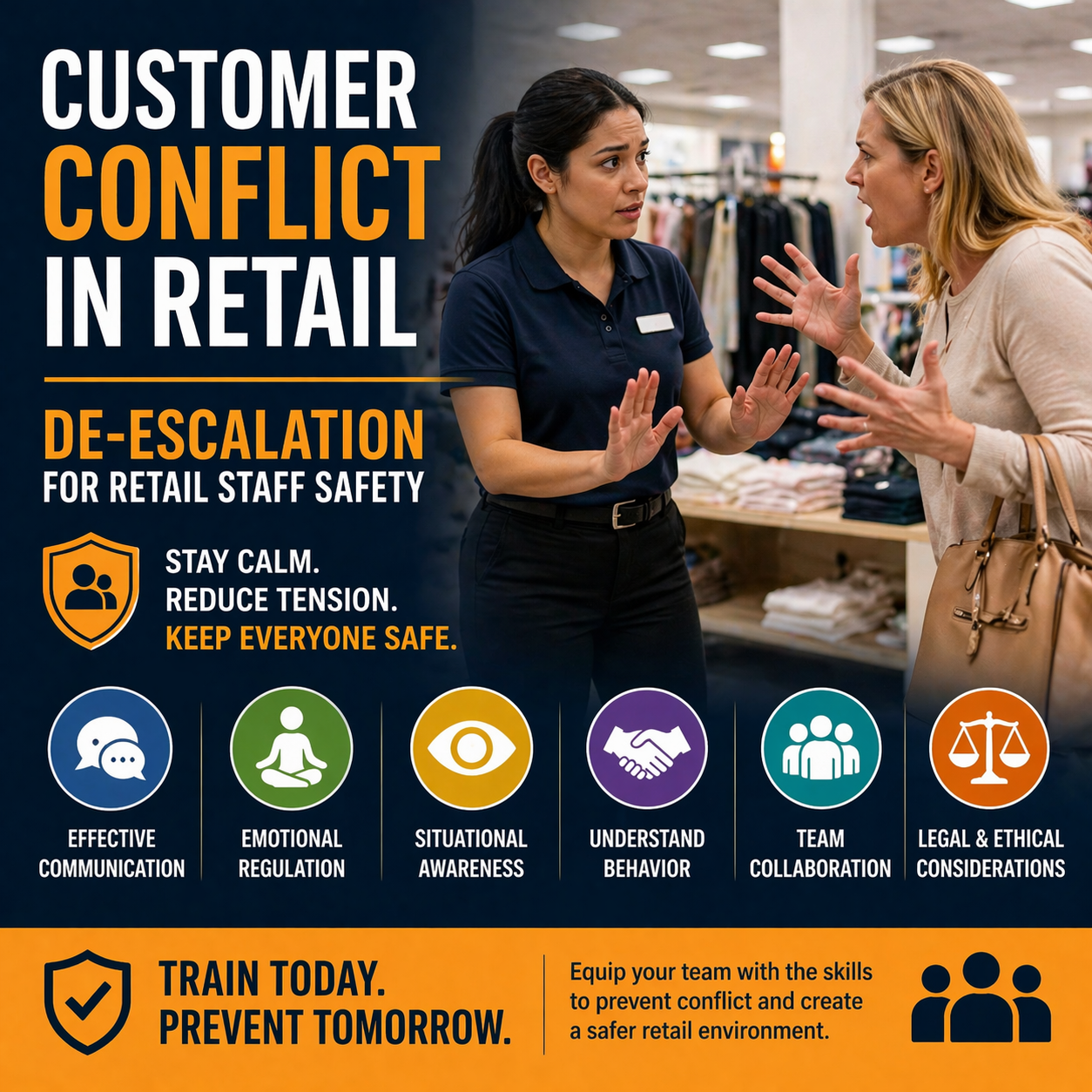
Retail environments are built around customer interaction, but not every interaction is positive. High stress situations, long wait times, policy disagreements, and personal frustrations can quickly lead to conflict. When customer conflict escalates, retail employees are often the first to face the risk.
Without proper training, these situations can become unsafe. De-escalation is not just a customer service skill. It is a critical safety strategy that helps protect employees, customers, and the business.
Why Customer Conflict Happens in Retail Settings
Retail employees engage with a wide range of customers every day. While most interactions are routine, certain triggers can increase tension and lead to confrontation.
Common causes of conflict include:
- Disagreements over returns or refunds
- Product availability or out of stock items
- Pricing or promotional confusion
- Long wait times or service delays
- Customer frustration unrelated to the store
Employees who are not prepared to manage these situations may unintentionally escalate them.
How Conflict Escalates Into Safety Risks
Customer conflict often follows a predictable pattern. Understanding this progression helps employees respond early and prevent situations from becoming dangerous.
- Initial Frustration
A customer expresses dissatisfaction or concern. - Emotional Escalation
Tone of voice increases, body language becomes tense. - Verbal Aggression
The customer may raise their voice or use confrontational language. - Threatening Behavior
Gestures, intimidation, or refusal to cooperate may occur. - Potential Physical Risk
The situation may escalate into unsafe or aggressive actions.
Recognizing these stages allows employees to intervene early and apply de-escalation techniques.
The Importance of De-Escalation for Retail Staff
De-escalation focuses on reducing tension rather than winning an argument. Employees trained in de-escalation are better equipped to manage difficult interactions safely.
Key benefits include:
- Reduced risk of workplace violence
- Improved employee confidence during difficult situations
- Better customer outcomes and resolutions
- Safer store environment for everyone
Retail staff should always prioritize safety over confrontation.
Core De-Escalation Skills Every Retail Employee Needs
Effective de-escalation relies on a combination of communication, awareness, and emotional control.
Communication Skills
- Use calm and respectful language
- Maintain a steady tone of voice
- Avoid confrontational or dismissive responses
Emotional Regulation
- Stay composed under pressure
- Avoid reacting emotionally to customer behavior
- Focus on resolving the situation calmly
Understanding Behavior
- Recognize signs of frustration or agitation
- Identify potential triggers that may escalate conflict
Situational Awareness
- Be aware of surroundings and potential risks
- Know when to involve a supervisor or security
Cultural Sensitivity
- Respect diverse perspectives and communication styles
- Avoid assumptions that may increase tension
How Retail De-Escalation Awareness Training Supports Safety
Training provides employees with the tools they need to handle real world situations effectively. The Retail De-Escalation Awareness course from TAP Series is designed specifically for retail environments.
Learn more about the course here:
Retail De-Escalation Awareness Training | Tap Series®
Key Topics Covered in Retail De-Escalation Awareness Training
The course provides structured lessons that address both prevention and response.
Topics include:
- The Need for De-escalation Awareness Training
- Conflict Prevention Strategies
- Communication Skills for Retail Staff
- Emotional Regulation Techniques
- Crisis Intervention Methods
- Understanding Customer Behavior
- Cultural Sensitivity in Interactions
- Risk Assessment and Awareness
- Team Collaboration During Incidents
- Legal and Ethical Considerations
These topics prepare employees to recognize risks early and respond appropriately.
Building Safer Retail Environments Through Training
Retail organizations that prioritize de-escalation training create safer workplaces and more confident teams. Employees who understand how to manage conflict are less likely to escalate situations and more likely to resolve them effectively.
Benefits of implementing training include:
- Stronger safety culture across the organization
- Reduced incidents of escalation and conflict
- Improved employee retention and confidence
- Enhanced customer experience even in difficult situations
By investing in structured programs such as Retail De-Escalation Awareness Training, retail businesses can better protect their staff, reduce risk, and maintain a safe and professional environment for everyone.