Retail Safety Compliance Training
Customer Conflict in Retail: Why De-Escalation Training Protects Employees and Customers
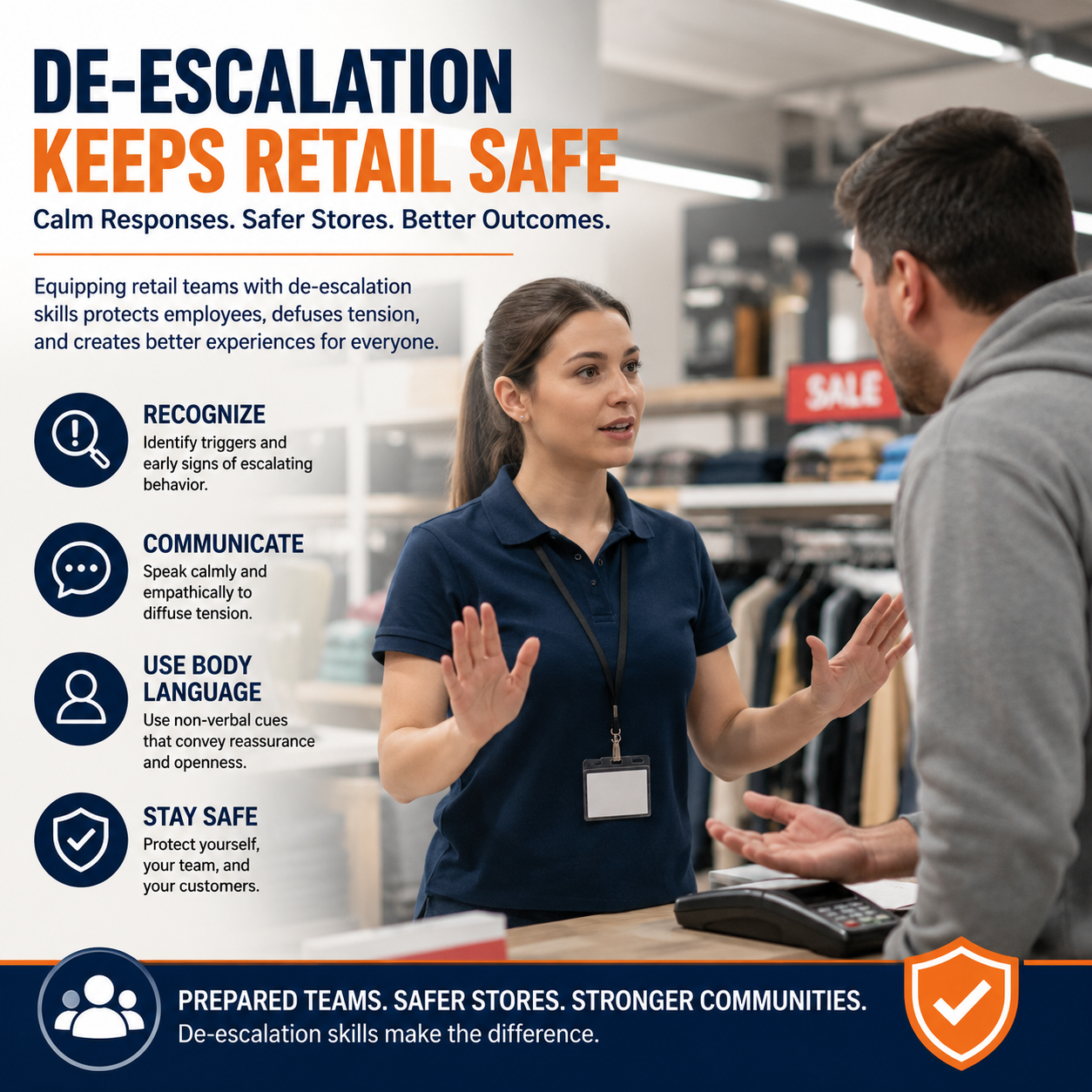
Retail de-escalation awareness is becoming a critical priority for U.S. retailers facing rising customer conflict, aggressive behavior, and workplace safety concerns. Frontline employees are expected to manage tense customer interactions while maintaining professionalism, protecting brand reputation, and ensuring the safety of everyone in the store.
From pricing disputes and return policy frustrations to long wait times and theft-related confrontations, retail staff regularly encounter emotionally charged situations that can escalate quickly if not handled correctly. Businesses that invest in practical de-escalation training create safer workplaces, reduce operational disruptions, and improve customer experiences across every location.
Customer Conflict Is Becoming a Daily Retail Challenge
Retail employees are often the first point of contact when customers are frustrated, stressed, or angry. Even routine interactions can suddenly become confrontational without warning.
Common triggers in retail environments include:
- Product shortages
- Long checkout lines
- Refund and return disputes
- Coupon or pricing disagreements
- Theft prevention encounters
- Service delays
- Miscommunication between staff and customers
Without proper training, employees may react emotionally, escalate tension unintentionally, or fail to recognize warning signs before situations become dangerous.
For employers, unresolved customer conflict can lead to:
- Employee injuries
- Increased turnover
- Negative customer experiences
- Social media incidents
- Liability concerns
- Operational disruptions
- Reduced employee morale
Why Retail Staff Need De-Escalation Skills
De-escalation is not simply about calming someone down. It is about recognizing behavioral warning signs early, responding professionally, and reducing the likelihood of a situation becoming unsafe.
Employees who understand de-escalation techniques are better prepared to:
- Identify escalating behaviors before conflict intensifies
- Communicate calmly under pressure
- Maintain professionalism during difficult interactions
- Reduce emotional reactions from customers
- Protect themselves and nearby customers
- Know when to involve supervisors or security personnel
These skills are especially important in high-traffic retail environments where staff interact with hundreds of customers daily.
Early Recognition Can Prevent Serious Incidents
One of the most important parts of conflict prevention is recognizing escalation triggers early. Retail workers who identify changes in tone, body language, or behavior can respond before situations spiral out of control.
Warning signs may include:
- Raised voices
- Aggressive gestures
- Pacing or physical agitation
- Refusal to listen
- Verbal threats
- Invasion of personal space
Employees trained in de-escalation understand how to remain composed while redirecting conversations toward resolution instead of confrontation.
Communication Techniques That Improve Safety
Retail employees often mirror the energy of difficult interactions without realizing it. Calm, controlled communication can significantly influence the direction of a tense situation.
Effective de-escalation communication techniques include:
- Speaking calmly and respectfully
- Using empathetic language
- Avoiding argumentative responses
- Maintaining appropriate personal space
- Using open and non-threatening body language
- Listening actively without interruption
When employees feel confident handling difficult customers, they are less likely to panic or react emotionally during stressful moments.
De-Escalation Training Supports Employee Retention
Retail turnover remains a major challenge for many U.S. businesses. Employees who frequently deal with hostile customer behavior may feel unsupported, overwhelmed, or unsafe.
Providing safety-focused training demonstrates that employers take employee wellbeing seriously.
Organizations that prioritize workplace safety often experience:
- Improved employee confidence
- Better team morale
- Reduced burnout
- Higher staff retention
- More consistent customer service
Employees are more likely to remain with companies that equip them with practical tools to handle real workplace challenges.
Better Customer Experiences Start With Safer Interactions
De-escalation training does not only protect employees. It also improves customer experiences by helping staff manage difficult situations professionally and respectfully.
Customers are more likely to trust businesses where employees remain calm, composed, and solution-focused during stressful interactions.
Strong de-escalation practices can help businesses:
- Reduce complaints
- Prevent public confrontations
- Protect brand reputation
- Improve customer satisfaction
- Create a more welcoming store environment
In competitive retail markets, customer experience and workplace safety often go hand in hand.
How TAP Series Helps Retail Teams Build De-Escalation Skills
The TAP Series Retail De-Escalation Awareness Course helps retail employees understand how to identify, respond to, and safely manage escalating customer situations.
The course covers:
- Understanding de-escalation in retail settings
- Recognizing triggers and warning signs
- Communicating calmly and empathetically
- Using effective body language and non-verbal cues
- Applying practical de-escalation strategies
- Supporting safer customer interactions
This training helps businesses create safer workplaces while improving employee preparedness and customer engagement.
Building Safer Retail Environments Through Preparedness
Customer conflict is an unavoidable part of modern retail operations, but escalation is not inevitable. Employees who receive proper de-escalation training are better prepared to handle tense situations safely, professionally, and confidently.
For retailers focused on workplace safety, employee retention, and customer experience, investing in retail conflict prevention training is a proactive step toward stronger daily operations and long-term business success.