De-escalation Awareness Training
Customer Conflict in Retail: Why De-Escalation Skills Are Essential for Staff Safety
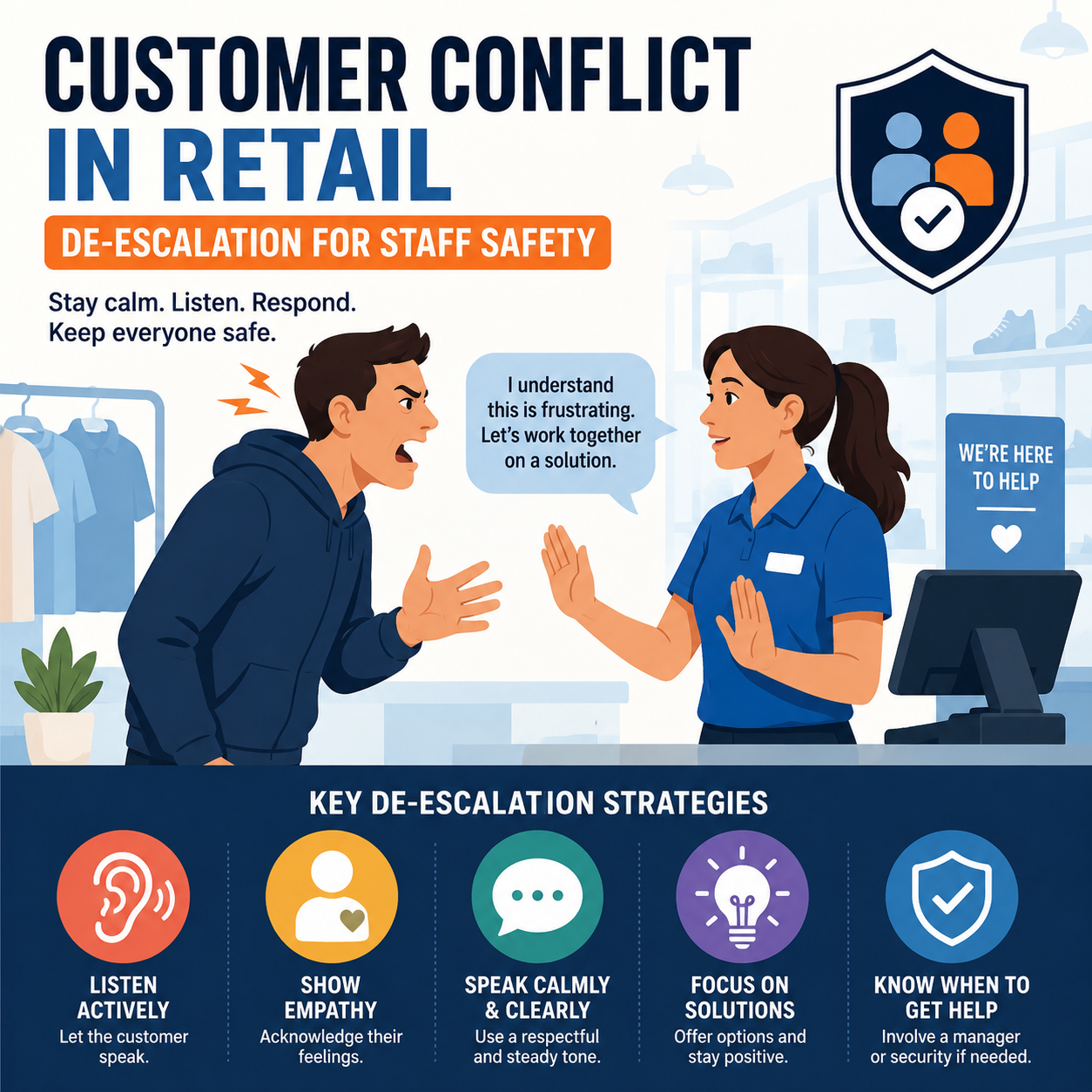
Retail employees are often the face of a business, interacting with hundreds of customers every day. While most interactions are positive, customer frustration, misunderstandings, policy disputes, and stressful situations can sometimes escalate into verbal aggression or threatening behavior.
Across the United States, retailers are facing increasing concerns about workplace violence, employee well-being, and customer conflict. As a result, de-escalation training has become an important part of creating safer retail environments for both employees and customers.
The ability to recognize warning signs, remain calm under pressure, and respond appropriately during difficult interactions can significantly reduce the likelihood of incidents becoming dangerous situations.
The Growing Challenge of Customer Conflict in Retail
Retail employees regularly encounter situations that can trigger customer frustration.
Common causes of conflict include:
- Product availability issues
- Long checkout lines
- Return and refund disputes
- Pricing disagreements
- Service delays
- Inventory shortages
- Loyalty program misunderstandings
- Policy enforcement
While many customer complaints are resolved quickly, some interactions can become emotionally charged, creating safety concerns for frontline staff.
Why De-Escalation Matters
De-escalation is the process of reducing tension during a conflict before it escalates into aggression, threats, or violence.
Effective de-escalation helps organizations:
- Improve employee safety
- Reduce workplace incidents
- Protect customers and staff
- Minimize operational disruptions
- Support positive customer experiences
- Strengthen workplace confidence
When employees understand how to manage difficult situations professionally, they are better equipped to maintain control without increasing conflict.
Recognizing Early Warning Signs
Many aggressive incidents begin with behaviors that indicate growing frustration.
Retail staff should be aware of warning signs such as:
- Raised voices
- Aggressive body language
- Personal insults
- Repeated demands
- Refusal to follow instructions
- Threatening statements
- Escalating emotional reactions
Recognizing these indicators early allows employees to adjust their approach before tensions intensify.
Common Mistakes That Escalate Conflict
Even well-intentioned employees can unintentionally worsen a situation.
Examples include:
- Arguing with the customer
- Interrupting while they are speaking
- Responding emotionally
- Using confrontational language
- Making promises that cannot be fulfilled
- Challenging or embarrassing the customer publicly
These actions can increase frustration and make conflict more difficult to resolve.
Effective De-Escalation Techniques for Retail Employees
Successful de-escalation focuses on maintaining professionalism while reducing emotional tension.
Key techniques include:
1. Stay Calm and Professional
Employees should maintain a steady tone of voice and avoid reacting emotionally.
Remaining calm helps prevent customers from mirroring heightened emotions.
2. Listen Actively
Customers often want to feel heard before they are willing to consider solutions.
Active listening includes:
- Maintaining appropriate eye contact
- Allowing customers to explain concerns
- Acknowledging frustrations
- Asking clarifying questions
Listening demonstrates respect and can quickly lower tension.
3. Show Empathy
Empathy does not require agreeing with the customer.
Instead, employees can acknowledge emotions by saying:
- "I understand this situation is frustrating."
- "I can see why you're upset."
- "Let's work on finding a solution."
Simple statements can help customers feel respected and understood.
4. Focus on Solutions
Rather than dwelling on the problem, employees should guide conversations toward available options.
Examples include:
- Alternative products
- Store credits
- Manager assistance
- Policy explanations
- Future service solutions
Customers are often more cooperative when they see a path forward.
5. Know When to Seek Assistance
Some situations require additional support.
Employees should understand when to:
- Contact a supervisor
- Request security assistance
- Follow emergency procedures
- Remove themselves from unsafe situations
Personal safety should always remain the priority.
Building a Safer Retail Environment
De-escalation is most effective when supported by a broader workplace safety culture.
Retail organizations can strengthen safety efforts by:
- Providing regular employee training
- Establishing clear incident reporting procedures
- Encouraging supervisor involvement
- Reinforcing safety protocols
- Conducting scenario-based learning exercises
When employees feel prepared, they are more confident and capable during challenging interactions.
The Role of Training in Conflict Prevention
Many customer conflicts can be managed successfully when employees have the right knowledge and tools.
Retail De-Escalation Awareness | TAP Series® provides retail employees with practical gu idance on recognizing potentially volatile situations, understanding conflict triggers, applying de-escalation techniques, and responding appropriately to difficult customer interactions.
The course helps organizations build safer workplaces by equipping employees with skills that support both personal safety and professional customer service.
Preparing Employees for Real-World Situations
Customer conflict is an unavoidable reality in many retail environments. However, conflict does not have to become a safety incident. Organizations that invest in de-escalation training help employees develop the confidence and skills needed to manage difficult situations calmly, professionally, and safely.
By prioritizing employee preparedness and workplace safety, retailers can reduce risk, improve customer interactions, and create a more secure environment for everyone who enters their stores.