Community Trust In Infrastructure Projects
Data Centers, Wind Farms, and Cell Towers All Raise the Same Fairness Question
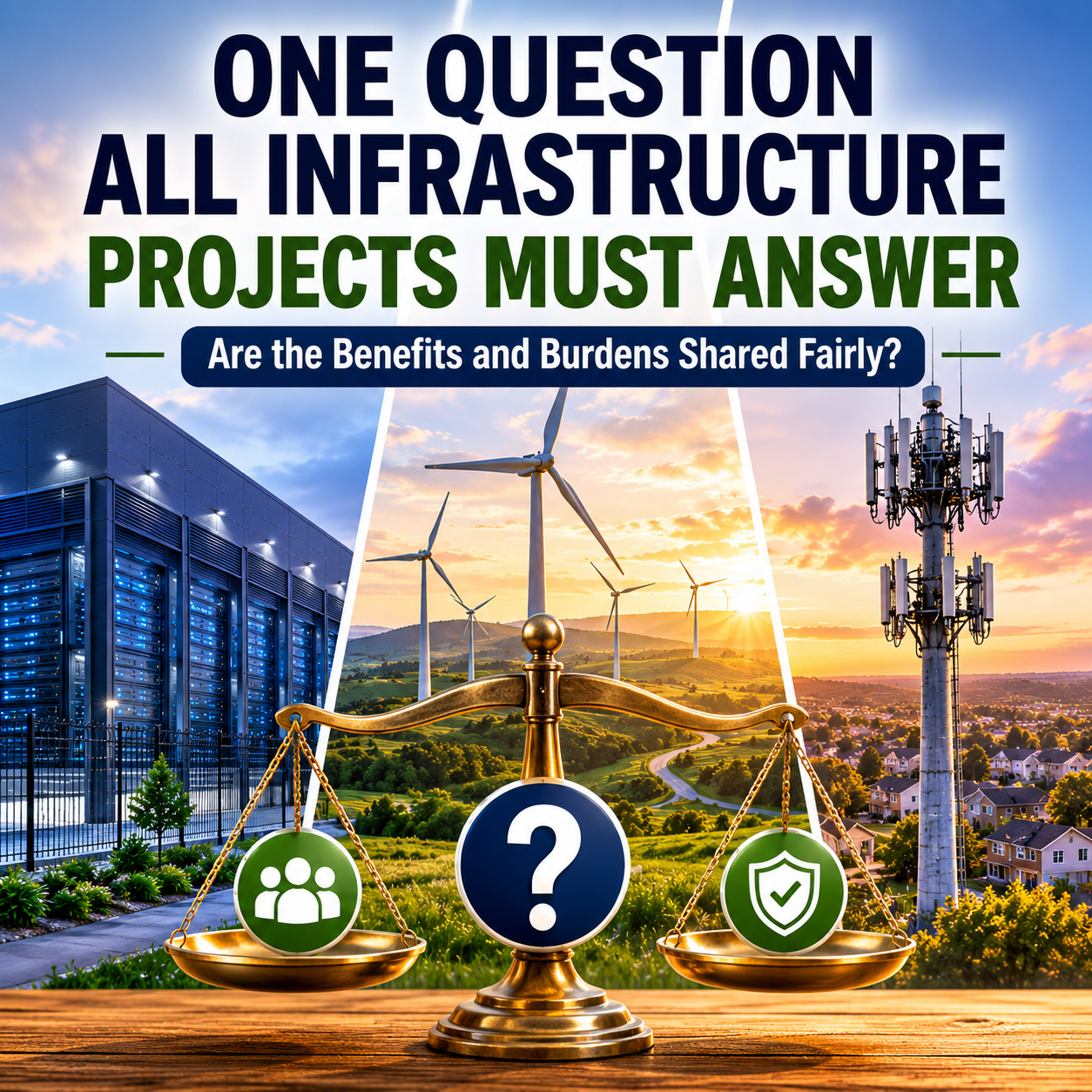
Data centers, wind farms, and cell phone towers may seem like very different types of infrastructure. One supports digital technology. One produces renewable energy. One provides wireless communication.
But the community conflicts around them are surprisingly similar.
In each case, society wants the benefit. In each case, the physical infrastructure has to be placed somewhere. And in each case, the people living near it often ask whether they are being treated fairly.
The Common Pattern
The pattern looks like this:
Data Centers
Public Benefit
- AI
- Cloud computing
- Digital services
- Cybersecurity
- Business systems
Local Concern
- Power use
- Water use
- Noise
- Tax incentives
- Land impact
Wind Farms
Public Benefit
- Renewable energy
- Tax revenue
- Landowner lease payments
Local Concern
- Views
- Noise
- Wildlife impacts
- Changes to rural character
- Uneven distribution of benefits
Cell Phone Towers
Public Benefit
- Better coverage
- Emergency communication
- Mobile service
Local Concern
- Aesthetics
- Property values
- Zoning issues
- Proximity to homes or schools
The public benefit may be real. But the local burden may also be real.
That is why these projects often become controversial.
The Benefits Are Broad, But the Burdens Are Local
One reason infrastructure projects face opposition is that benefits are often spread widely while burdens are concentrated locally.
A data center may support companies and users across the country. A wind farm may send power into a regional grid. A cell tower may improve service for thousands of people moving through an area.
But the nearby community lives with the structure every day.
That imbalance creates tension.
The people receiving the benefit may not be the same people living with the impact. When that happens, local residents often demand compensation, protections, or a greater voice in the approval process.
Tax Revenue Alone May Not Be Enough
Developers and public officials often promote infrastructure projects by pointing to tax revenue.
Tax revenue matters. It can support schools, roads, emergency services, and public budgets.
But tax revenue alone may not resolve local opposition if residents believe the project creates long-term burdens.
For data centers, residents may ask whether tax incentives reduce the financial benefit. They may question whether the project creates enough permanent jobs. They may worry that utilities, water systems, emergency services, and roads will need upgrades.
For wind farms, residents may question whether tax revenue offsets changes to the landscape. For cell towers, they may question whether better service justifies the location.
The lesson is that financial benefit must be clear, local, and credible.
Community Benefit Must Be Specific
General promises do not build trust.
A developer saying “this project will help the economy” is not enough. Communities increasingly want specific commitments.
For data centers, that may include:
- local hiring goals;
- training partnerships;
- utility cost protections;
- water conservation requirements;
- noise limits;
- emergency response funding;
- public reporting;
- environmental monitoring;
- and community benefit agreements.
For wind farms, it may include community payments, road repair commitments, wildlife mitigation, setback rules, or shared revenue.
For cell towers, it may include design standards, location alternatives, camouflage structures, or restrictions near sensitive areas.
The common issue is enforceability. Communities want written commitments that survive beyond the public relations stage.
The Approval Process Can Create or Destroy Trust
Many infrastructure fights are made worse by poor process.
If residents believe decisions are made before public meetings, they may distrust everything that follows. If technical documents are not disclosed, they may assume risks are being hidden. If public officials appear too close to developers, opposition may increase.
This has happened with wind projects, cell tower approvals, and data center proposals.
A better process should include early notice, plain-English explanations, public access to key documents, independent review, and a meaningful opportunity to comment before final approval.
The Core Question
The real question behind all three infrastructure conflicts is not whether society needs the service.
The real question is:
Are the benefits and burdens being shared fairly?
If the answer is yes, communities may still have concerns, but the conversation can move toward conditions and solutions.
If the answer is no, opposition will likely grow.
The final blog in this series will explain how data center projects can move forward more responsibly by learning from the mistakes made with wind farms and cell phone towers.