Grocery Store Safety Training Programs
Employee Errors in Grocery Stores: How Small Deli Mistakes Create Big Violations
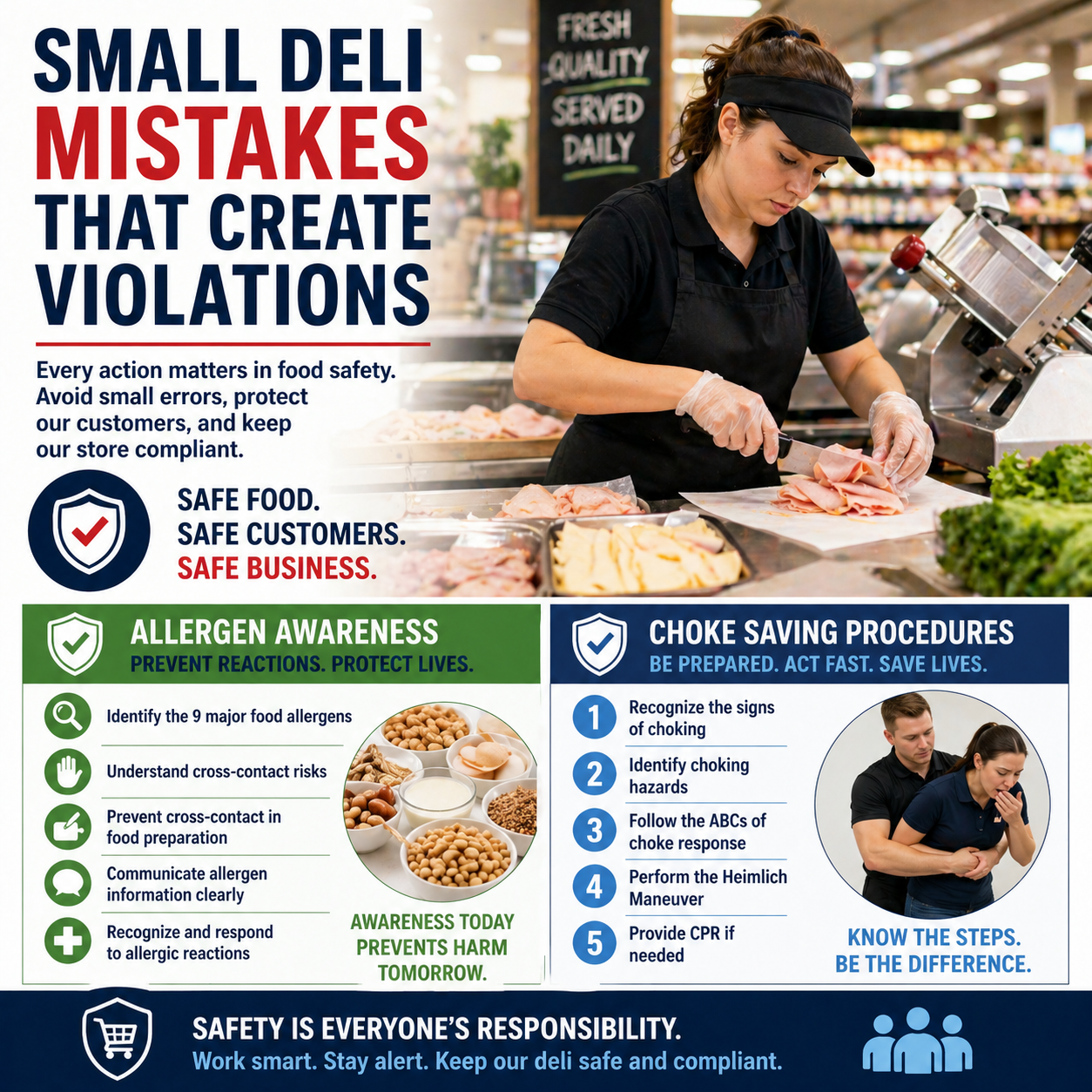
Grocery deli sections operate in fast paced environments where employees prepare, handle, and serve food continuously. While most tasks seem routine, small mistakes in deli operations can quickly lead to serious food safety violations, customer health risks, and failed inspections.
In many cases, these errors are not intentional. They happen due to lack of training, rushed processes, or gaps in awareness. Understanding how these small mistakes occur is key to preventing them.
Why Small Deli Mistakes Lead to Major Violations
Deli operations involve multiple food safety risks at once. Employees handle ready to eat foods, allergens, equipment, and customer requests in a short amount of time.
Common causes of violations include:
- Inconsistent food handling practices
- Lack of allergen awareness
- Improper cleaning and sanitizing
- Poor communication between staff
- Limited understanding of emergency response situations
Even minor oversights can create compliance issues that inspectors identify immediately.
Allergen Mistakes in Deli Operations
One of the most critical risks in deli environments is allergen exposure. A small mistake can have serious consequences for customers with food allergies.
Common allergen related errors include:
- Using the same utensils for different foods without cleaning
- Failing to identify allergen ingredients in prepared items
- Cross contact between allergen and non allergen foods
- Providing incorrect information to customers about ingredients
These mistakes can lead to allergic reactions and potential legal consequences.
Cross Contact Risks During Food Preparation
Cross contact occurs when allergens are unintentionally transferred from one food to another. This risk is especially high in deli areas where multiple foods are handled in shared spaces.
Examples include:
- Shared cutting boards or slicers not properly sanitized
- Gloves not changed between tasks
- Surfaces not cleaned between food preparation steps
- Improper storage of allergen containing ingredients
Preventing cross contact requires consistent procedures and employee awareness.
Communication Breakdowns That Create Violations
Clear communication is essential in deli operations. Miscommunication between employees or with customers can lead to serious safety issues.
Common breakdowns include:
- Employees not clearly marking allergen related orders
- Misunderstanding customer requests
- Lack of coordination between front counter staff and food prep teams
- Providing incomplete or incorrect food safety information
Strong communication practices reduce risk and improve overall safety.
Choking Risks in Deli and Prepared Food Areas
In addition to food safety risks, deli operations must also consider customer safety during food consumption. Choking incidents, while less frequent, can become emergencies if staff are not prepared.
Potential risks include:
- Large or improperly prepared food portions
- Customers consuming food quickly in store areas
- Lack of staff awareness on how to respond to choking incidents
Employees must be trained to recognize and respond to these situations quickly.
How Allergen Awareness Training Reduces Risk
Proper training helps employees understand the seriousness of allergen management and how to prevent common mistakes.
The Allergen Awareness Training course from TAP Series provides essential knowledge for grocery staff.
Learn more about the course here:
Allergen Awareness | Tap Series®
Key Skills Employees Gain:
- Identifying major food allergens
- Understanding cross contact risks
- Applying strategies to prevent allergen exposure
- Communicating allergen information clearly
- Recognizing and responding to allergic reactions
This training supports safer deli operations and helps prevent violations related to allergen mishandling.
Preparing Staff for Emergencies with Choke Saving Procedures Training
In addition to prevention, employees must be prepared to respond to emergencies. The Choke Saving Procedures Training course equips staff with life saving skills.
Learn more about the course here:
Choke Saving Procedures Training | Tap Series®
Key Skills Employees Learn:
- Recognizing signs of choking
Identify when a customer is in distress and requires immediate help. - Understanding choking hazards
Learn how certain foods and situations increase risk. - Responding effectively
Apply step by step actions to assist someone who is choking. - Heimlich Maneuver techniques
Learn proper techniques for different scenarios. - Basic CPR skills
Provide support in emergency situations when needed.
Building Safer and More Compliant Deli Operations
Preventing violations in grocery deli environments requires consistent training, awareness, and accountability. Small improvements in daily practices can significantly reduce risk.
Grocery stores that prioritize employee training benefit from:
- Reduced food safety violations
- Improved customer safety and confidence
- Better inspection outcomes
- Increased employee preparedness and accountability
By investing in structured programs such as Allergen Awareness Training and Choke Saving Procedures Training, grocery businesses can address common deli mistakes, strengthen compliance, and create safer environments for both employees and customers.