Grocery Deli Safety Best Practices
Employee Errors in Grocery Stores: Small Deli Mistakes That Create Serious Violations
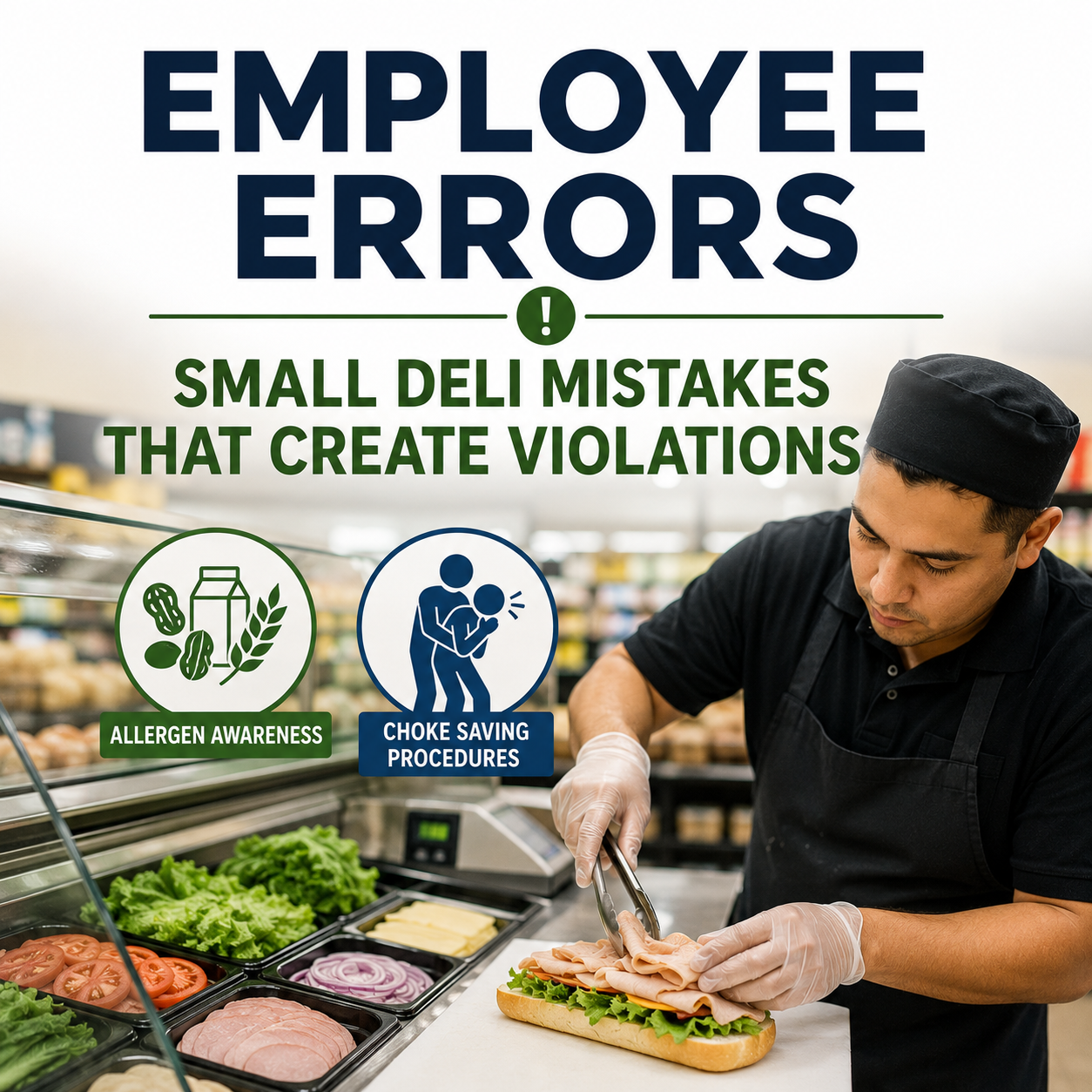
Grocery store delis operate in fast-paced environments where employees handle food preparation, customer service, sanitation, and safety procedures simultaneously. While many mistakes may seem minor during busy shifts, small errors in deli operations can quickly lead to health violations, allergen incidents, customer injuries, and regulatory concerns.
For grocery retailers across the United States, food safety compliance is not limited to preventing large-scale outbreaks. Everyday operational mistakes involving allergens, food handling, and emergency response preparedness can create serious liability risks. Proper employee training helps reduce these risks while supporting safer customer experiences and stronger compliance standards.
TAP Series’ Allergen Awareness and Choke Saving Procedures courses help grocery employees strengthen food safety practices, improve emergency preparedness, and reduce preventable deli violations.
Allergen Awareness Course:
Allergen Awareness | Tap Series®
Choke Saving Procedures Course:
Choke Saving Procedures Training | Tap Series®
Why Grocery Store Delis Face High Compliance Risks
Deli departments handle ready-to-eat foods, sliced meats, prepared meals, salads, bakery products, and specialty items that often involve allergens and choking hazards. During busy service periods, employees may unintentionally skip procedures or overlook important safety steps.
Common deli compliance risks include:
- Allergen cross-contact
- Improper food labeling
- Unsafe food handling practices
- Poor communication about ingredients
- Inadequate cleaning and sanitation
- Unsafe serving procedures
- Delayed emergency response during choking incidents
These issues may result in customer complaints, failed inspections, allergic reactions, medical emergencies, or legal liability.
How Small Employee Errors Create Major Violations
Many grocery violations begin with routine mistakes that employees may not recognize as serious risks.
Examples include:
- Using Shared Utensils
Employees may accidentally transfer allergens between foods when using the same slicers, knives, gloves, or serving tools.
- Incorrect Ingredient Information
A customer asks whether a prepared deli item contains allergens, but staff provide incomplete or inaccurate information.
- Improper Cleaning Procedures
Food residue left on counters, slicers, or preparation areas increases contamination risks.
- Cross-Contact During Food Preparation
Prepared foods stored or assembled too closely together may expose customers to allergens unintentionally.
- Failure to Respond Quickly to Choking Emergencies
Employees may panic or fail to recognize choking symptoms during in-store dining or food sampling situations.
While each mistake may appear minor individually, repeated operational errors can create serious compliance and safety concerns.
The Importance of Allergen Awareness in Grocery Delis
Food allergies continue to affect millions of Americans, making allergen safety a critical responsibility for grocery foodservice operations.
The TAP Series Allergen Awareness course helps deli employees understand how to reduce allergen-related risks and improve communication with customers.
Allergen Awareness | Tap Series®
Key learning topics include:
- Identifying the Major Food Allergens
Employees learn to recognize allergens commonly linked to severe allergic reactions.
- Understanding Cross-Contact Risks
Staff gain awareness of how allergens spread during preparation, storage, cooking, and service.
- Preventing Allergen Cross-Contact
Teams learn safer food handling, cleaning, and equipment management procedures.
- Communicating Allergen Information Clearly
Employees improve customer communication regarding ingredients and allergen concerns.
- Recognizing and Responding to Allergic Reactions
Staff learn how to identify symptoms and understand emergency response importance.
Why Choking Response Training Matters in Grocery Settings
Prepared foods, deli counters, bakery items, and food sampling stations can all create choking risks for customers. Employees who understand choking response procedures are better prepared to act quickly during emergencies.
The TAP Series Choke Saving Procedures course helps grocery employees build practical emergency response knowledge.
Choke Saving Procedures Training | Tap Series®
Important learning areas include:
- Understanding Choking
Employees learn to recognize signs and symptoms of choking emergencies quickly.
- Identifying Choking Hazards
Staff gain awareness of foods and situations that commonly contribute to choking incidents.
- Learning Choke Response Steps
Employees understand immediate response procedures that may help save lives.
- Heimlich Maneuver Techniques
Teams learn response techniques for different emergency situations.
- CPR Skills for Individuals
Employees develop basic emergency response awareness to support workplace safety.
Building Safer Grocery Deli Operations
Compliance and safety depend on consistent employee awareness and operational discipline. Grocery retailers can reduce deli violations and improve customer protection by strengthening training and safety procedures.
Best practices include:
- Providing regular allergen and emergency response training
- Reinforcing sanitation and cleaning standards
- Reviewing ingredient labeling procedures
- Improving employee communication during food preparation
- Monitoring cross-contact prevention practices
- Practicing emergency response procedures regularly
Customers trust grocery stores to provide safe foodservice experiences. Proper training helps employees meet those expectations confidently and consistently.
Protect Your Grocery Operations Through Better Employee Training
Small deli mistakes can quickly become major safety violations when employees lack proper awareness and preparation. As grocery stores continue managing growing compliance expectations and customer safety concerns, training remains one of the most effective ways to reduce operational risk.
The Allergen Awareness and Choke Saving Procedures courses from TAP Series help grocery retailers improve food safety practices, strengthen emergency preparedness, and support safer deli operations through practical employee education.