Deli Department Safety Training
Employee Errors in Grocery Stores: Small Deli Mistakes That Create Violations
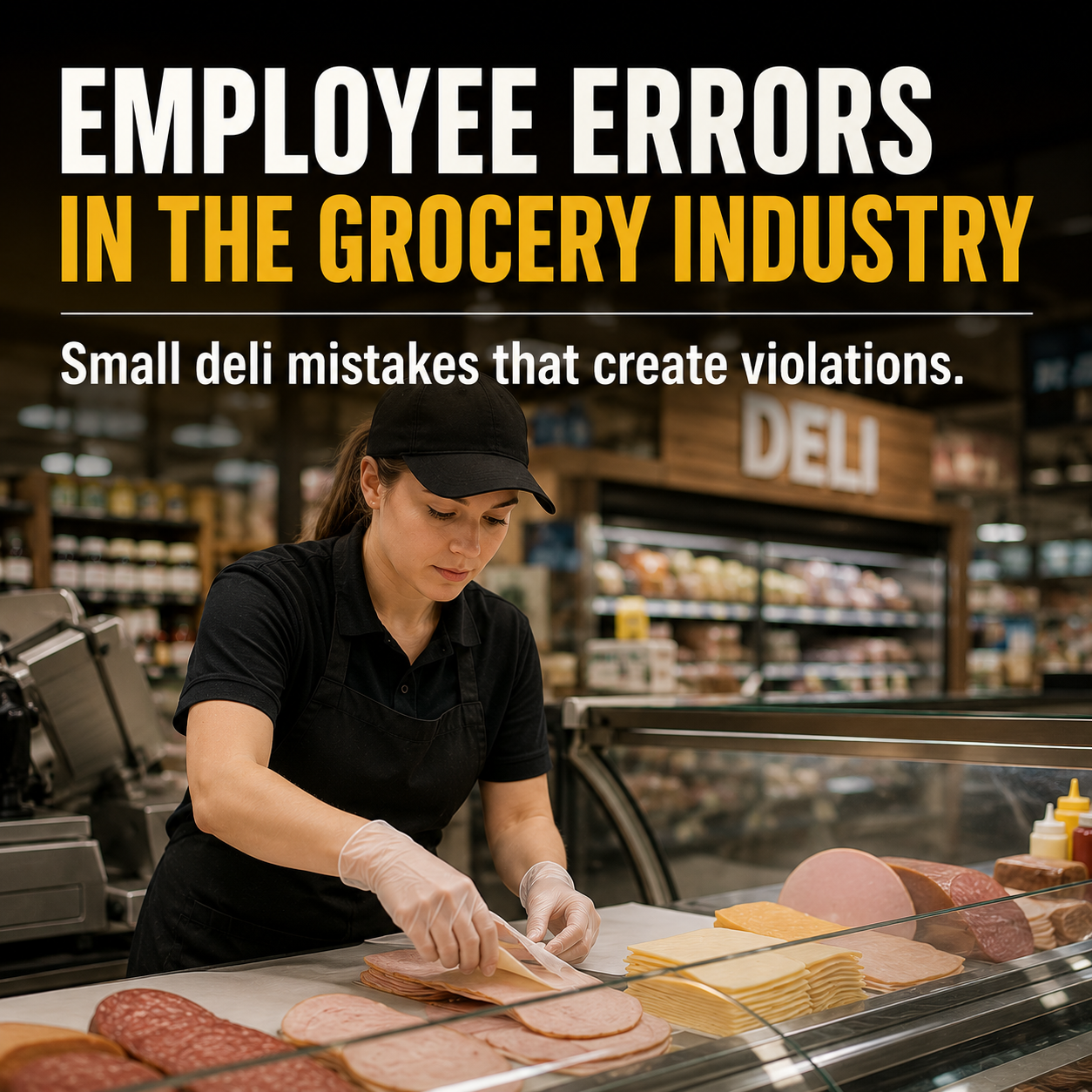
Grocery store delis are among the busiest departments in retail food operations. Employees prepare meals, slice meats and cheeses, package products, answer customer questions, and maintain food safety standards throughout the day. While these tasks may seem routine, even small mistakes can lead to regulatory violations, customer safety concerns, and potential liability issues.
Many deli-related violations are not caused by major failures. Instead, they often result from minor employee errors that occur during normal operations. Understanding these risks can help grocery stores strengthen compliance efforts while protecting both customers and employees.
Why Deli Operations Receive Special Attention
Deli departments handle a wide variety of ready-to-eat foods, making them a key focus during inspections.
Inspectors often evaluate:
- Food handling practices
- Employee hygiene
- Product labeling
- Temperature controls
- Cross-contamination prevention
- Allergen management
- Emergency response readiness
Because deli products are often consumed without additional cooking, mistakes can directly impact customer health and safety.
Small Mistakes That Commonly Lead to Violations
Many violations begin with simple oversights that employees may not recognize as serious risks.
1. Using Shared Equipment Without Proper Cleaning
Deli slicers, knives, cutting boards, and preparation surfaces are used throughout the day.
Violations can occur when employees:
- Skip cleaning between products
- Use the same equipment for multiple foods
- Fail to sanitize surfaces properly
- Rush cleaning procedures during busy periods
Even minor lapses can create contamination risks and inspection concerns.
2. Improper Allergen Handling
Customers increasingly rely on deli employees to provide accurate information about ingredients and allergens.
Common mistakes include:
- Providing incorrect allergen information
- Using shared utensils between products
- Cross-contact during food preparation
- Improper labeling
- Failure to communicate allergen concerns among staff
For customers with food allergies, even small errors can have serious consequences.
3. Inaccurate Product Labeling
Labels provide important information that helps customers make informed decisions.
Violations may occur when:
- Labels are missing
- Ingredients are listed incorrectly
- Allergen information is omitted
- Products are mislabeled
- Expiration dates are inaccurate
Labeling errors can affect both compliance and customer safety.
4. Poor Hand Hygiene Practices
Handwashing remains one of the most important food safety requirements.
Common violations include:
- Failing to wash hands between tasks
- Improper glove use
- Handling ready-to-eat foods after touching contaminated surfaces
- Inadequate handwashing procedures
Small hygiene mistakes can quickly become significant food safety concerns.
5. Temperature Control Errors
Ready-to-eat foods require proper temperature management throughout storage and display.
Employees may create violations by:
- Leaving products out too long
- Failing to monitor temperatures
- Improperly storing prepared foods
- Ignoring temperature logs
Consistent monitoring helps prevent both food safety risks and inspection findings.
The Overlooked Risk: Customer Choking Emergencies
While food safety often focuses on contamination and allergens, customer safety extends beyond food handling.
Deli departments frequently serve foods that may pose choking hazards, particularly for:
- Young children
- Older adults
- Individuals with medical conditions
Employees who are unprepared to respond during a choking emergency may struggle to act quickly when seconds matter most.
Why Training Matters
Many deli violations occur because employees lack awareness of how everyday actions affect compliance and customer safety.
Without proper training, employees may:
- Misunderstand allergen risks
- Follow inconsistent procedures
- Miss warning signs of safety concerns
- Fail to respond effectively during emergencies
- Create avoidable inspection violations
Ongoing education helps reinforce safe practices while improving employee confidence.
Building a Safer Deli Operation
Grocery stores can reduce violations and improve safety by focusing on consistent procedures and employee preparedness.
Key strategies include:
- Reinforce food safety expectations daily.
- Conduct regular equipment cleaning checks.
- Verify product labeling accuracy.
- Strengthen allergen communication practices.
- Monitor temperature controls consistently.
- Prepare employees for customer emergencies.
Small improvements in daily routines can significantly reduce operational risks.
The Role of Training in Preventing Deli Violations
Proper training helps employees understand how their actions impact both compliance and customer well-being.
Allergen Awareness Training | TAP Series® helps grocery employees identify allerge ns, prevent cross-contact, communicate effectively with customers, and support safer food handling practices throughout deli operations.
Choke Saving Procedures Training | TAP Series® provides employees with practical guidance fo r recognizing choking emergencies and responding appropriately when immediate action may be needed to protect customer safety.
Together, these training programs help grocery stores strengthen food safety efforts, improve customer protection, and reduce the risk of violations caused by preventable employee errors.
Turning Small Actions Into Stronger Compliance
Most deli violations do not start with major failures. They begin with small mistakes that go unnoticed until an inspection, customer complaint, or emergency occurs. By investing in employee education, reinforcing safe procedures, and prioritizing both food safety and emergency preparedness, grocery stores can build stronger deli operations that protect customers and support long-term compliance.