Home Buying Decisions
Fixer-Upper vs. Move-In Ready: Which Home Is Right for You?
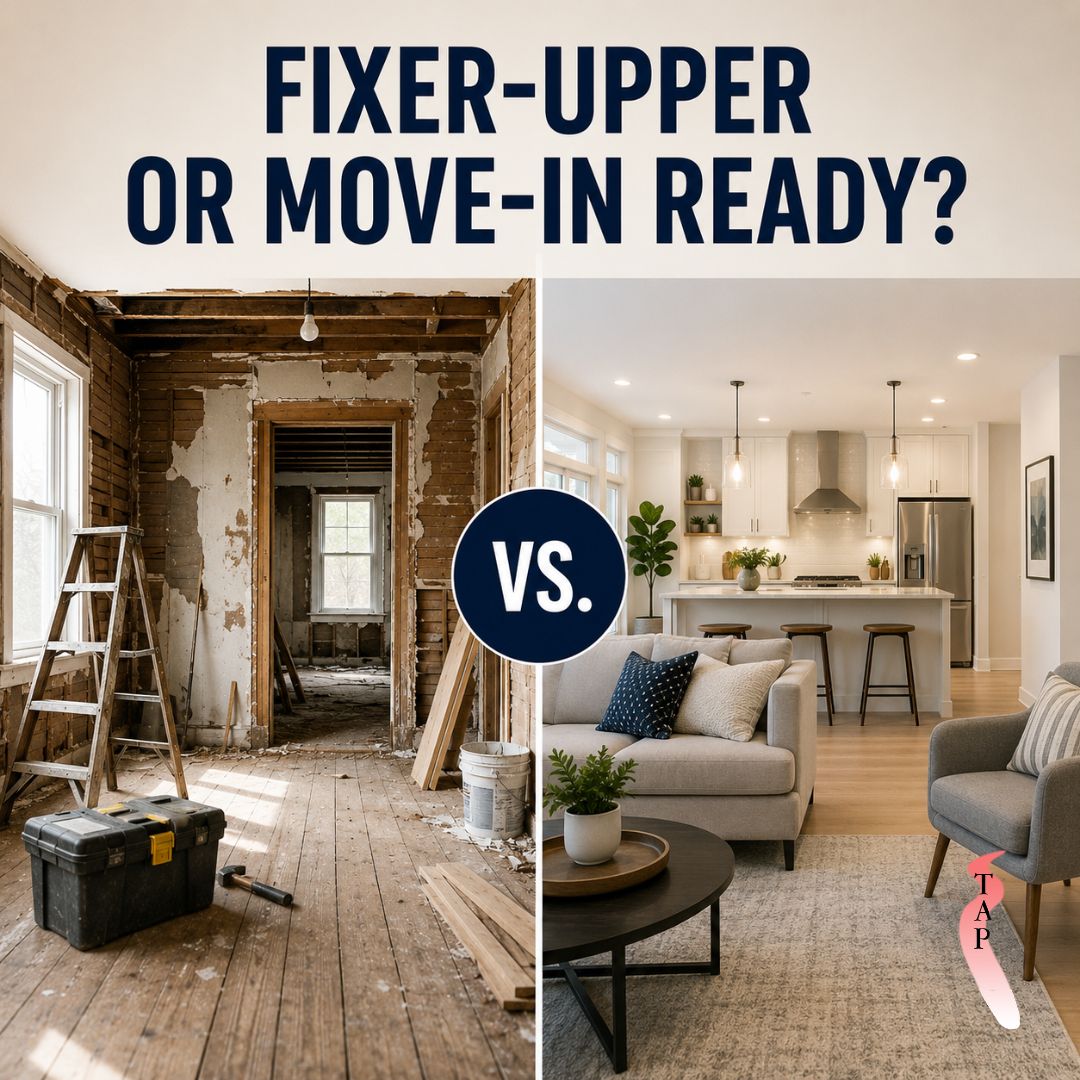
When buying a home, one of the biggest decisions is whether to purchase a property that needs renovations or choose one that is ready to move into immediately. Both options have advantages and challenges, and the right choice depends on your budget, timeline, lifestyle, and willingness to manage home improvement projects.
A fixer-upper may offer opportunities to personalize your home, while a move-in ready property provides convenience and fewer immediate projects. Understanding the financial and practical differences between these options can help you make a decision that aligns with your long-term goals.
What Is a Move-In Ready Home?
A move-in ready home is generally a property that is immediately livable without requiring significant repairs or renovations.
These homes often have:
- Updated kitchens and bathrooms
- Functional plumbing and electrical systems
- Finished flooring and interior paint
- Working heating and cooling systems
- Minimal immediate maintenance needs
While cosmetic changes may still be desired, the home is generally prepared for occupancy.
What Is a Fixer-Upper?
A fixer-upper is a property that requires repairs, updates, or renovations before it fully meets the buyer's preferences or needs.
Projects may include:
- Interior painting
- Flooring replacement
- Kitchen remodeling
- Bathroom renovations
- Roof repairs
- Landscaping
- Updating older systems
The amount of work varies significantly from one property to another.
Financial Considerations
Cost is often one of the biggest factors when comparing these two options.
Move-In Ready Home
Potential advantages include:
- Fewer immediate repair expenses
- More predictable short-term budgeting
- Lower likelihood of unexpected renovation costs shortly after moving in
Potential considerations include:
- Higher purchase price in some markets
- Limited opportunities to customize without additional expense
Fixer-Upper
Potential advantages include:
- Lower purchase price in some cases
- Opportunity to spread renovation costs over time
- Ability to personalize the home during renovations
Potential considerations include:
- Higher maintenance and renovation expenses
- Possible unexpected repair costs
- Larger financial commitment after purchase
Every property's financial picture is different, so buyers should consider both the purchase price and the estimated cost of future improvements.
Practical Considerations
Your schedule and lifestyle can influence which option is more suitable.
A move-in ready home may be a better fit if you:
- Need to relocate quickly
- Prefer minimal disruption
- Have limited time for renovation projects
A fixer-upper may be appropriate if you:
- Enjoy home improvement projects
- Have flexibility in your moving timeline
- Are comfortable managing renovations over time
Maintenance Responsibilities
All homes require ongoing maintenance, regardless of condition.
However, renovation needs often differ.
Move-In Ready Homes
Maintenance may focus on:
- Routine servicing
- Preventive maintenance
- Landscaping
- Appliance upkeep
Fixer-Uppers
In addition to routine maintenance, owners may also manage:
- Renovation planning
- Contractor coordination
- Material purchases
- Larger repair projects
Understanding these responsibilities can help buyers prepare for the level of involvement required.
Lifestyle Considerations
Your daily routine should also influence your decision.
A move-in ready home may suit buyers who value:
- Immediate comfort
- Predictable schedules
- Reduced stress during the transition
A fixer-upper may appeal to buyers who enjoy:
- Personalizing living spaces
- Completing home projects
- Gradually improving a property over time
Neither option is inherently better. The right choice depends on your personal preferences.
Practical Example: Move-In Ready Home
Imagine a family relocating for a new job.
Because they need to settle quickly, they choose a move-in ready home with updated systems and modern finishes.
Although the purchase price is slightly higher, they avoid managing renovations while adjusting to a new community and work schedule.
For them, convenience outweighs the additional upfront cost.
Practical Example: Fixer-Upper
Now imagine a buyer with flexible timing and a long-term ownership plan.
They purchase an older home that requires cosmetic improvements such as painting, flooring updates, and kitchen remodeling.
Rather than completing every project immediately, they renovate gradually over several years while living in the home.
This approach allows them to customize the property based on their preferences and available budget.
Questions to Ask Yourself
Before making a decision, consider asking:
- What is my total budget for purchasing and maintaining a home?
- Do I have time for renovation projects?
- Am I comfortable managing repairs and contractors?
- How quickly do I need to move?
- Do I want to customize the home myself?
- Am I prepared for ongoing maintenance expenses?
These questions can help clarify which option better supports your lifestyle and financial circumstances.
Think Long Term
Whether you choose a fixer-upper or a move-in ready property, consider how the home will meet your needs over the coming years.
Factors such as:
- Family size
- Career plans
- Commute
- Maintenance responsibilities
- Future renovation goals
can all influence your long-term satisfaction with the property.
Conclusion
Choosing between renovating after buying and purchasing a move-in ready home is a personal decision that depends on your financial situation, available time, and lifestyle preferences. A move-in ready home offers convenience and fewer immediate projects, while a fixer-upper provides opportunities for customization and gradual improvements.
By evaluating the total costs, maintenance responsibilities, and your long-term plans, you can make a more informed decision about which type of property best supports your homeownership goals. Taking a balanced approach helps ensure that your choice aligns with both your current needs and your future plans.